Nurturing the Future 2026

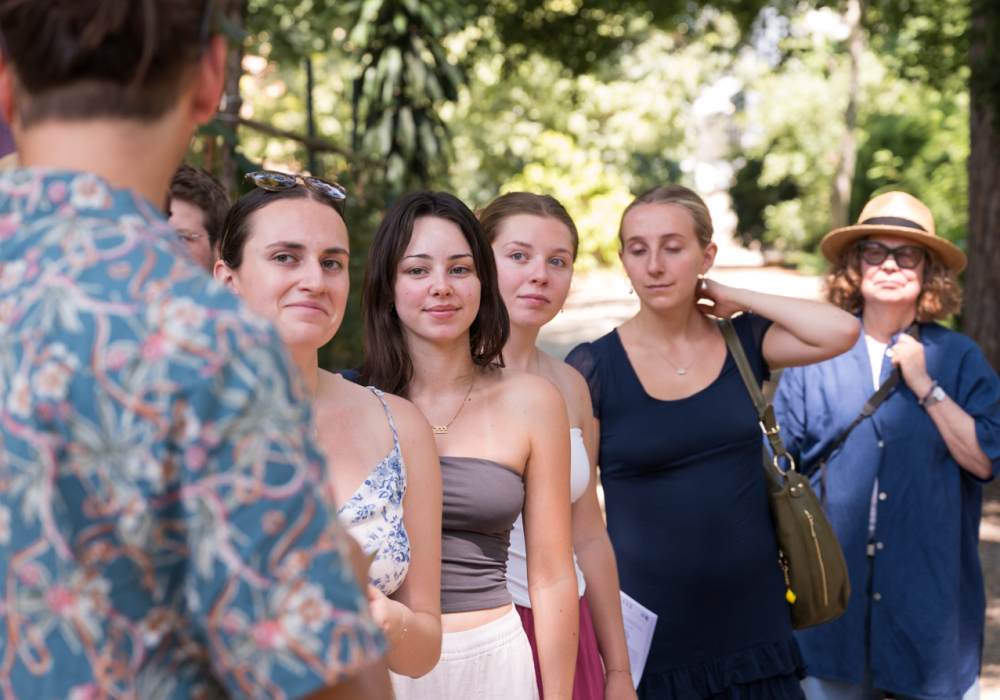
Nurturing the Future – Nutrire il futuro is the LdM end-of-year event, which this year features a double program.

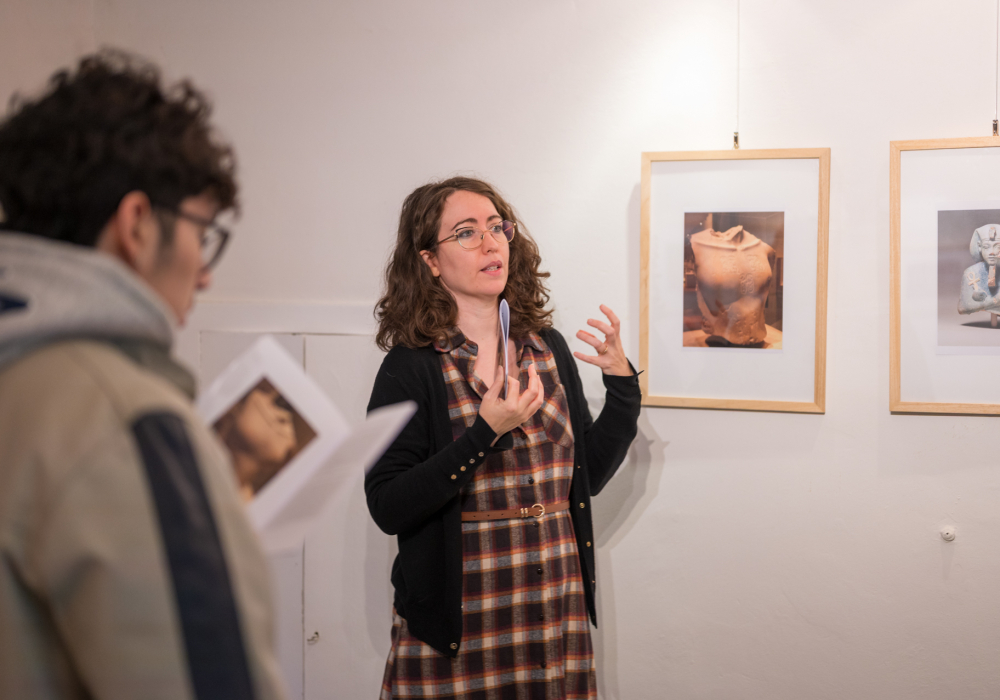
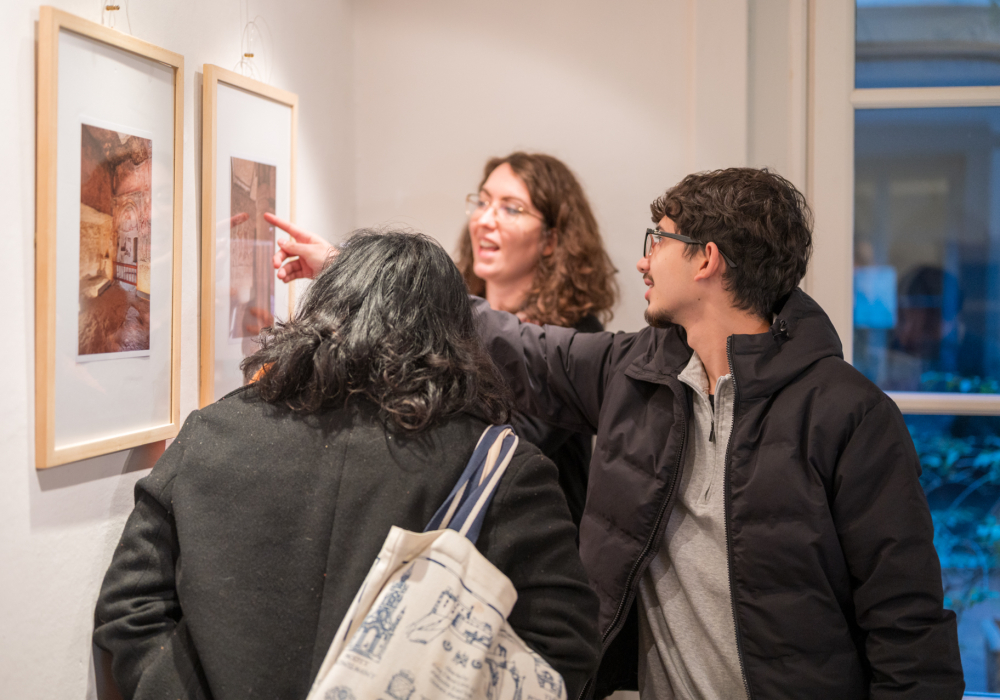
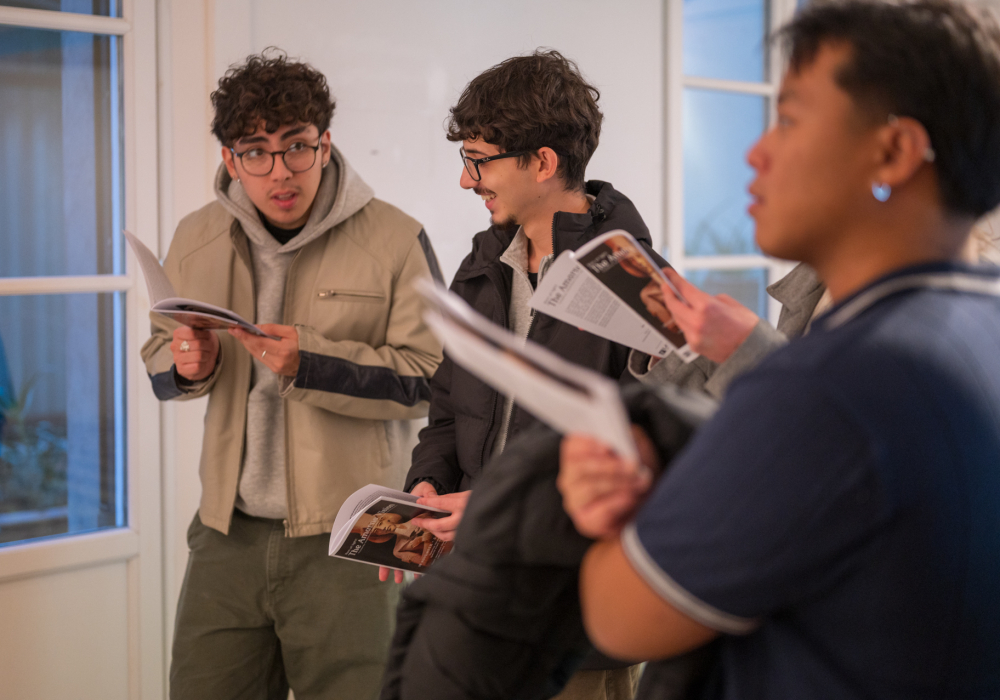
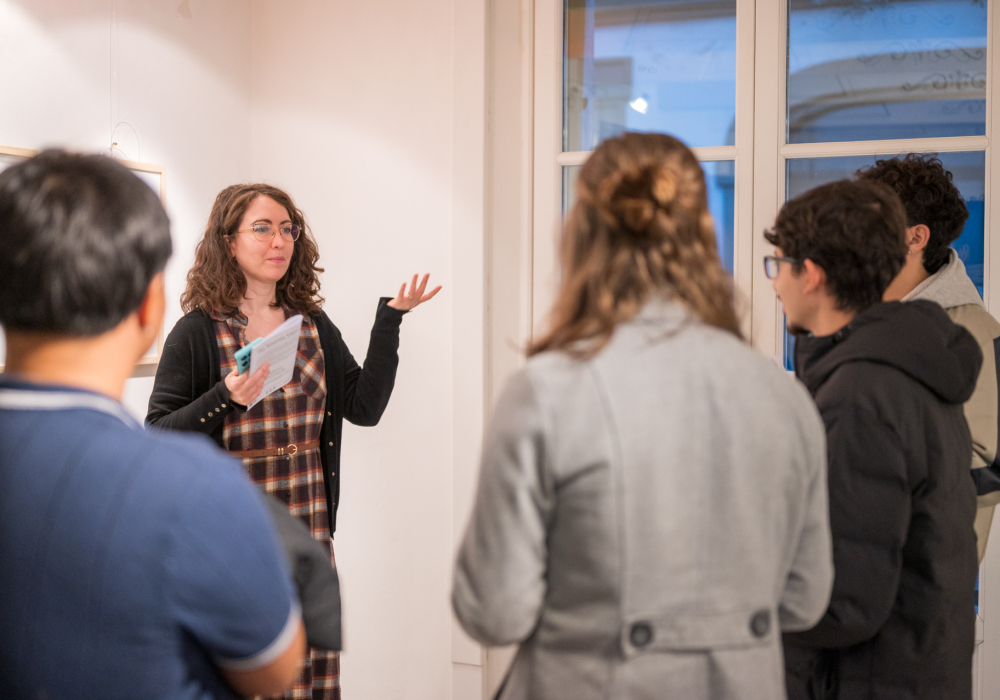
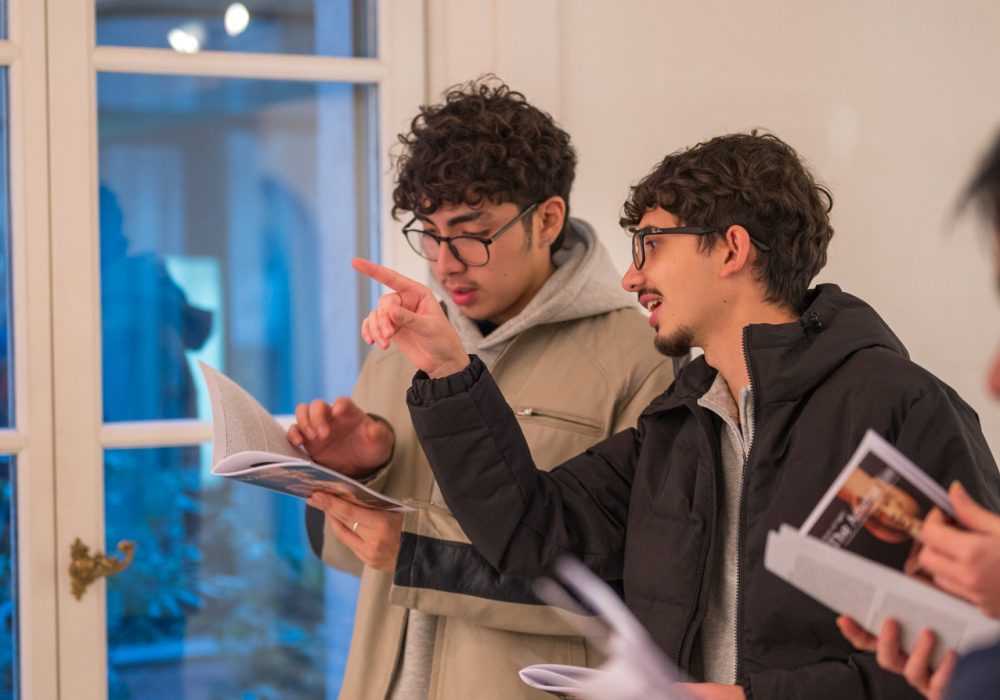
The day will begin at 10:30 AM at the Istituto degli Innocenti with the opening of a one-day student exhibition, showcasing a curated selection of works created by students of Istituto Lorenzo de’ Medici enrolled in the Creative Arts and Design programs.

What makes this occasion truly special is not only the historical significance of this remarkable venue, but also the atmosphere of warmth and intimacy, both physical and spiritual, that permeates its spaces. Since its origins, the Istituto degli Innocenti has been devoted to welcoming young people and supporting their cultural and emotional growth within society. It remains a place where beauty nurtures possibility, and where new perspectives emerge within the harmony of Renaissance architecture.

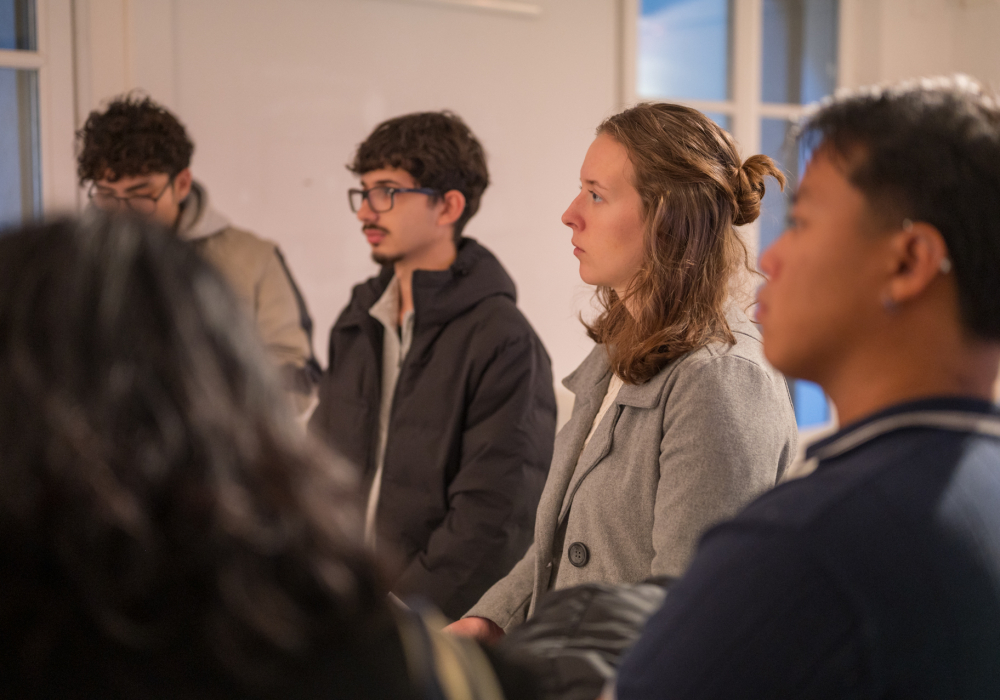
Such a setting offers the ideal context to present our students’ artistic expressions, amplify their voices, and encourage meaningful interaction with the public.

The exhibition will also include a live stage featuring ballet performances by our students, as well as a special gastronomic experience curated by the Italian Gastronomy and Culture students.  

The student exhibition ends at 6PM, but Nurturing the Future continues towards an exciting Finale.  The evening will conclude with a Fashion Event at Fondazione Zeffirelli, from 7PM to 9 PM, offering an inspiring journey through creativity, expression, and self-discovery. The event, designed by the Event Planning class, celebrates the creations of three students, debuting as designers at the end of their time here in Florence. 

Program

10:30 AM – 6:00 PM
STUDENT EXHIBITION – Selected works curated by LdM Department Supervisors and Professors.

5:00 PM
BALLET PERFORMANCE 
Istituto degli Innocenti, Piazza SS. Annunziata 

7:00 PM – 9:00 PM
FASHION EVENT
Fondazione Zeffirelli, Piazza San Firenze

Free Entry

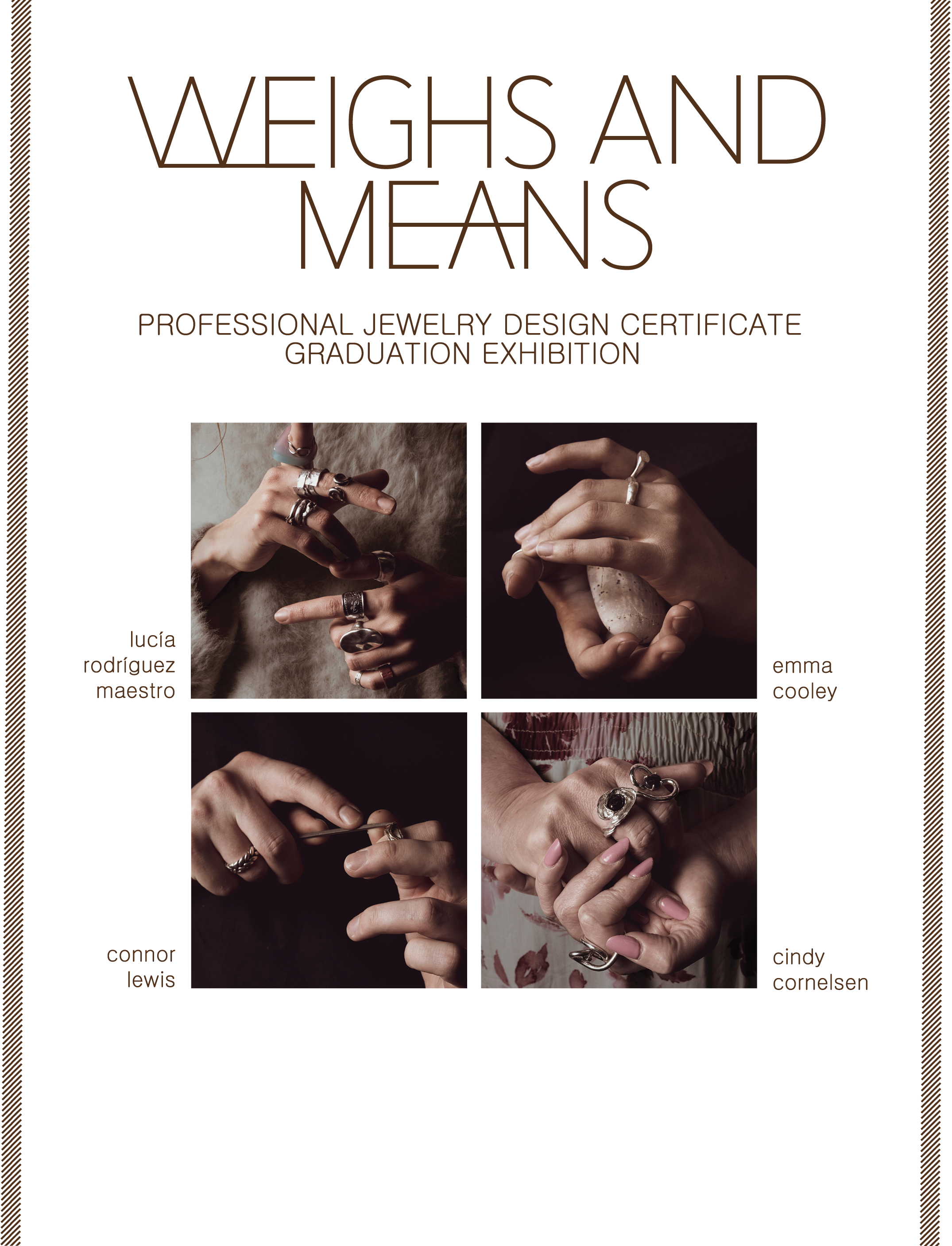
Weighs and Means

Professional Jewelry Design Certificate Graduation Exhibition

Lucía Rodríguez
Connor Lewis
Cindy Cornelsen
Emma Cooley

When holding an object in your hand, what do you notice f irst? Is it the temperature, or the texture? Is it the shape or the size? One of the first sensations our bodies recognize before we are conscious of anything else, is the weight. Pick up an object and our muscles reflexively adjust in response. Our bodies then notice and acknowledge, this is heavy, or this is light, but respond f irst, engaging systems to incorporate this new weight into our sense of balance. Natural and often unconscious, dynamic weight adjustment is ever in process, with connection as the result, and thus weight can also be interpreted as a form of relationship.

If you interact with the physical weight of an object, then it is facilitating a relationship with gravity. If you feel something in response to the emotional weight of an object, then it is guiding you to a relationship with meaning. If you notice the marks of an object’s history and the weight of its many different pasts, then it is sharing with you a relationship to time.

As makers and artisans, our process of relating to an understanding our work is unending. When we pause momentarily to share our process with others in the form of an object, we hope to evoke all of these relationships and more. May the many weights of our pieces connect deeply with the many weights you carry yourself and may you f ind a new relationship in the space between.

Gallery coordinator: Špela Zidar

Gallery interns: Alexandria Swanson, Isabella Walejko

Opening May 9th 4-7PM
LdM Gallery, Via de’Pucci 4, Firenze
From May 9 to May 13th
Opening hours: Mon, Wed, Thu, Fri 4-7pm, Tue 10am-2pm

About LdM Gallery

The LdM Gallery is a project by Istituto Lorenzo de’ Medici, an interdisciplinary space where academic research and artistic experimentation meet within a professional setting.

[email protected] www.ldminstitute.com  [email protected]
Note to Self

by the SOAP! Art and Literary Magazine Team

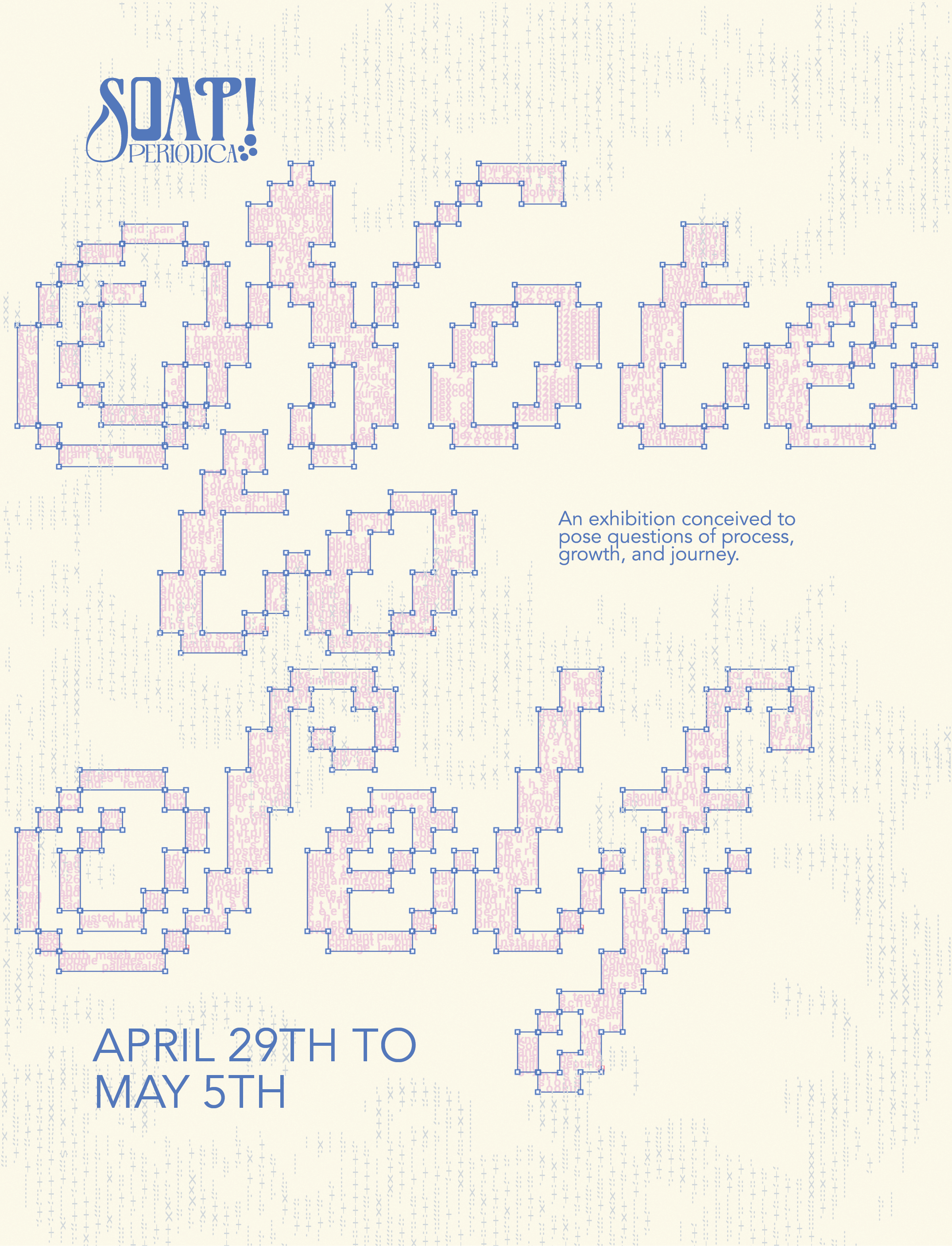
‘Note to Self’ is an exhibition conceived to pose questions of process, growth, and journey. As the original SOAP! team prepares to graduate, these are questions we have been grappling with on our own terms. SOAP! was founded as a collaborative process, one with constant notes going back and forth between group chats, sticky notes, and planner scribbles. The process of SOAP! has been defined by the notes passed between us. The notes have narrated our journey to create a physical throughline from issue 1’s ‘Fresh Laundry’ to issue 5’s ‘Blood Orange.’ We have come to know the process as the
art itself.
The exhibition makes our layouts 3D by establishing a physical space for the artists we have curated and worked with over our past five issues. It showcases their reflections on their creative process and artistic/personal journey. Dually this exhibit serves as a retrospective for the magazine, to provide a window into SOAP!’s journey over the past three years. These elements will work together to create dialogue around process and growth. ‘Note to Self’ exlpores how creative practices evolve through exchange, reflection, and shared authorship. The exhibition treats notes, drafts, and documentation as active creative forms rather than secondary records.

Gallery coordinator: Špela Zidar

Gallery interns: Alexandria Swanson, Isabella Walejko

Opening April 29th, 5-8PM
LdM Gallery, Via de’Pucci 4, Firenze
From April 29th to May 5th
Opening hours: Mon, Wed, Thu, Fri 4-7pm, Tue 10am-2pm

About LdM Gallery

The LdM Gallery is a project by Istituto Lorenzo de’ Medici, an interdisciplinary space where academic research and artistic experimentation meet within a professional setting.

[email protected] www.ldminstitute.com  [email protected]
Mamma Mia Museum

A project that stems from a daughter’s observation of certain behaviours of her mother affected by Alzheimer’s disease .

The sharing of these images on social media, under the name Mamma Mia Museum, highlights the need to share these fragilities with the outside world. Through the transformative power of art, they acquire visibility and a new form.

The displacement of objects, the combination of seemingly distant elements, and other strange juxtapositions are captured with quick and furtive photographs, reflecting the need to transform and interpret these apparitions as creative and poetic processes rather than errors.

Working in the contemporary art world, the author of this project found herself forced, at the beginning, to bring her mother to “work,” including meetings, exhibition openings, and installations,trying to remain somehow connected to her profession. She even started to observe her mother’s gestures and eccentricities from the same point of view she used to interpret art works, rediscovering  in her mother’s casual gestures the same poetic obsessions that drives artists to creation.

Mammia Mia Museum is therefore a series of photographs that sometimes show her mother at exhibitions and museums, and other domestic moments in which certain movements of objects seem to create works of art.

The “art family” surrounding the author immediately recognized the potential of these images, inspiring the creation of a dedicated artistic project.

The Mamma Mia Museum inscription is a Poetrick by artist Stefano Calligaro, also transformed into a ceramic plaque to hang outside the front door, like the entrance to a real museum.

Each image is given a title, a metaphor of the impossible challenges that caregivers are forced to face every day.

Since her mother’s illness began in 2020, Becagli has had to balance work and caregiving, feeling the full weight of a family caregiver, including bureaucracy, family, and the practicalities of life. She has no time for private life. What’s left is dedicated to work, to maintain an income and a foothold in reality.

Serena Becagli, (Florence, 1973), lives and works in Signa (FI). She holds a degree in Phenomenology of Styles from the DAMS (University of Bologna) and works in the promotion, production, curation, and communication of exhibitions and cultural events, as well as in the drafting and coordination of editorial projects, collaborating with various organizations, galleries, museums, and independent spaces.

Opening Thursday, April 2nd, 5pm – 8pm

From April 2 to April 24th

LdM Gallery, Via de’Pucci, 4 Florence

Curated by: Špela Zidar
Gallery coordinator: Špela Zidar
Gallery intern: Alexandria Swanson, Isabella Walejko


LdM Gallery Interview: Serena Becagli

LdM Gallery: How has your relationship with your work and your mother changed, if at all, given how intertwined the two have become? To put it another way: you’ve mentioned being “forced” to bring your mother to work meetings, exhibitions, and installations. How did this merging of your professional and private lives impact your mother’s well-being and your own “grip on reality”?

Serena Becagli: My relationship with work has changed significantly; I have much less time to devote to it than before. I find myself constantly checking my watch because I have to get home to relieve the caregiver—even when I’m at an exhibition or an opening—which can sometimes come across as rude or superficial.

In the beginning, when Mom was still mobile, I took her with me as much as possible. It was partly a way to “save money”: with what I earn as a freelance artist, paying for a caregiver often cost more than the job itself paid. But in the end, it turned out to be a very beautiful and stimulating experience for her. I’ve had to learn to let go of many things, which was often painful and carried the risk of isolation. For me, sharing these images was like creating a small museum at home—a place where, despite the difficulties, something magical could happen.

LdM Gallery: The titles are described as metaphors for the challenges caregivers face. Can you talk about your process for naming each image?

SB: Working with artists teaches you the tricks of the trade. When my mother fell ill, I was part of the Estuario collective in Prato. At the time, we were working on a project called “Making Contemporary Art,” and artist Roberto Fassone led a workshop on creative processes, including a lesson on his quirky methods for titling works. He was a great inspiration and one of the first people to encourage me to turn this into a structured project.

The title of each image is crucial and a very fun part of the process. Furthermore, the title of the entire project was created by artist Stefano Calligaro as part of his Poetricks series. The “Poetricks” are simultaneously artworks, minimalist poems, and tools used to redefine the boundaries of art and language. I love the idea of exploring those boundaries.

LdM Gallery: How has this project affected your personal experience of caregiving? Did the act of making art change how you cope with your mother’s illness? What do you wish people who have never experienced Alzheimer’s would take away from this work?

SB: Bringing this project to life has lightened the burden of caregiving. I often say I’ve journeyed from curator to caregiver, but deep down, I’ve always been a curator who “cares” for projects. My friend, the artist Lori Lako, and I coined the phrase “I don’t cure, I care,” and that has always resonated with me.

Being around artists and observing the processes through which they transform things helps us perceive reality differently. I’ve tried to find levity in what is actually very heavy. Many caregivers who see this project are moved because they recognize the weight of this reality. It has also helped me establish a different relationship with those around me; I’ve learned to ask for help. I hope people realize how vital it is to support a caregiver, even with the smallest things—for us, even ten minutes is life-changing. Some people complain that we don’t see each other anymore, perhaps without truly understanding what I am going through.

LdM Gallery: Do you see this project as part of a larger conversation about illness, care, and visibility in contemporary art?

SB: This project was born almost by chance—or perhaps out of desperation—and yet it is garnering so much attention. I was invited to speak at a medical conference and was amazed by the doctors’ enthusiasm. It made me realize that this project transcends the narrow confines of the art world, which sometimes risks only speaking to itself.

LdM Gallery: You have stated that you want to show there is “nothing to be ashamed of” regarding the illness. Why is visual art a more effective tool for this than traditional medical or social discourse?

SB: We often imagine the art world as something glossy and perfect—all openings and drinks. For me, taking my mother to a museum or gallery was like lifting a veil and freeing myself from prejudice. Artists were often the first to look after my mother during public events. Illness is a part of life, and artists have a unique way of transforming and expressing fragility and suffering.

LdM Gallery: Does the playfulness and creativity with which you approach this serious situation have a therapeutic effect?

SB: Definitely. It helps defuse the tension and makes it easier to communicate with the outside world.

LdM Gallery: To me, you are a kind of superhero. How much courage did it take to speak about a topic so delicate and personal? Were you ever reluctant to share it, or was the project born from a need to be seen and helped?

SB: Thank you for the compliment! Sometimes I feel like a “supergirl” too when I think about how I’ve managed to endure this and everything I’ve given up. Sometimes it hurts deeply. But I’ve met extraordinary people on this journey, like the workers at AIMA (the Italian Alzheimer’s Association), who gave me the strength to never give up.

At first, I was afraid to make these images public, mainly out of respect for my mother’s privacy. A conversation with the psychologist at my mother’s day care center was the turning point. I went to her for support, but we ended up discussing my photographs. She encouraged me to organize the first exhibition and even suggested the project’s first subtitle. She eventually purchased a photograph as a symbol of art’s transformative power. The project is certainly a message asking for help.

LdM Gallery: How is the project working as a catalyst for connection? Do you have any direct experiences to share, and what would you like to see improved?

SB: Since the first exhibition at Palazzo Vecchio in 2024, I’ve received countless messages from people facing the same struggles. People from all over the world have written to me, moved to tears because they saw their own stories in my photographs.

I often correspond with Pietro, an artist from northern Italy who lost his mother but finds encouragement in my work. Another artist, Daniela, also had a mother with this terrible disease; we had known each other for a long time through work, but we only connected deeply once we shared this common bond. I want this project to bring caregivers together to share ideas and support one another. Sometimes it takes very little to help. I can’t lift my mom alone, so I’m not ashamed to call my neighbors for help. It’s a simple twenty-minute gesture, but it builds a more aware and supportive community.

LdM Gallery: If there is one thing you want a visitor to take away from the exhibition at the LdM Gallery, what would it be?

SB: I hope people understand the beauty and necessity of art—of learning to interpret unconventional languages. In a world that races toward profit and ruthless consumerism, knowing how to pause in the face of fragility and care for others might be the only way to save ourselves.

About LdM Gallery

The LdM Gallery is a project by Istituto Lorenzo de’ Medici, an interdisciplinary space where academic research and artistic experimentation meet within a professional setting.

[email protected] www.ldminstitute.com  [email protected]
Decolonizing

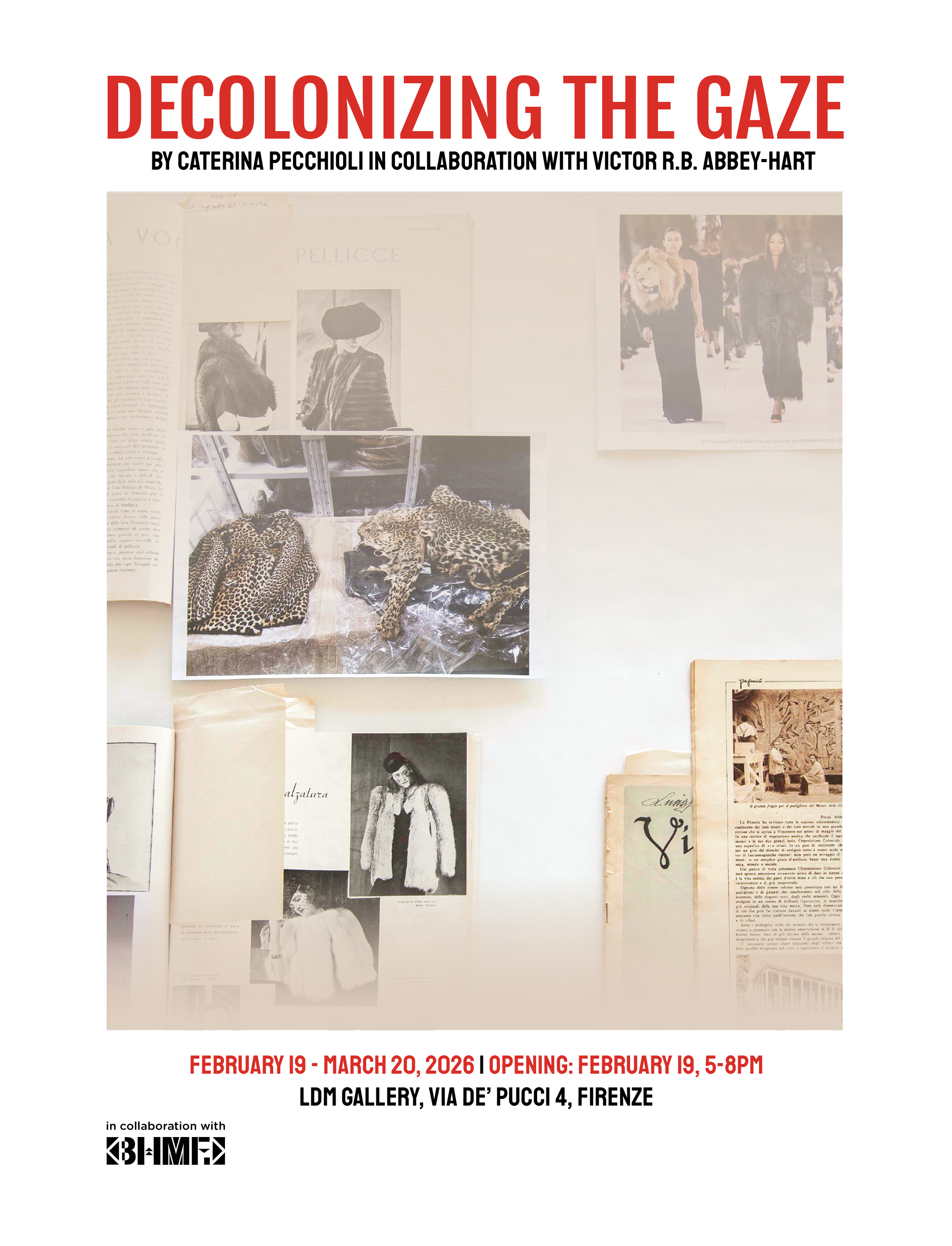
Decolonizing the Gaze is an ongoing participative artistic and research project by the artist Caterina Pecchioli that approaches colonialism by investigating fashion and textile design, combining aesthetics, history, and activism to critically approach the colonial legacy through material culture.

The research took place in the deposits of museums in Italy and the Netherlands, in particular Ex_Museo Coloniale, Museo delle Civiltà in Rome, critically examining fabrics, clothing and archive material. The discussion, involving stylists, artists and fashion designers from African countries and other states with a history of Italian and Dutch colonization, has allowed to examine new points of view and to identify new meanings in fashion practices and body politics that were widespread during the colonial period, and their effects on the individual and the collective imagination.The LdM Gallery will present the project in the form of an exhibition with works by Caterina Pecchioli in collaboration with Victor R.B. Abbey-Hart, during the 2026 edition of the BHMF.

Read the full interview with the artists here!

DECOLONIZING THE GAZE

By Caterina Pecchioli in collaboration with Victor R.B. Abbey-Hart

Opening Thursday February 19th, 5pm

From February 19 to March 20th

LdM Gallery, Via de’Pucci, 4 Florence

Gallery coordinator: Špela Zidar
Gallery intern: Alexandria Swanson, Isabella Walejko

In collaboration with BHMF – Black History Month Florence


About LdM Gallery

The LdM Gallery is a project by Istituto Lorenzo de’ Medici, an interdisciplinary space where academic research and artistic experimentation meet within a professional setting.

[email protected] www.ldminstitute.com  [email protected]
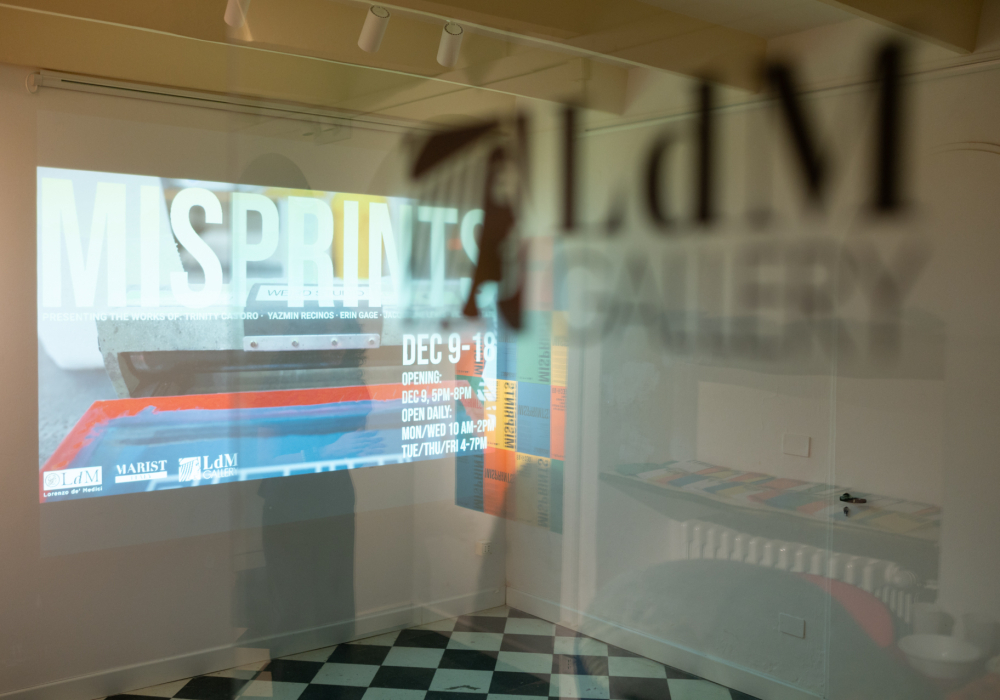
Misprints

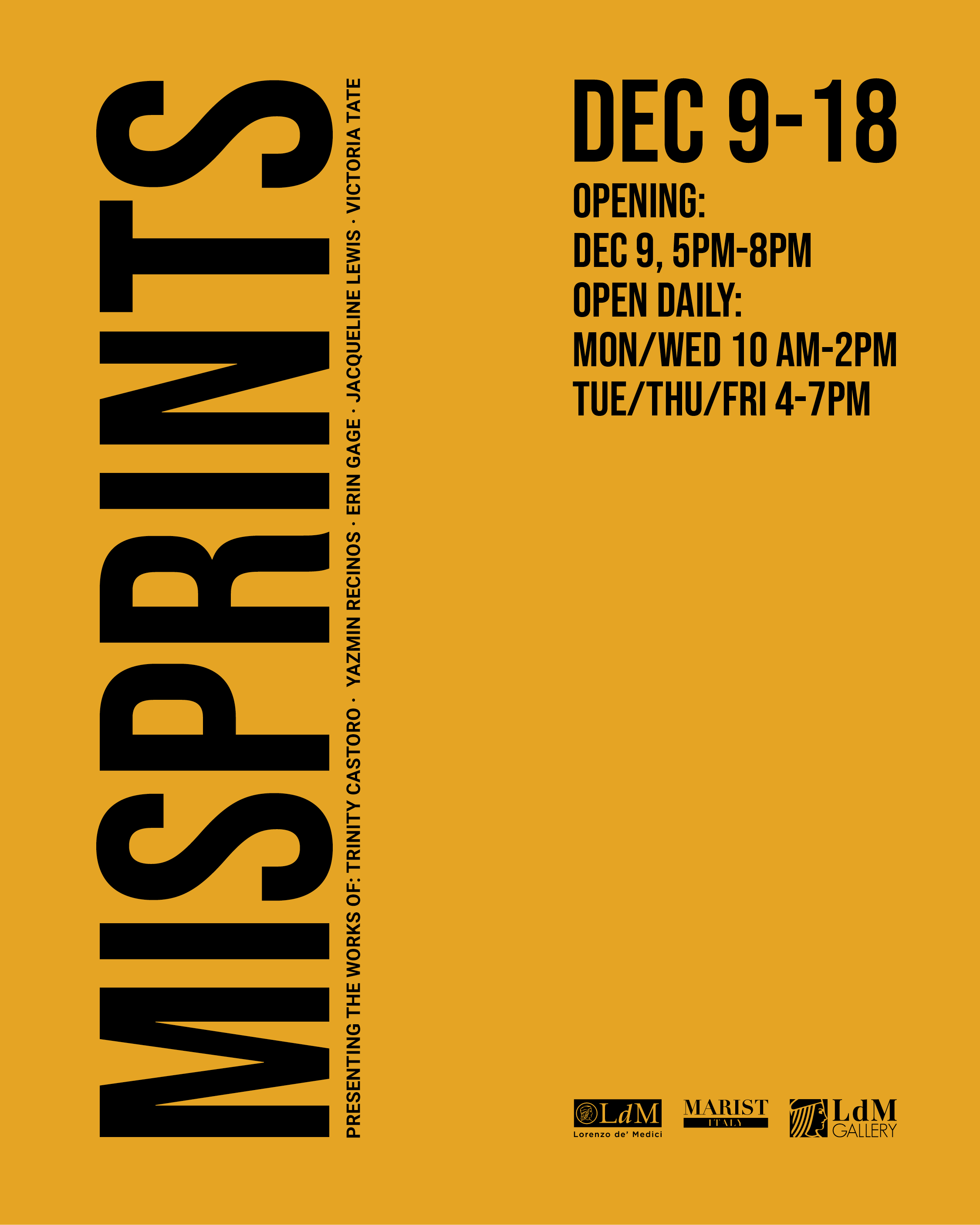
PRESENTING THE WORKS OF: JACQUELINE LEWIS , VICTORIA TATE, ERIN GAGE, YAZMIN RECINOS, TRINITY CASTORO

DEVELOPED IN COLLABORATION WITH: WEIRD STUDIO + COLLA COLLA

UNDER THE GUIDANCE OF LDM GRAPHIC DESIGN INSTRUCTOR: ANNA CEDERUS

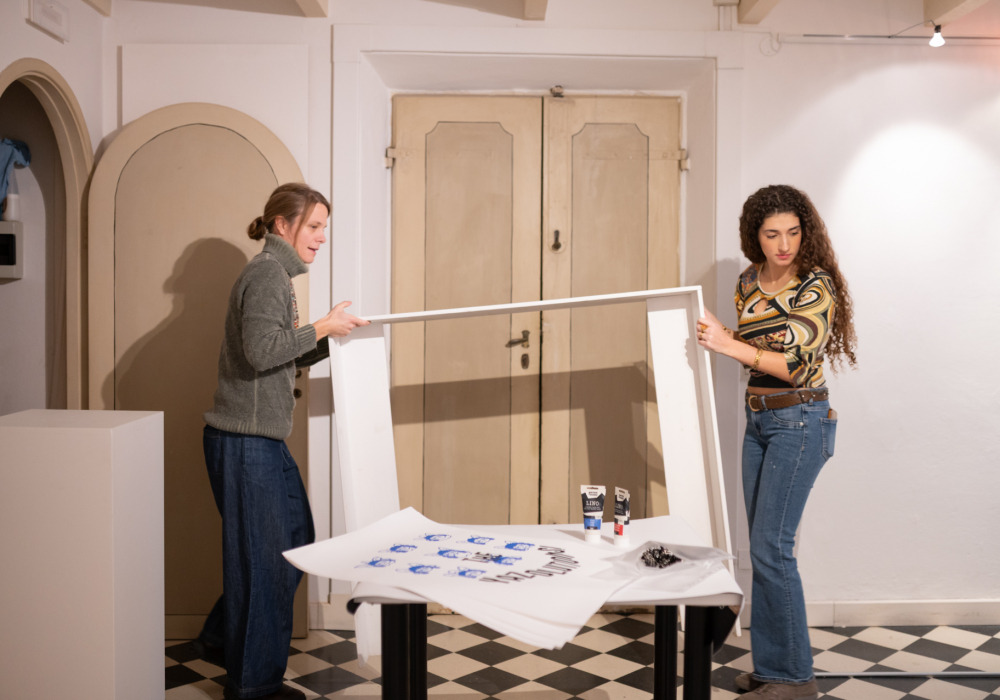
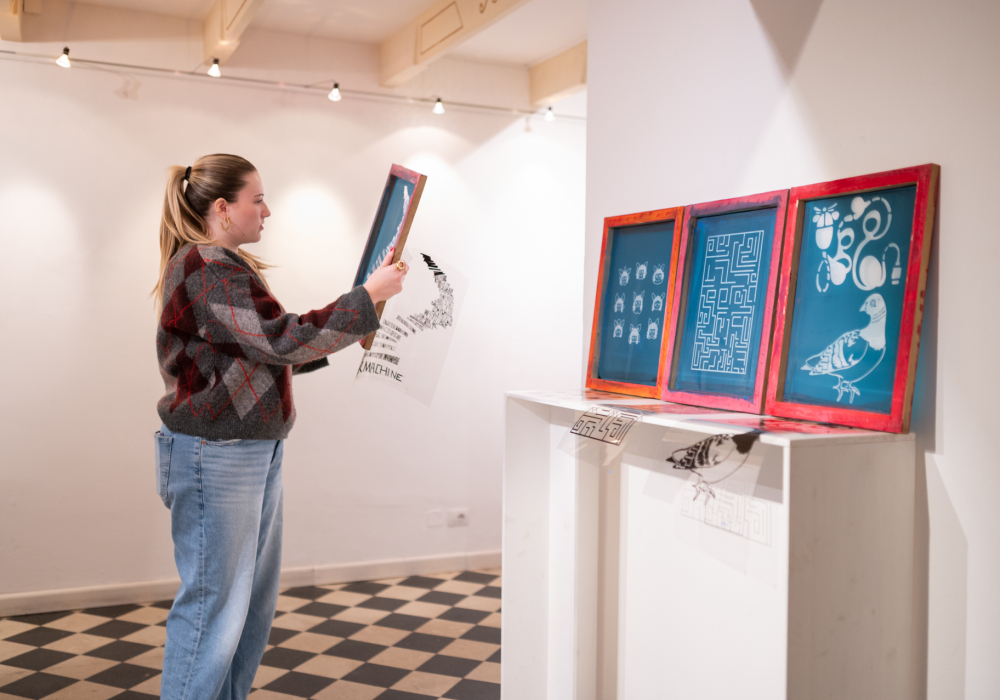
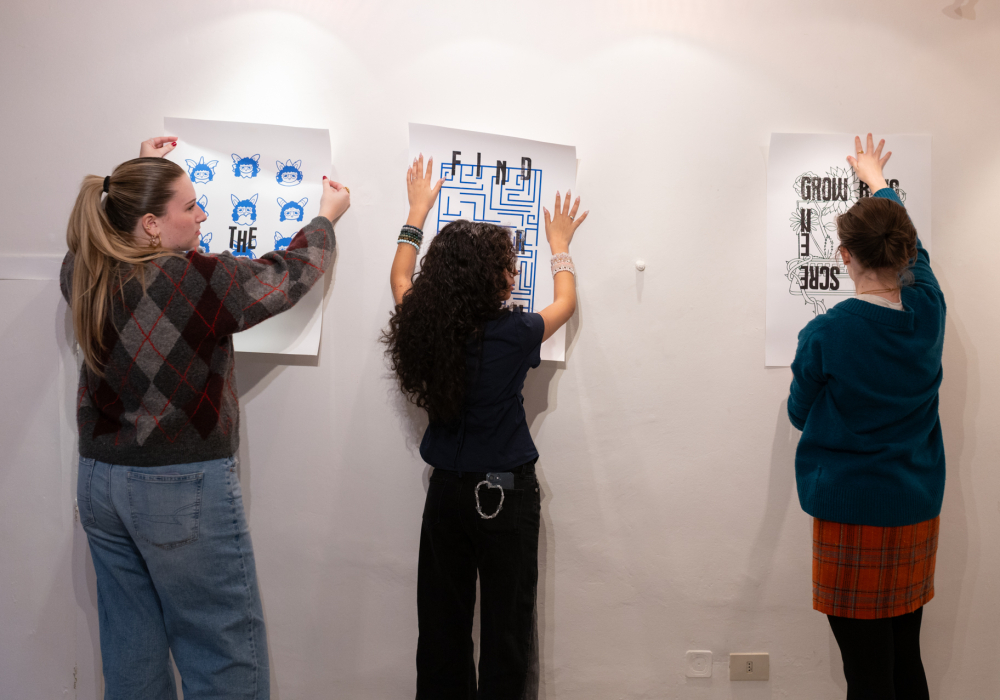
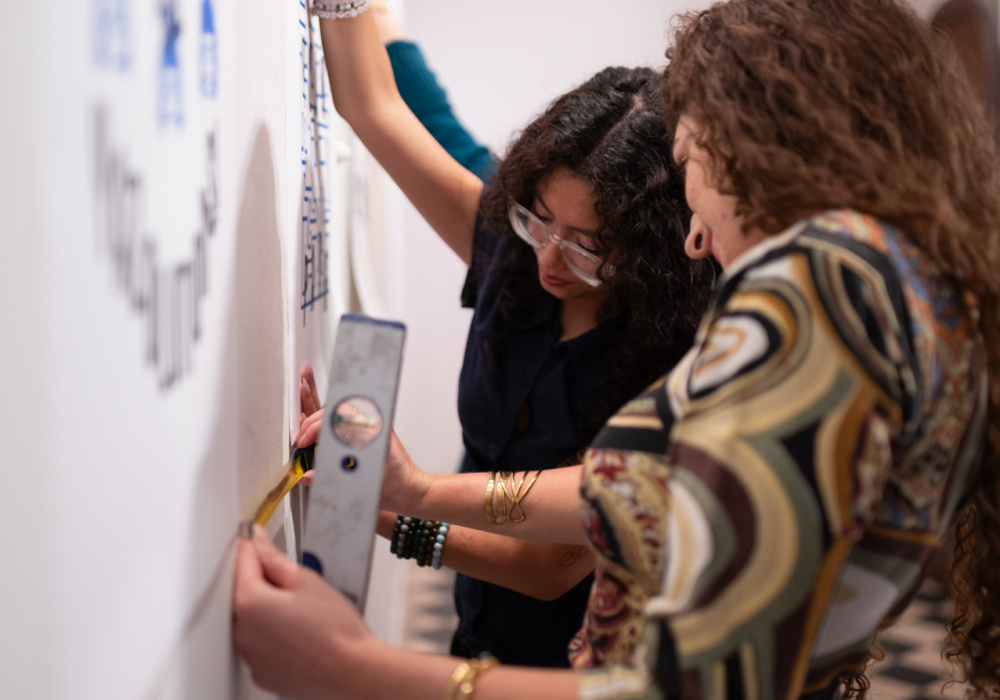
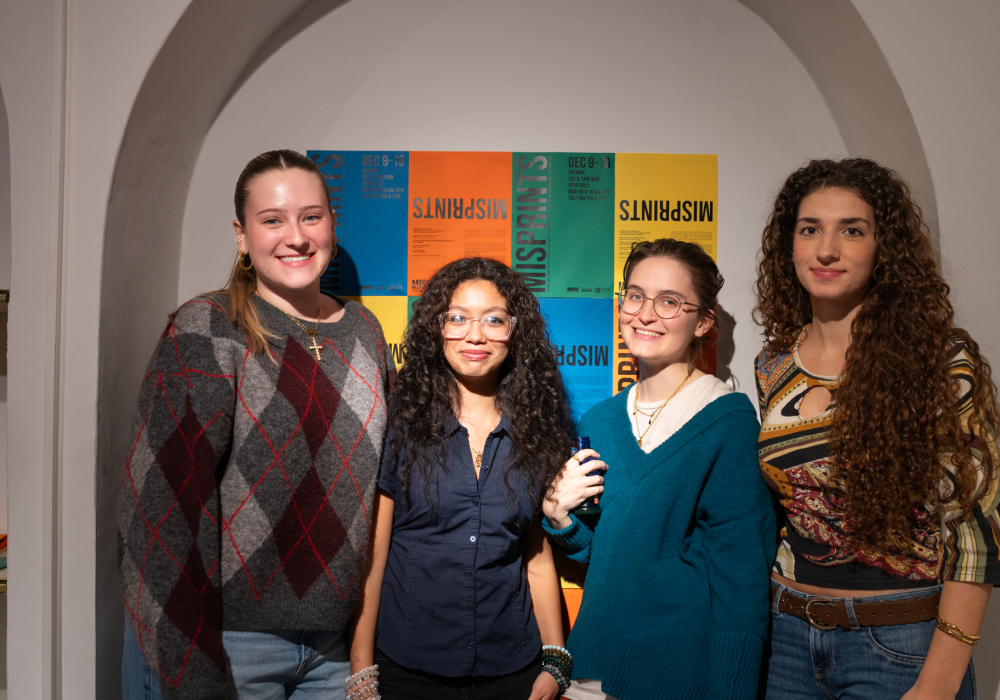
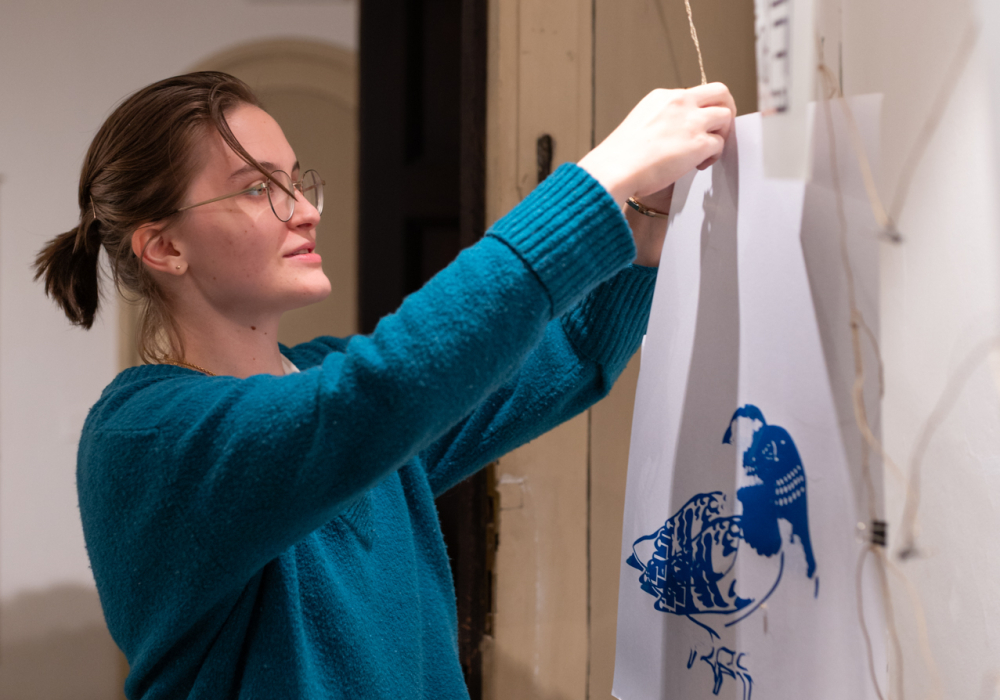
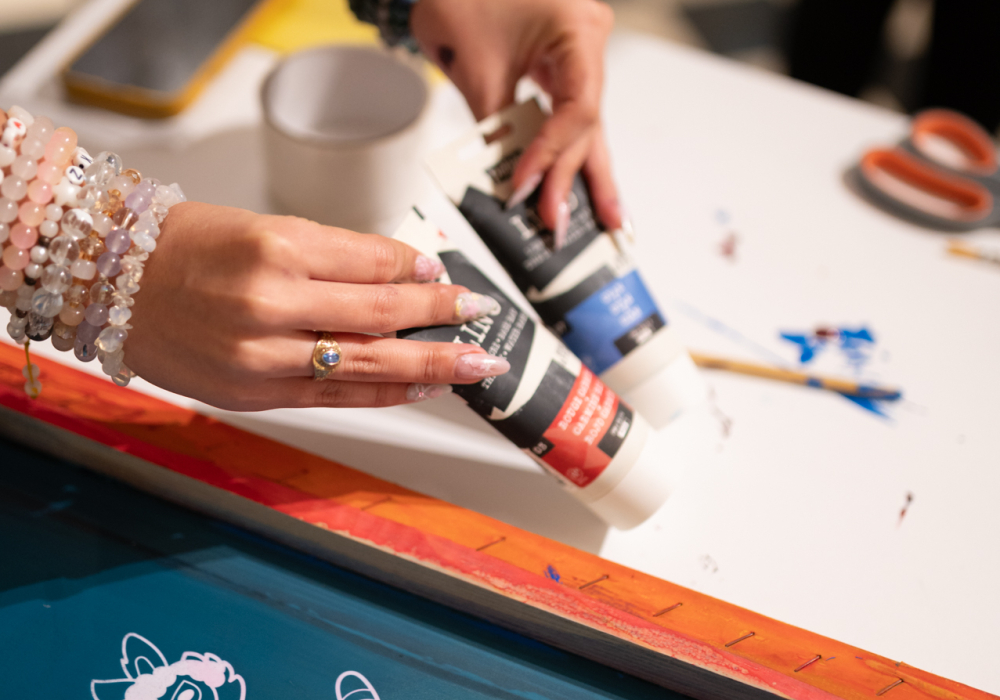
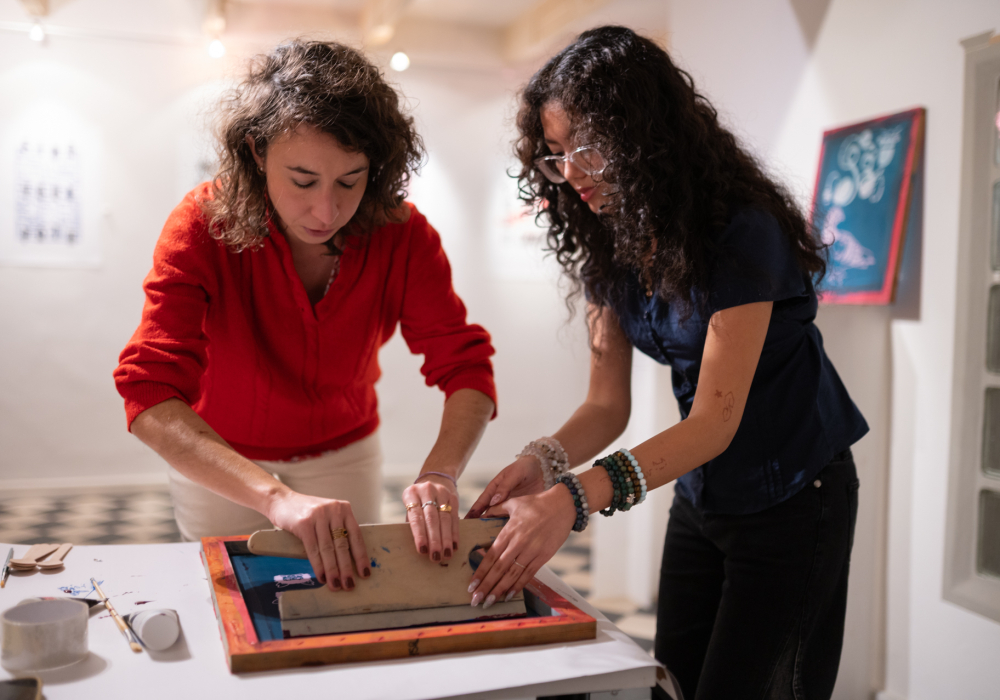
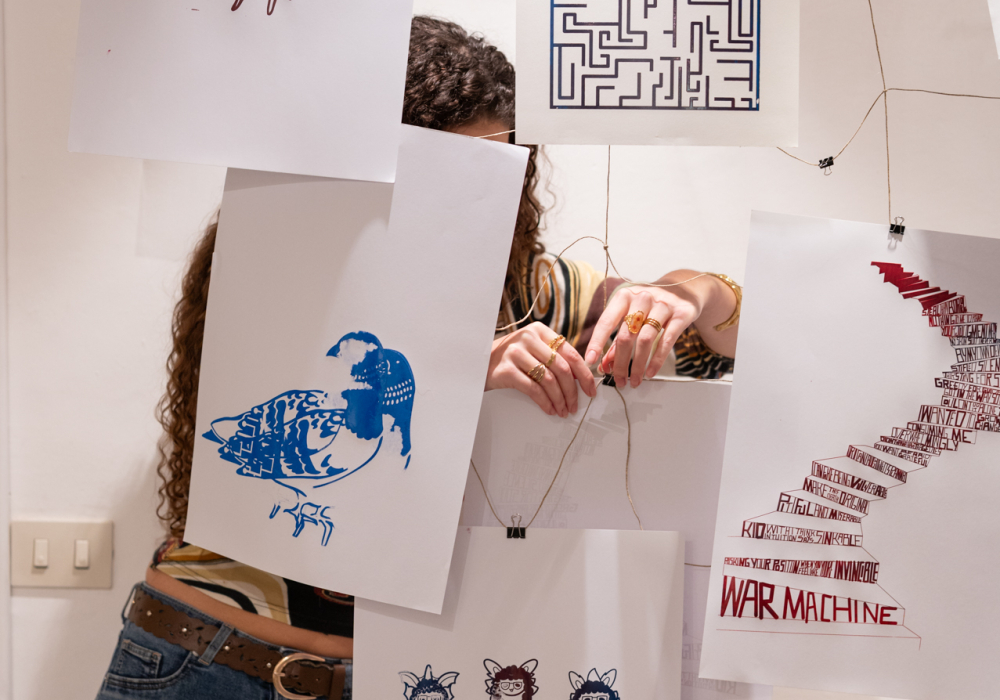
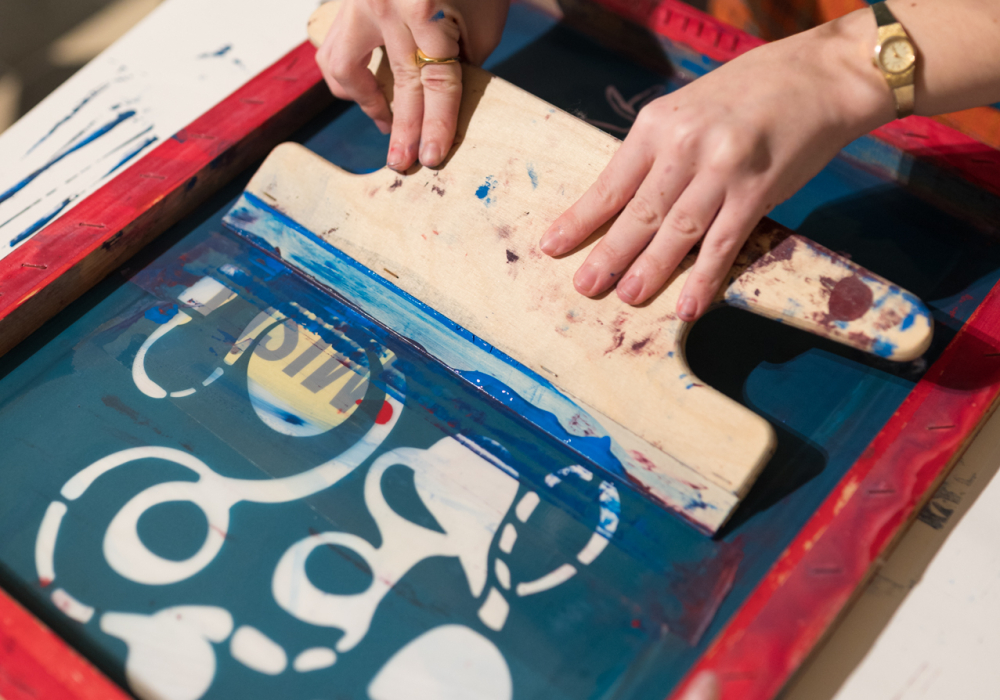
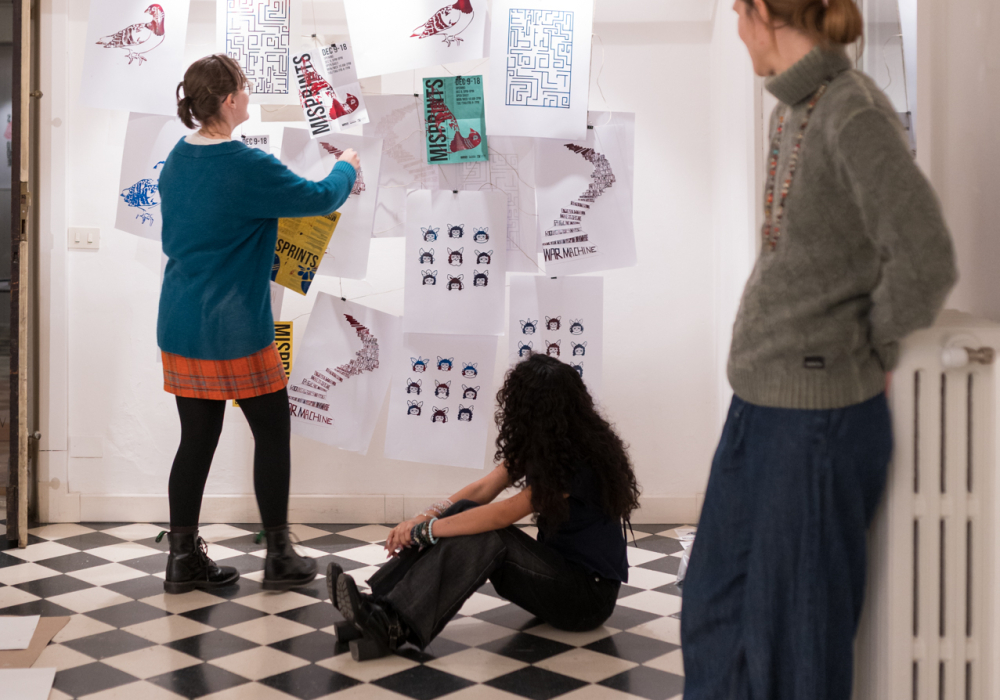
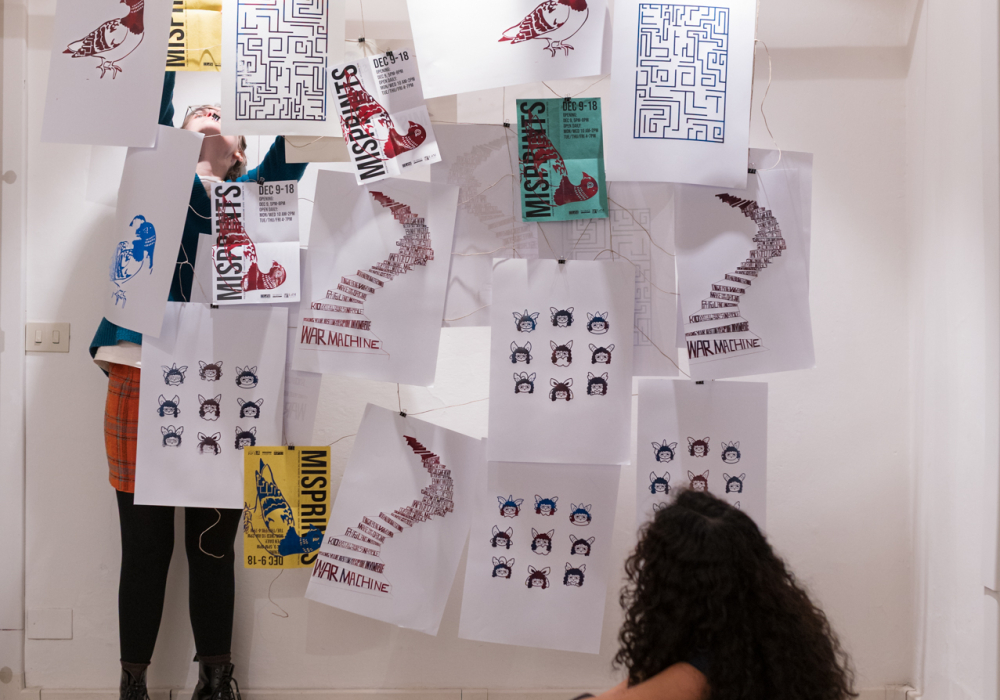
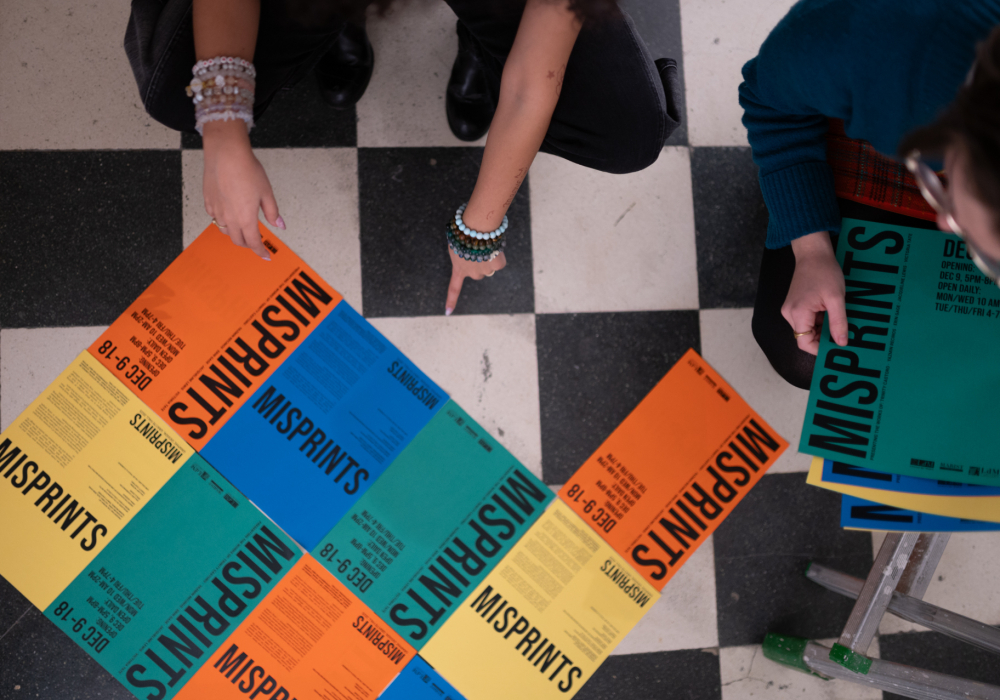
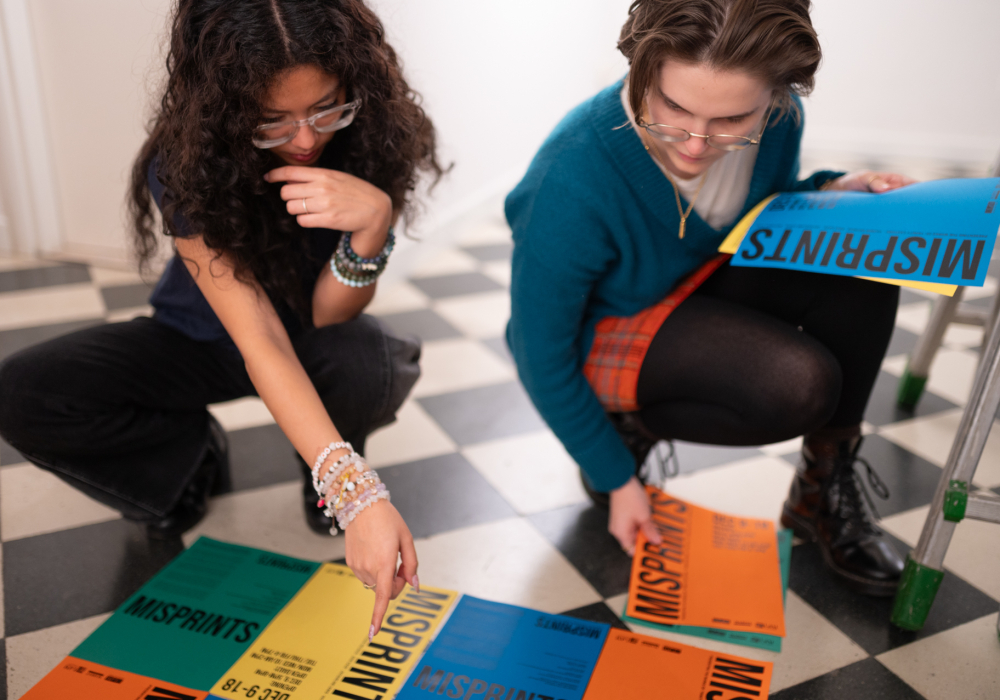
Today we create quickly, consume even faster, and too often mistake software proficiency for creative thinking or design skill. Digital tools make everything appear effortless; they create the illusion that ideas emerge instantly and that the medium will resolve the design for us. This exhibition is the outcome of a semester-long project developed by the Fall 2025 LdM Graphic Design students. Through a manual workshop in silkscreen and letterpress printing, the course offered a deliberate pause, an analog break designed to rebuild confidence in using simple, centuries-old printing techniques. Students were asked to communicate meaning through symbolism, metaphor, and visual tension: searching for direction (Find Your Way), examining the overlap between digital and physical identity (Blurred Realities), or reflecting on personal development (Grow Beyond the Screen). To reach these outcomes, they began with hand-drawn sketches, moved into vector refinement, and then returned to the physical world to print the final work. This analog detour is not about nostalgia or rejecting technology. It is a reminder that design is built on decisions, intent, and the ability to communicate through form, concept, and metaphor, long before any software gets involved.

GALLERY COORDINATOR: ŠPELA ZIDAR

GALLERY INTERN: TRINITY CASTORO

LDM GALLERY, VIA DE’ PUCCI 4, FLORENCE

About LdM Gallery

The LdM Gallery is a project by Istituto Lorenzo de’ Medici, an interdisciplinary space where academic research and artistic experimentation meet within a professional setting.

Every LdM Student, professor, or staff member can participate in this project!


The LdM Gallery is a project by Istituto Lorenzo de’ Medici, an interdisciplinary space where academic research and artistic experimentation meet within a professional setting.

[email protected] www.ldminstitute.com  [email protected]
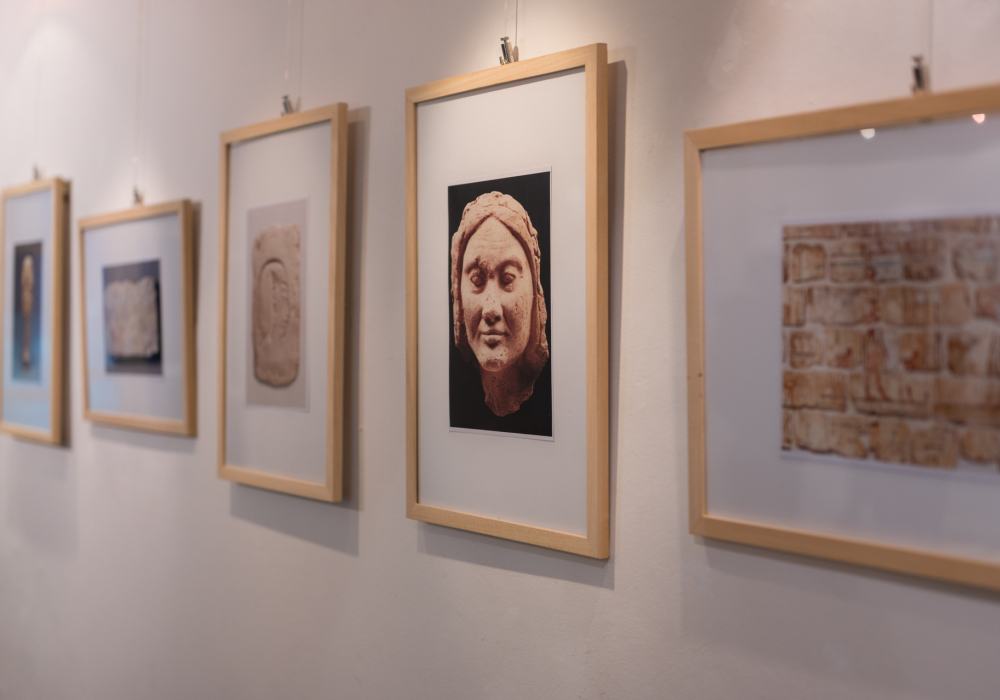
Amarana Vision

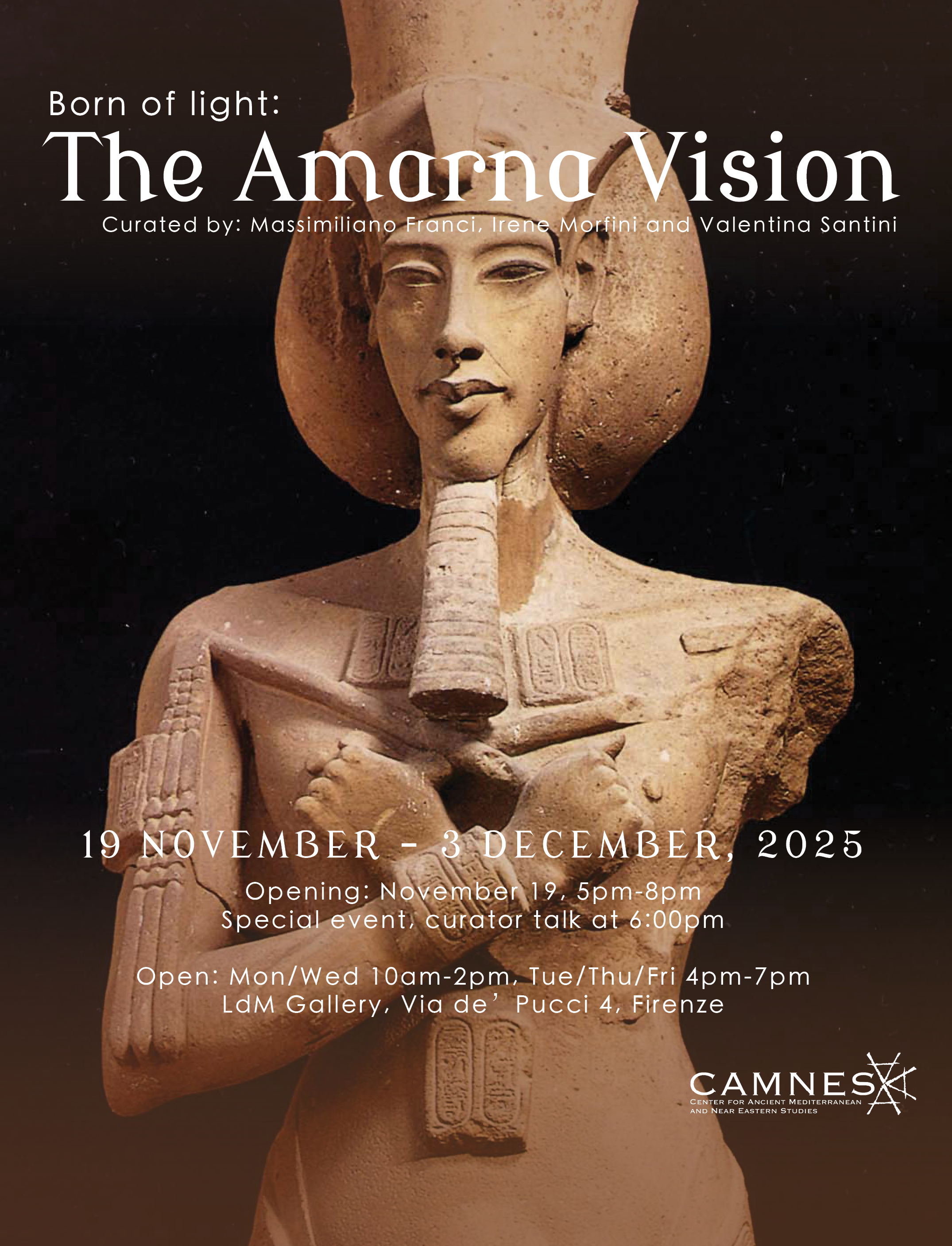
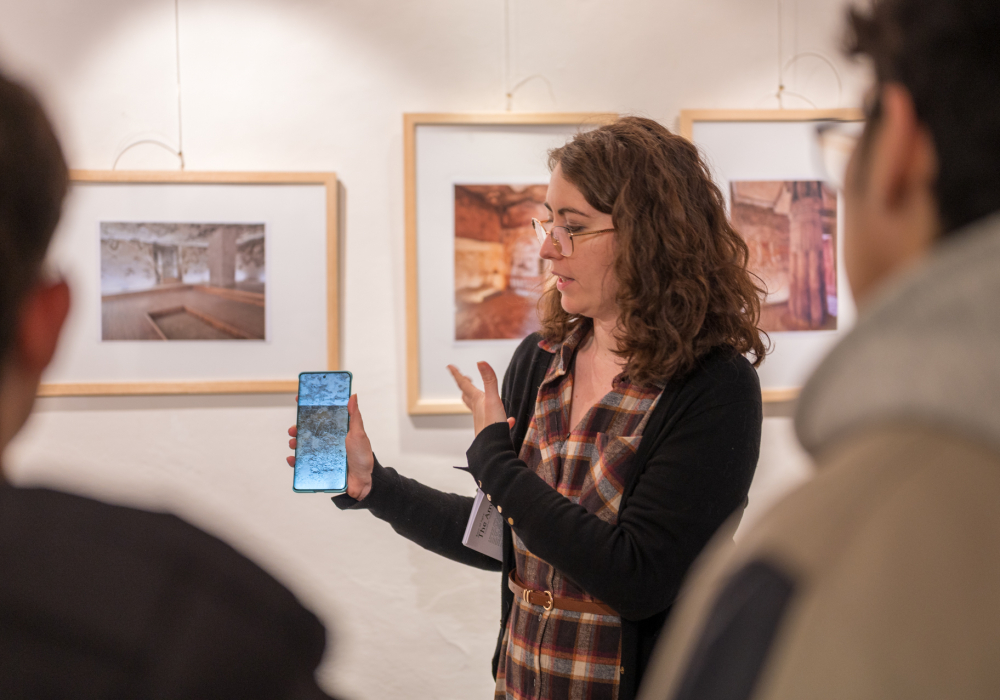
LdM Gallery in collaboration with CAMNES –  Center for Ancient Mediterranean and Near Eastern Studies, is pleased to present Born of Light: The Amarna Vision curated by Massimiliano Franci, Irene Morfini and Valentina Santini.

A brand-new capital, built from scratch in record time; a revolutionary art form, driven by an extreme – sometimes even exaggerated – naturalism; an once-marginal god elevated to supreme ruler of the whole pantheon; and a major god – until then the foremost in ancient Egyptian religion – literally erased from every visible surface, to obliterate his memory from History. These are the hallmarks for one of the most extraordinary epochs of the ancient Egypt: the Amarna Period.

This revolutionary era – spanning the reign of pharaoh Akhenaten and that of his immediate successors, and lasting for roughly 20 years (1350–1330 BCE) – stands at the heart of this exhibition, which aims to guide the visitor through the sweeping transformations that defined the Amarna Period and to show them what made this brief moment in time so unique.

Step back into the 14th century BCE, to glimpse the ancient Egyptian society during this radical and subversive age, and to meet the pharaoh who shattered centuries of orthodoxy, by defying tradition itself: Akhenaten. 

BIO curators:

Massimiliano Franci is an Associate Professor of Egyptology and Food Anthropology at CAMNES-LdM Institute. He was the secretary of the International Congress of Egyptologists, held in Florence in 2015. He participated in numerous international conferences and is the author of many scientific contributions, such as: “Rethinking Osiris (Rome 2021)” in collaboration with Salima Ikram (AUC) and Irene Morfini (CAMNES), and “The Stelae of Khentykhetjwn and the Ancient Egyptian Lexical Field of ‘The man, ages, and Kinship’: an invitation to an Anthropological Analysis (Cairo 2022)”. Among his recent projects is the development of new information technologies for the analysis of Egyptian artifacts in partnership with the CNR and the University of Florence.

Irene Morfini is an Egyptologist and Archaeologist. She graduated in Egyptology from both the University of Pisa in Italy and at the University of Leiden in the Netherlands. In 2019 she obtained her PhD at the University of Leiden. She’s participated in numerous excavations in Italy since 2000 and in Egypt since 2007. Since 2013 she has been co-director of the Min Project in Luxor. She has been vice-president of the Canarian Association of Egyptology who carries out research and dissemination of knowledge in the field of the archaeological, historical and scientific heritage of ancient Egypt and has been developing cultural projects in Egypt, Cuba and Ghana since 2011. Since 2017 she has been part of the staff of CAMNES. From 2019 till 2022 she has been working in the field for the EU-funded project ‘Transforming the Egyptian Museum in Cairo’, for the National Museum of Antiquities of Leiden and for the Museo Egizio of Turin.

Valentina Santini is Egyptologist and responsible for communication at the centre for archaeological studies CAMNES, based in Florence (Italy), and is currently pursuing her PhD in Egyptology at the University of Birmingham (UK), with a thesis focused on the analysis of New Kingdom bereavement scenes from a psychological and anthropological standpoint. She is also involved in the Egypopcult Project, which aims to promote the study of the perception of ancient Egypt in contemporary cultures, and is part of the Editorial Board of the magazine Scoprire l’Antico Egitto (Sprea Ed.), intended for the wider public. She recently co-edited the volume Sacredness at Deir el-Medina (Arbor Sapientiae). She has participated in numerous international conferences, authored various scientific papers, and published books for a broad audience.

About LdM Gallery

The LdM Gallery is a project by Istituto Lorenzo de’ Medici, an interdisciplinary space where academic research and artistic experimentation meet within a professional setting.

Every LdM Student, professor, or staff member can participate in this project!


The LdM Gallery is a project by Istituto Lorenzo de’ Medici, an interdisciplinary space where academic research and artistic experimentation meet within a professional setting.

[email protected] www.ldminstitute.com  [email protected]
Blave – Archive

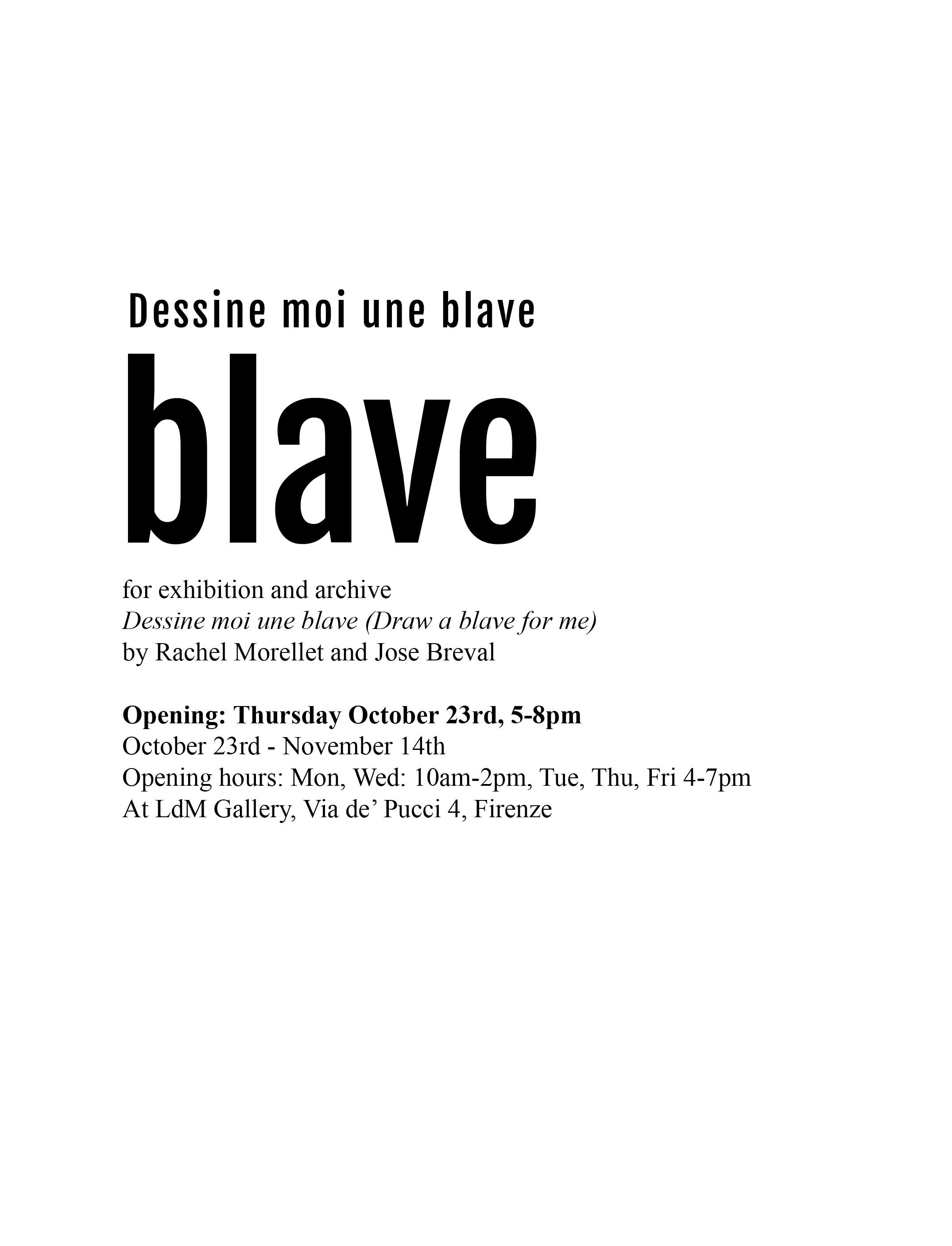
LdM Gallery, in collaboration with @dessine_moi_une_blave projects, promotes an Open Call for artworks for exhibition and archive 

DESSINE MOI UNE BLAVE (Draw a blave for me)

@dessine_moi_une_blave is a project by Rachel Morellet & José Bréval.

“Imagination is more important than knowledge,” said A. Einstein, “because knowledge is limited to all we know and understand, as imagination embraces the entire world. Imagination is the only thing that can open our minds and our hearts to the possible; it is what gives us the power to invent.”


The Story of the Blave – What?

Years ago, in the enchanting landscapes of the south of France, a whimsical tale began to weave its way into the hearts and minds of those who dared to listen. It all started with an evening among friends, where I, under the influence of the local Corbières wine or perhaps some hidden muse, shared a peculiar revelation. 

In hushed tones, I spoke of a mystical being that materializes under specific conditions – a creature known only as the “Blave.” I illustrated rough shapes on the table, depicting Blaves emerging from space, the abyss, or the vastness of the ocean. Cryptic words accompanied these drawings, deepening the mystery. 

However, skepticism hung heavy in the air, as my friends, their senses tinged with the taste of wine, questioned whether the Blave was a product of artistic grandstanding or a genuine creation of the imagination. 

Time passed, and Rachel Morellet, a participant in that fateful evening, took it upon herself to breathe life into the elusive Blave. She initiated the “Dessine-moi une Blave” project – a collective endeavor inviting contributions from anyone willing to share their interpretation of this enigmatic creature. 

The response was overwhelming. A multitude of drawings and texts poured in, offering diverse perspectives on what a Blave could be, its characteristics, actions, and more. The once-questionable existence of the Blave became a canvas for boundless creativity and imagination. 

While the term “blave” may have an obscure origin in old French dictionaries, referring to a small pocket handkerchief floating on the sea waves, the project “Dessine-moi une Blave” has transformed it into a symbol of limitless possibility, sparking the evolution of a new fantastical species. 

Now, as the collection of Blaves continues to grow, the question arises: What can we do? 

In the realms of science, the Blave could inspire ecological studies, prompting researchers to explore the potential impact of this imaginary being on ecosystems. Could the Blave serve as a metaphor for the delicate balance of nature, encouraging environmental awareness and conservation efforts? 

In the realm of art, the Blave could become a muse for various creative endeavors. Artists might find inspiration in the diverse interpretations, leading to exhibitions, performances, or even collaborative projects across different artistic disciplines. The Blave could transcend its fictional origins, becoming a symbol of unity through artistic expression. 

Moreover, the Blave might serve as a catalyst for storytelling and literature, with writers crafting tales of Blaves exploring uncharted territories, encountering mythical creatures, or embarking on quests that mirror the collective human experience. 

Ultimately, “Dessine-moi une Blave” has not merely birthed a creature; it has sparked a cultural phenomenon. The Blave, once a whisper in the wind, has grown into a shared creation that transcends the boundaries of imagination, inviting us all to explore the wonders of creativity, collaboration, and the limitless possibilities that lie within the realms of art and science. 

Participants

Duccio Abate, Marco Acquafredda, Josefina Ahumada, Anouk Aldegher, Sylvie Arena, Marie Astier, Fabrizio Basso, Silvia Bellandi, Devis Bergantin, Leonora Bisagno, Stefano Boccalini, Carla Brogi, José Bréval, Marina Maria Buratti, Myriam Cappelletti, Federica Cecchi, Shilha Cintelli, Maxine Christensen, Fabio Cresci, Cristina Crusciani, Filipe Da Rocha, Gandolfo Gabriele David, Sandra Dechezleprêtre, Elisabeth Délétang, Cinzia Delnevo, Delphine Denis, Axel Di Chiappari, Eyrine Dietzman, Kyana Dietzman, Diego Di Sepio, Raffaele Di Vaia, Graziano Dovichi, Manuel Fadat, Dino Ferruzzi, Barbara Fluvi, Alessio Fossi, Silvia Galasso – Francesco Gianmaria Bernabei, Nicolas Gal, Alexandre Gérard, Fabio Giusti, Pamela Gori, Stephane Granger, Nicolas Gruppo, Victoria Hawrys, Julie Hruba, Tianyang Huang, Inge Iacoviello, Iris, François Jacob, Suzy Kim, Scott Kuffner, Lori Lako, Valentina Lapolla, Julien Lavigne, Luis, Bartolo I. Marini, Christophe Morellet, Rachel Morellet, Bob Morse, Nicolas Mouton-Bareil, Florent Nicolas, Oblo Creature, Monserrat Perez Arteaga, Valeria Piccoli, Isabelle Pigeonnier, David Perahia, Nicolas Ramel, Barbel Reinhard, Duccio Ricciardelli, Bertrand Rigaux, Leandro Riecke, Nemo Riecke, Patrizia Sacchi, Lizzy Sainsbury, Eva Sauer, Caterina Sbrana, Alessandra Serra, Luca Sguanci, Margherita Sguanci, Simoncini –Tangi, Lucia Spennato, Chiara Tambani, Serena Tani, Aldo Thomas, Marco Ulivieri, Enrico Vezzi, Tatiana Villani, Victor Zabrockis, Elisa Zadi, Belinda Zhang, Marta Zunino, Sara Zunino

General info

Exhibition Title: Dessine moi une blave

Location: LDM Gallery, Via Dei Pucci 4 – Florence

Date: October 23rd until November 14th

Open: Mon/Wed 10 am-2 pm, Tue/Thu/Fri 4-7 pm

About LdM Gallery

The LdM Gallery is a project by Istituto Lorenzo de’ Medici, an interdisciplinary space where academic research and artistic experimentation meet within a professional setting.

Every LdM Student, professor, or staff member can participate in this project!


The LdM Gallery is a project by Istituto Lorenzo de’ Medici, an interdisciplinary space where academic research and artistic experimentation meet within a professional setting.

[email protected] www.ldminstitute.com  [email protected]
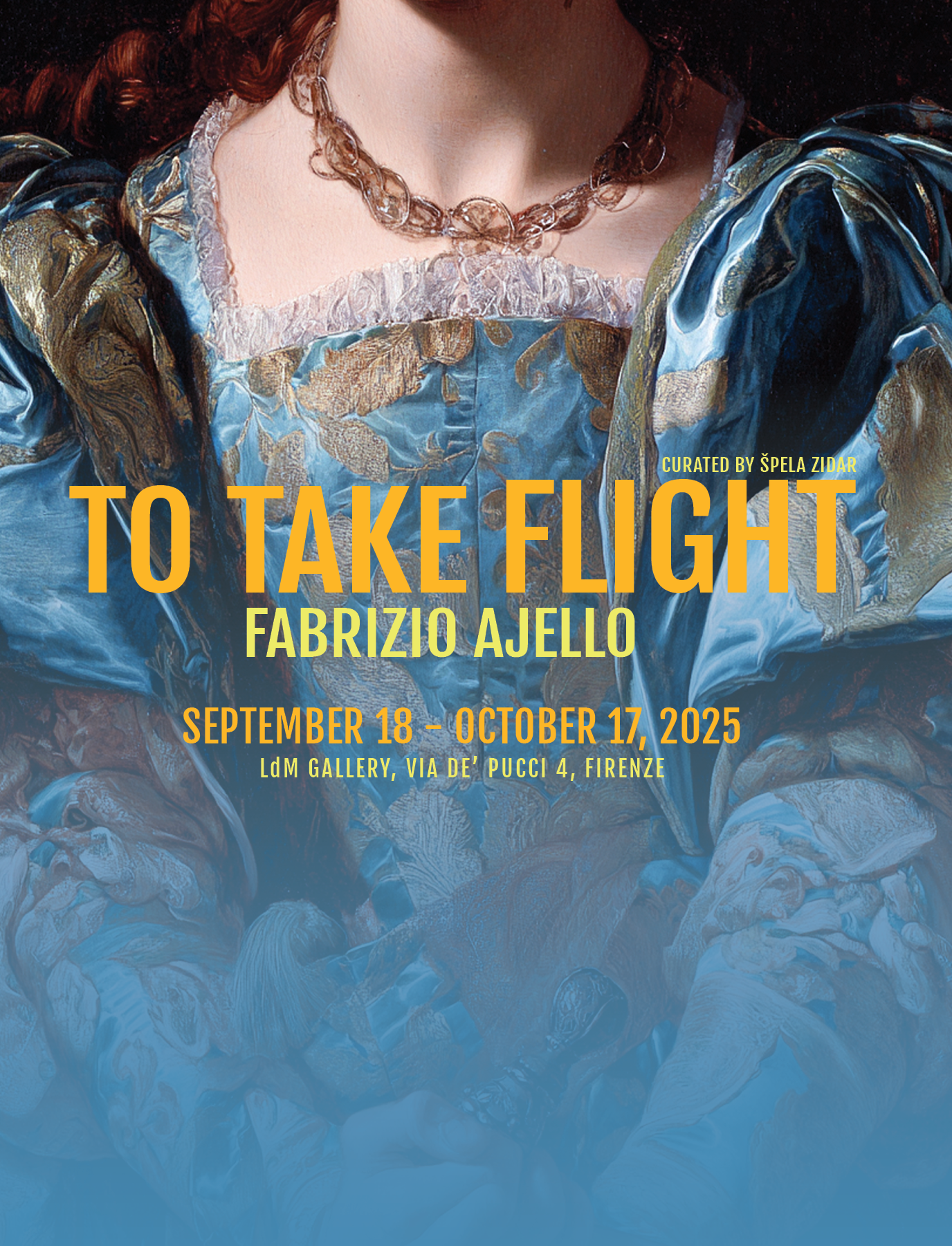
Fabrizio Ajello


To Take Flight

A cura di Spela Zidar
LdM Gallery, Via de’Pucci 4 FI
Sep 18 – Oct 17 2025
Opening: Thursday Sep 18, 5-8pm


About To Take Flight

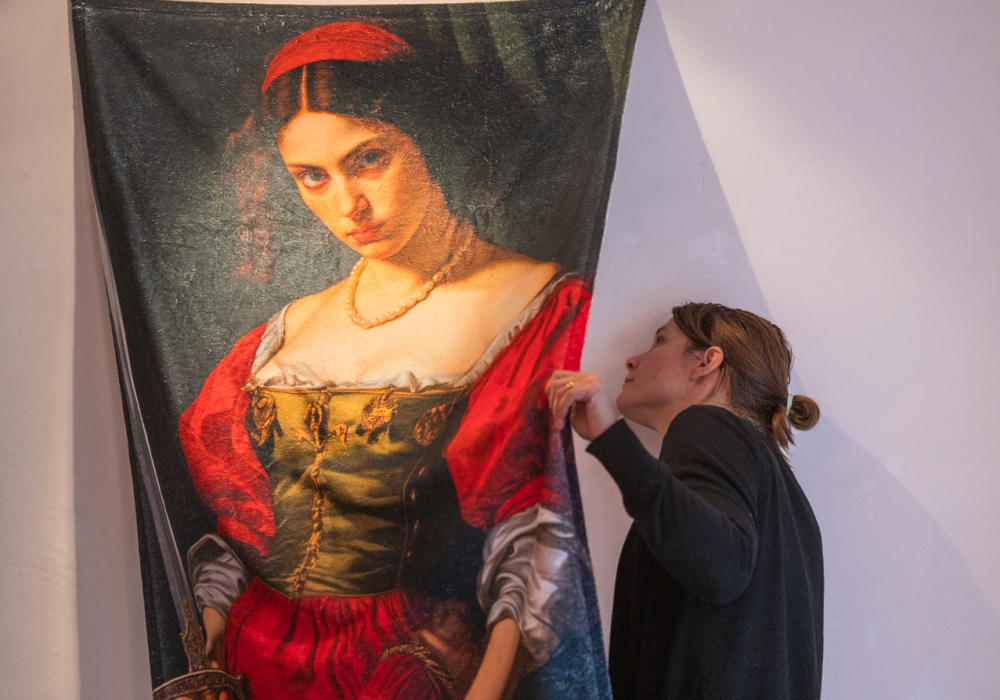
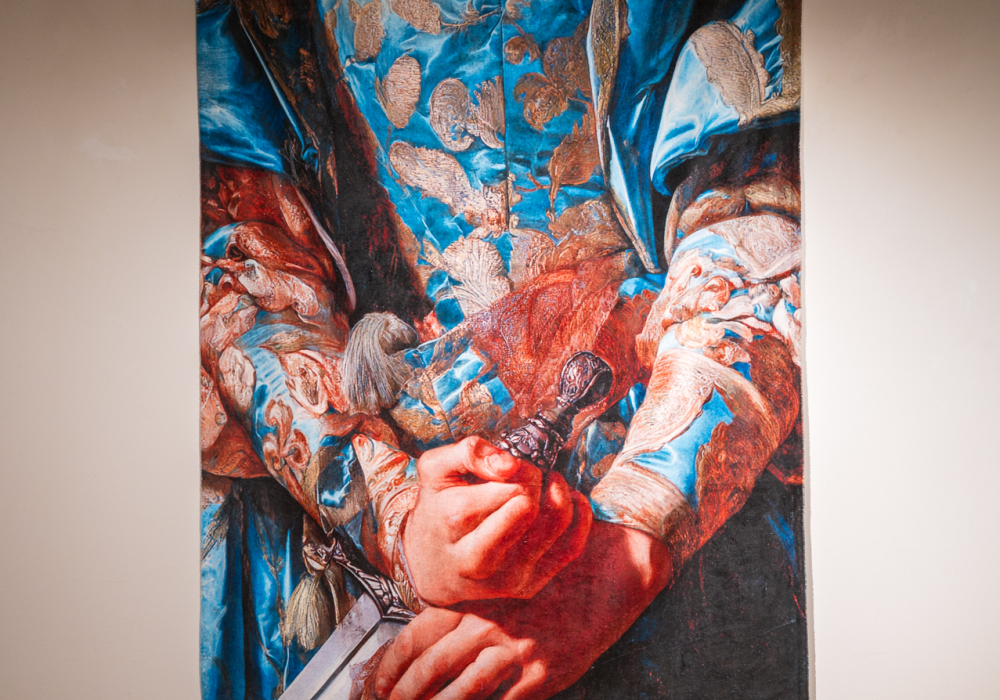
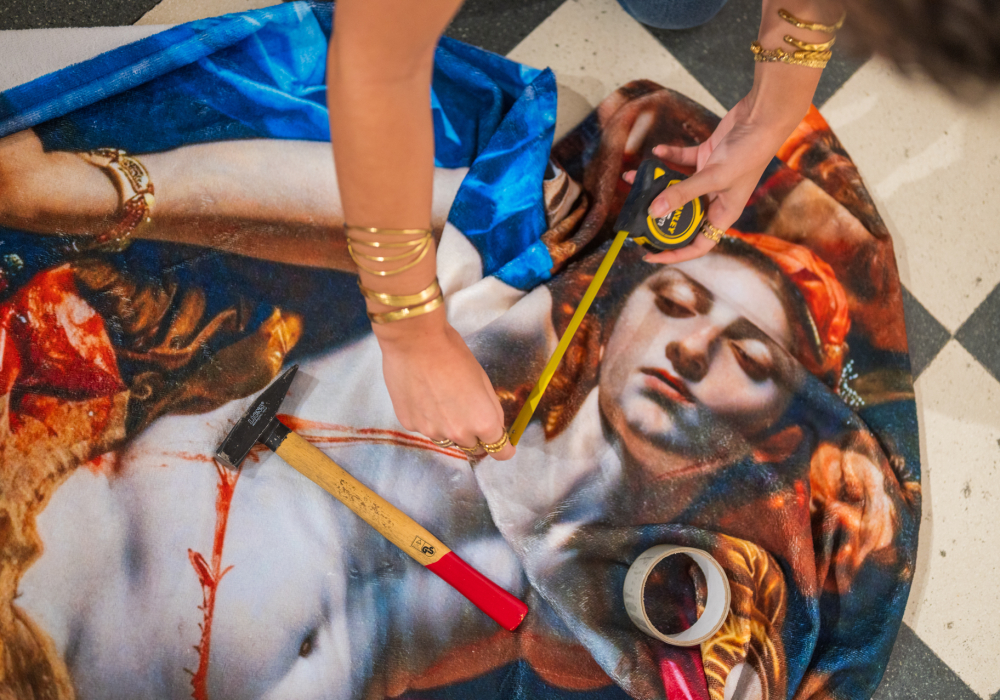
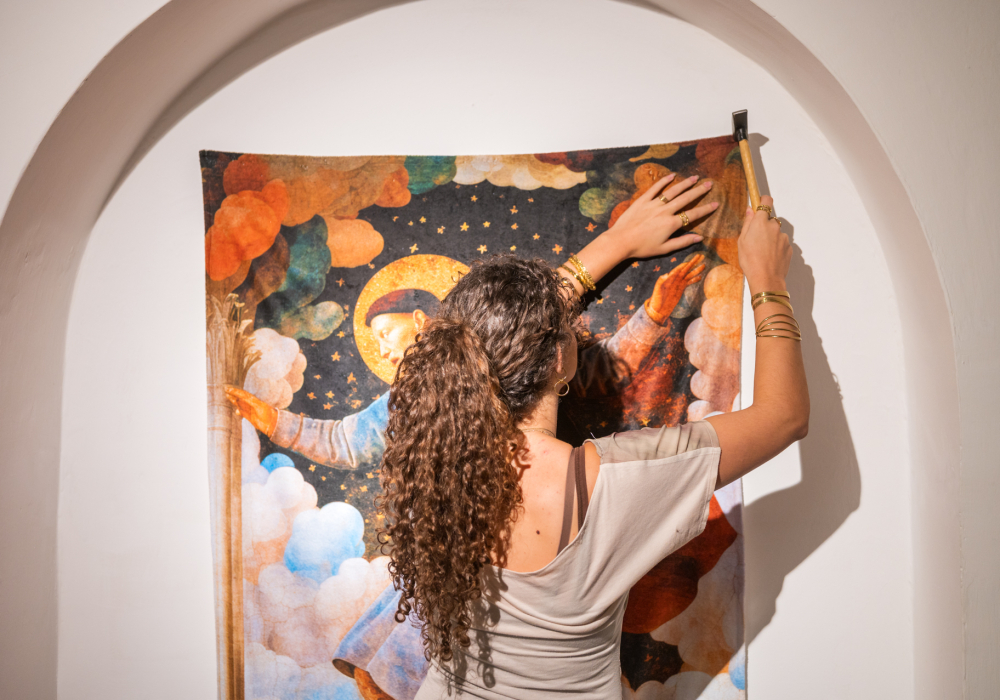
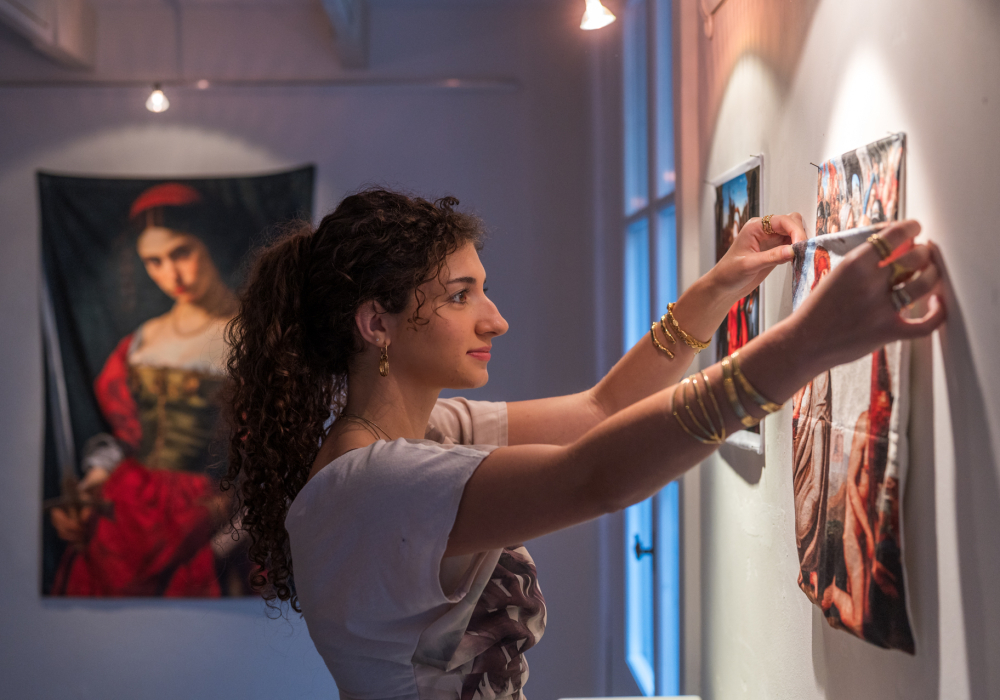
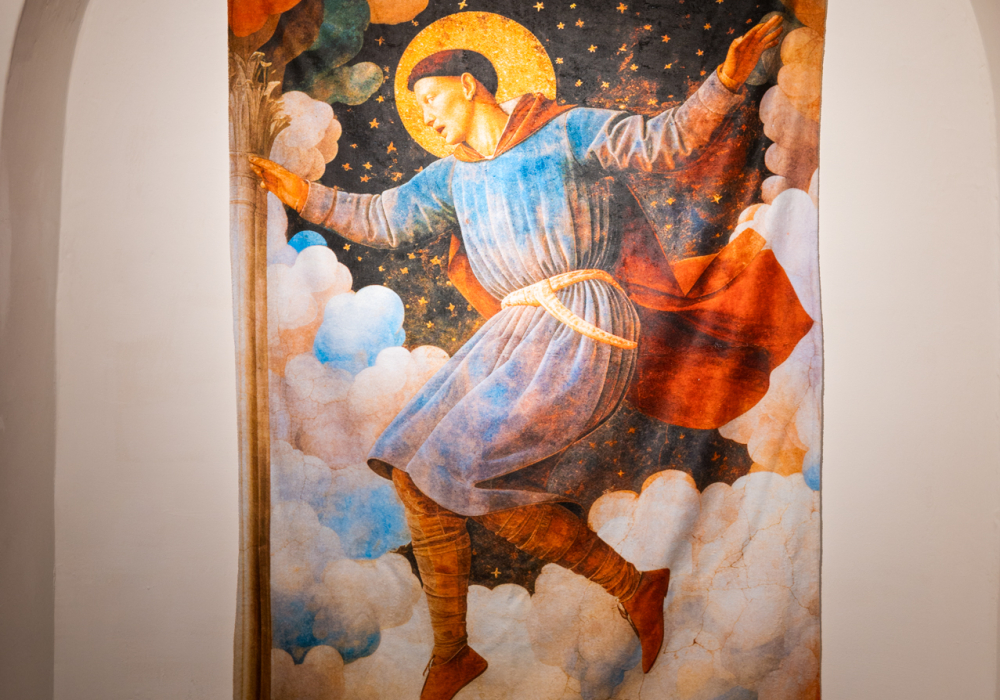
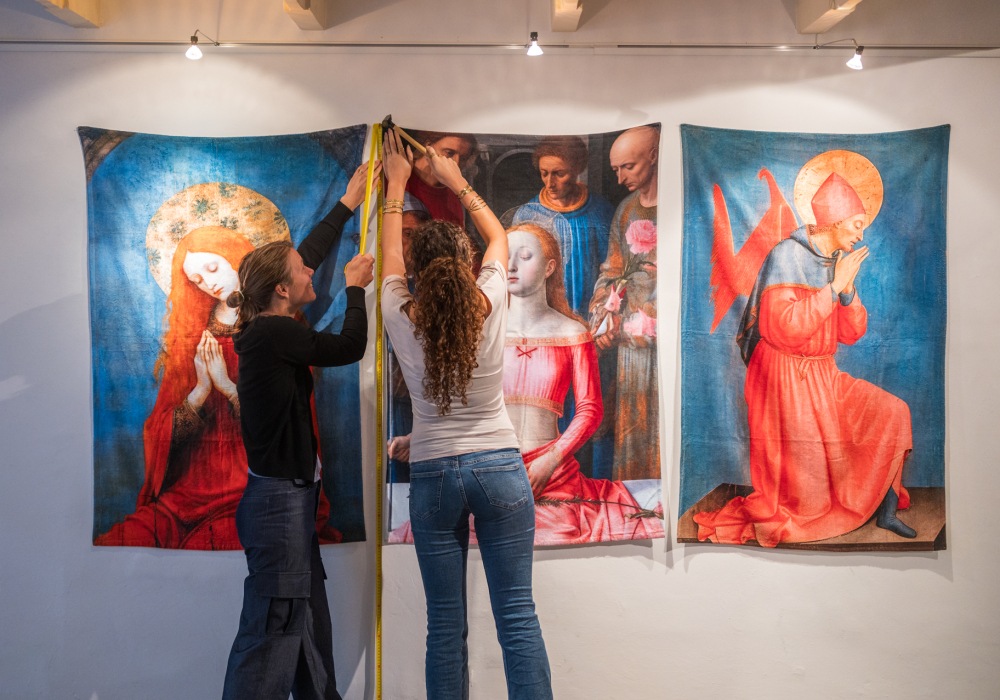
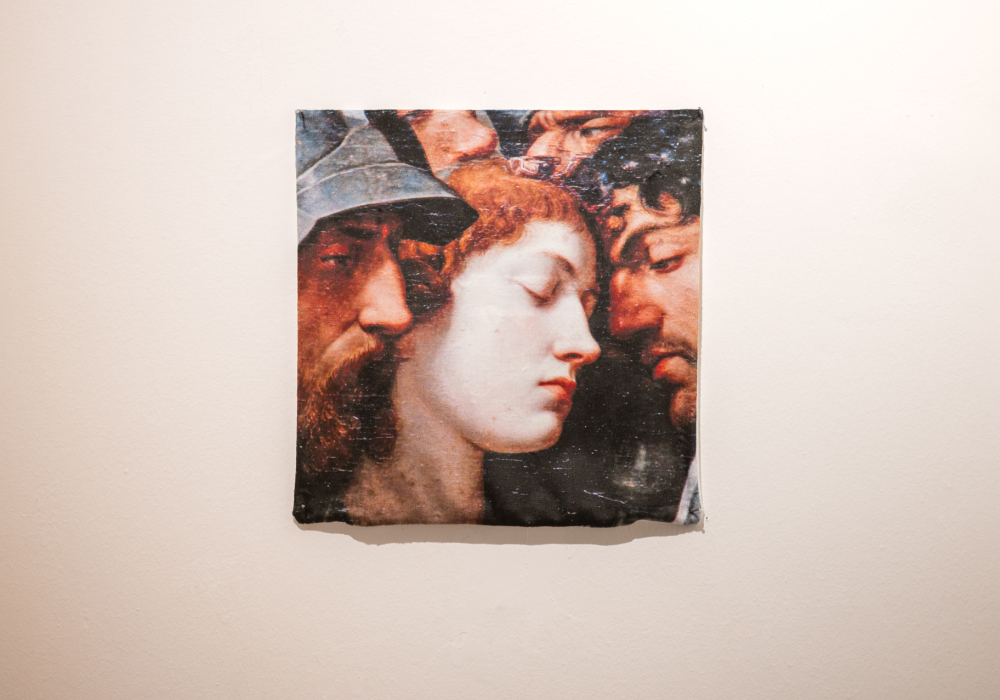
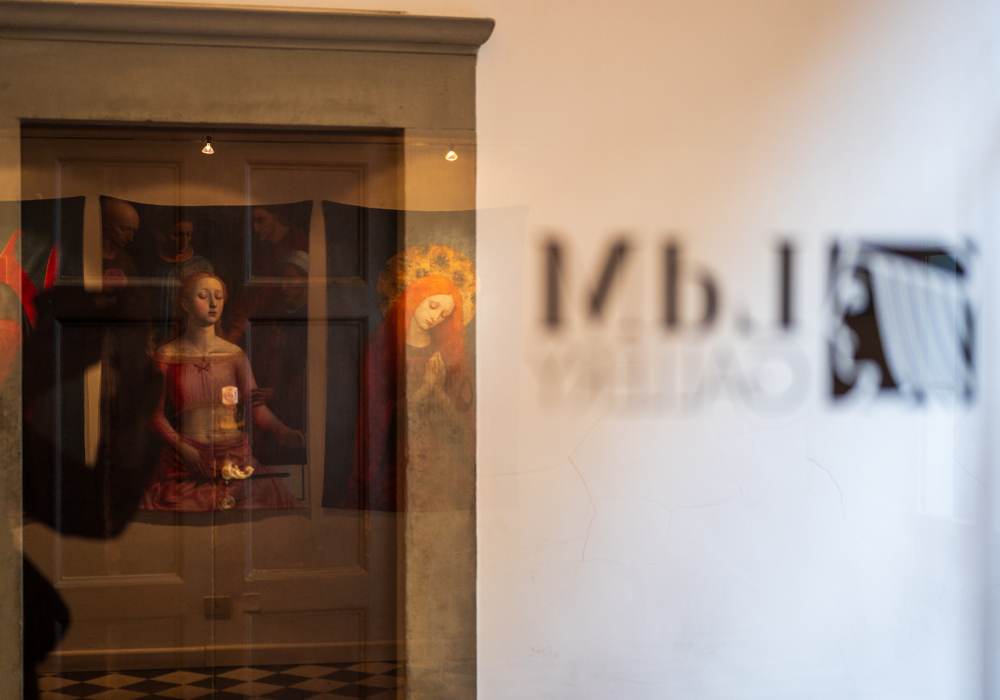
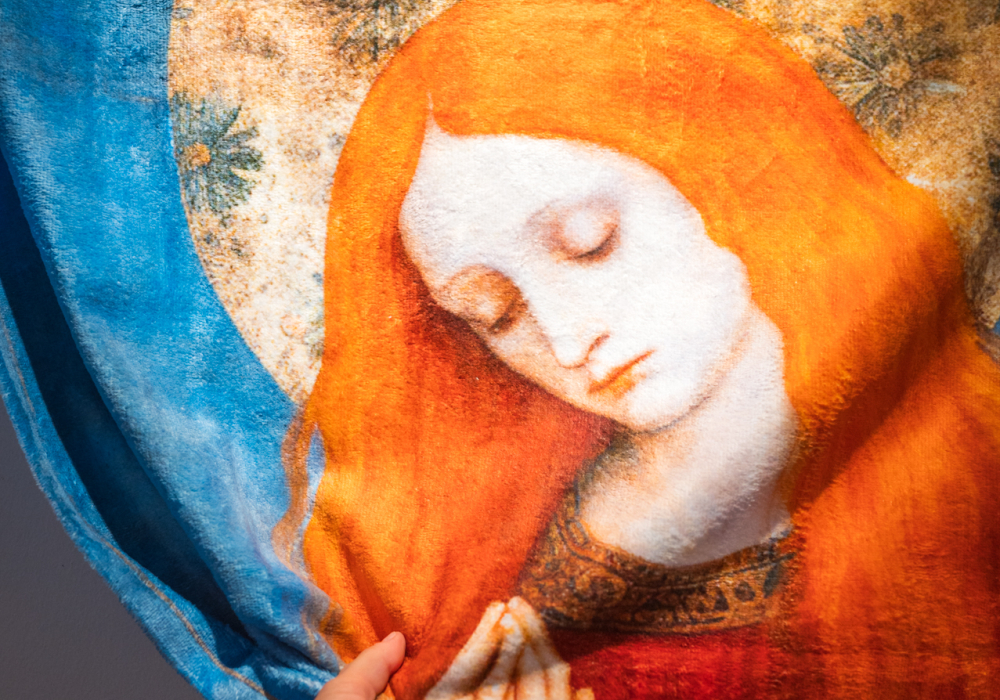
LdM Gallery is pleased to present To Take Flight by Fabrizio Ajello, an artistic project featuring works created through the interaction of different media, but above all through text-to-image applications. These works challenge our understanding and perceptual habits.

The relationship between the image and what we, in some ways, define as reality—one of the intrinsic questions in the very existence of art—has been at the heart of Ajello’s artistic research for several years, which he addresses in the book L’immagine Leggera: arte ricondizionata, sognata, ritrasmessa (The Light Image: Reconditioned, Dreamed, Retransmitted Art), published in 2024 by Castelvecchi Editore.

To Take Flight presents an imagery that takes us back to themes and styles traceable to the Renaissance and Baroque periods, mimetically yet always with a reinterpretative and liminal approach. Upon approaching, the viewers cannot find the conventional supports or formats, nor can they even glimpse the brushstrokes or smell the oil paint and even the iconography is alienating and disturbing. The representations are something else entirely, created by the artist through an extensive research process with the help of some TTI applications that exploit artificial intelligence.


The LdM Gallery is a project by Istituto Lorenzo de’ Medici, an interdisciplinary space where academic research and artistic experimentation meet within a professional setting.

[email protected] www.ldminstitute.com  [email protected]
Sandra Binion and Lou Mallozzi


RD
(Rappaccini’s Daughter)

Curated by: Spela Zidar
Opening June 12th, from 5 to 8 PM
June 12-July 11
Open Mo-Thur 10am-2pm, Fri 4-7pm
LdM Gallery, Via de’ Pucci 4
Free Entrance


About RD

“RD” is a multimedia project by artists Sandra Binion and Lou Mallozzi. The exhibit is inspired by Nathaniel Hawthorne’s 1844 short story “Rappaccini’s Daughter.” Hawthorne tells the story of Beatrice, the daughter of a mad scientist Giacomo Rappaccini who cultivates a garden of exotic and poisonous plants. As a result of caring for the garden, Beatrice becomes poisonous to the touch, finding herself akin to Persephone and Hades with her father Giacomo. She and a young student, Giovanni, fall into a tragic romance, where she eventually turns Giovanni poisonous as well. The story deals with the tensions of desire and order, the male anxiety towards the female body, and fear of unchecked scientific experimentation. In the exhibition “RD,” the artists interpret this story to become a living site for these themes through writing, images, gestures, sound, surfaces, etc.

“RD” seeks to explore one’s relationship with the nature of a garden and the man-made and natural duality inherent within the space. What are the fact and fiction that emerge with the garden? How does one approach the garden through their individual path, senses, and interpretations? The artists approach the garden’s materiality, structure, and history through their informed senses and minds to create works that emerge from their experiences.

About the Artists:  

Sandra Binion is an interdisciplinary artist whose work often takes the form of multimedia installations based on literary or historical themes and references. Her work encompasses performances, installations, process-based artworks, photographs, and paintings that embrace a choreography of the everyday. She has exhibited and performed in the US, Europe, and Japan at venues including the Musée d’Orsay Paris, Kyoto City University of the Arts, Maison de George Sand, Musée Flaubert Rouen, Hyde Park Art Center Chicago, Los Angeles Contemporary Exhibitions, Los Angeles Institute of Contemporary Art, Kunstraum Stuttgart, Institut Unzeit Berlin, and many others.

www.sandrabinion.com 

Lou Mallozzi is an interdisciplinary artist and educator in Chicago. He dismantles and reconstitutes gesture, sound, image, and language to poetically destabilize our relationships with the familiar through performances, installations, interventions, fixed media works, improvised music, drawings, and collaborations. His work has been exhibited and performed in many venues in the US and Europe, including the Museum of Contemporary Art Chicago, The Smart Museum at the University of Chicago, The Italian Cultural Institute of Chicago and the Italian Pavilion of the Venice Biennale, TUBE Audio Art Series in Munich, Radiorevolten Festival in Halle, Constellation in Chicago, and many others.

www.loumallozzi.com


Events for LdM students:   

During the exhibition LdM students and other spectators will be able to deepen their experience of the exhibition participating to special events organized in collaboration with the artists and Sistema Museale di Firenze.  


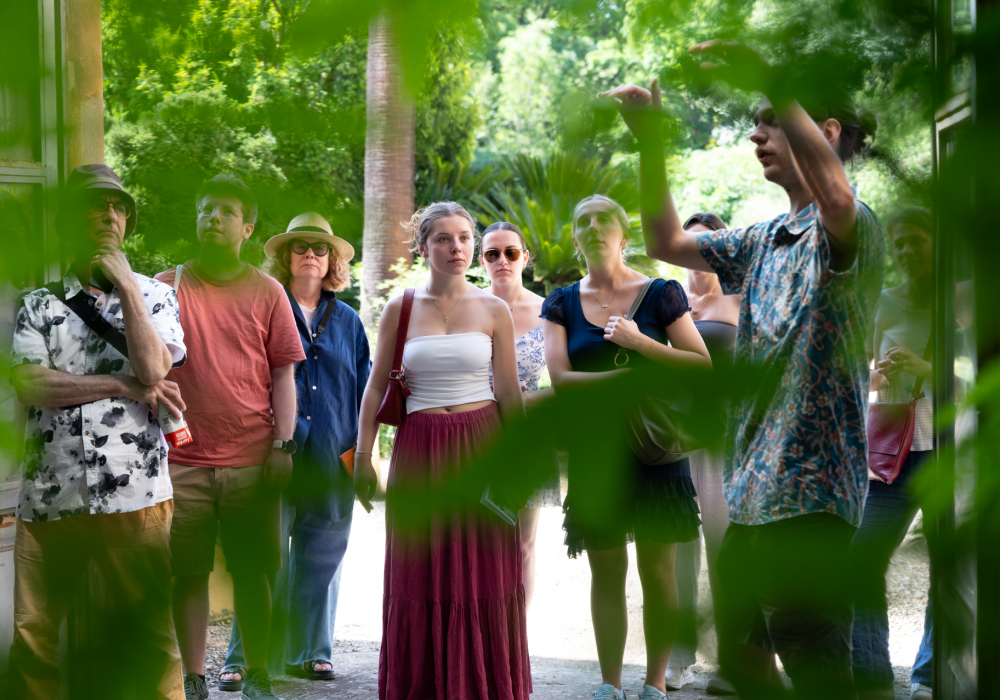
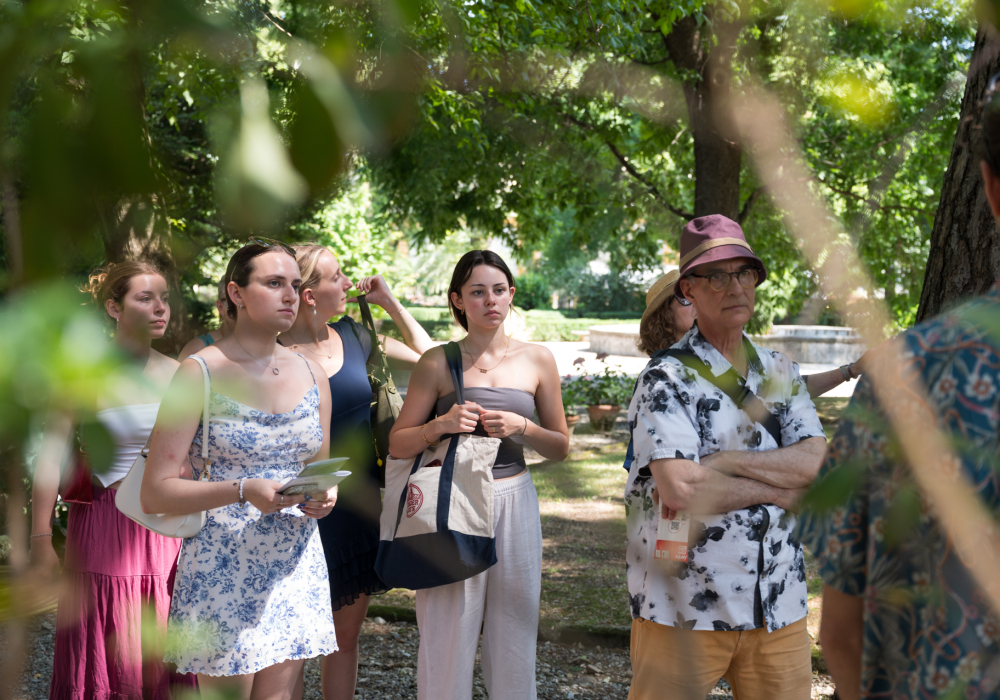
Looking for Rappaccini’s Garden  – Guided tour Summer 

Thursday July 10th at 10:00 am.
Botanical Gardens Giardino dei Semplici,
Via Micheli 3 and LdM Gallery, Via de’Pucci 4.
Book your spot through Activities Office!

In conjunction to the exhibition RD (Rappacini’s Daughter) by Binion and Mallozzi LdM Gallery organizes for LdM students a guided tour to Florentine Botanical Gardens Giardino dei Semplici and LdM Gallery exhibition guided by professional guides and in the presence of the artists.

Free Entrance    
Meeting point: Via Faenza 43 at 9:50am
LdM Galler visit: 10 am
Botanical Gardens visit: 10:45 am
End of the tour: 11:45am


Rain Gravel Thread – Sound performance by Lou Mallozzi


Friday July 11th at 6:30pm, LdM Gallery, Via de’Pucci 4.
Book your spot through Activities Office!

In conjunction with the exhibition RD by Sandra Binion and Lou Mallozzi, LdM Gallery presents the premiere of Rain Gravel Thread, a new sound work by Lou Mallozzi. Composed and produced in Firenze during the artists’ stay, Rain Gravel Thread is cinema for the ear, a film without images that focuses on the materiality of listening and the imaginary sites and objects conjured by sound and speech.

Rain Gravel Thread (18:12) by Lou Mallozzi; narrator: Bruce Jenkins

Free Entrance    
Meeting point: Via Faenza 43 at 6:15pm


The LdM Gallery is a project by Istituto Lorenzo de’ Medici, an interdisciplinary space where academic research and artistic experimentation meet within a professional setting.

[email protected] www.ldminstitute.com  [email protected]