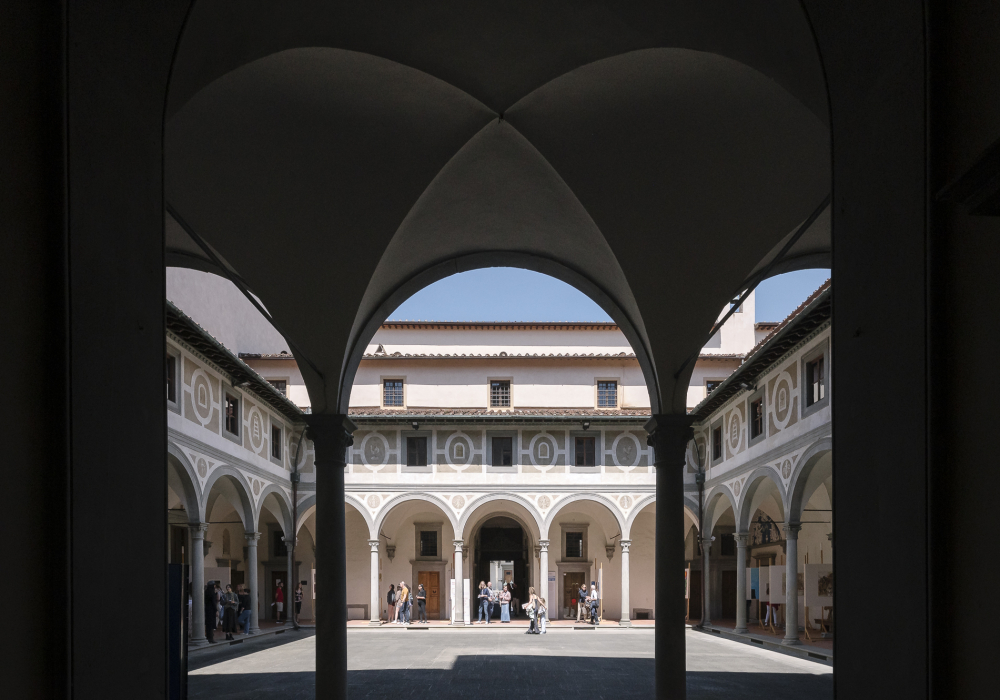
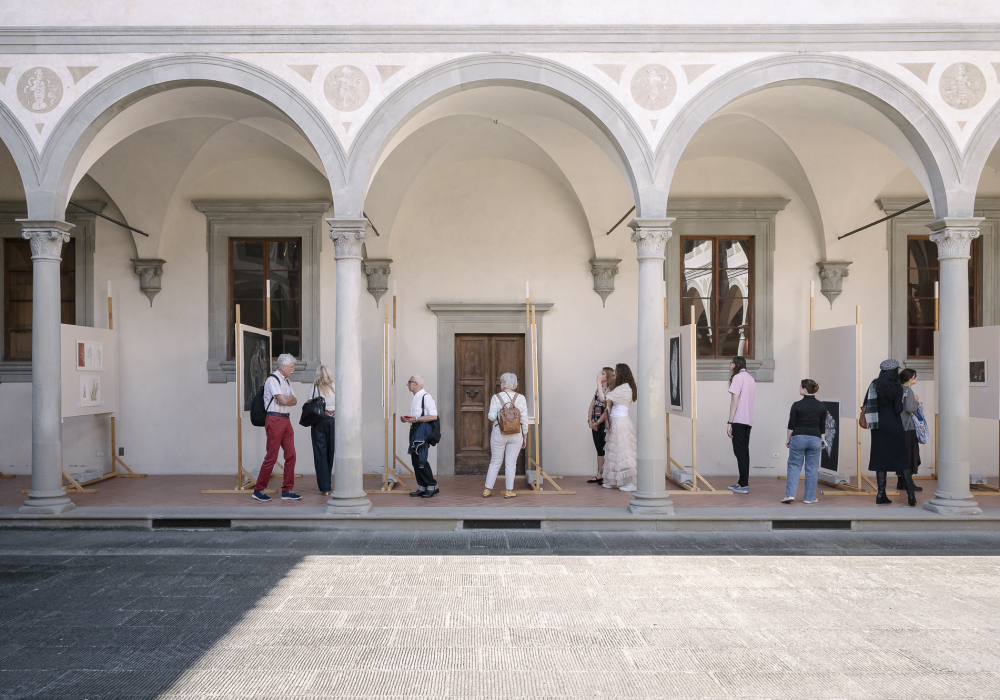
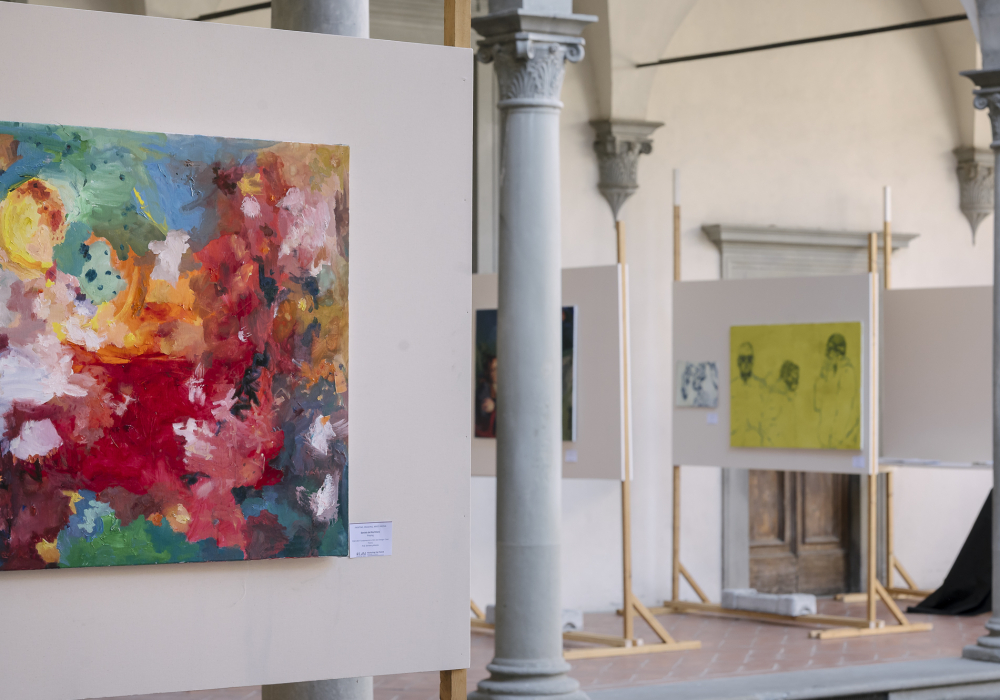
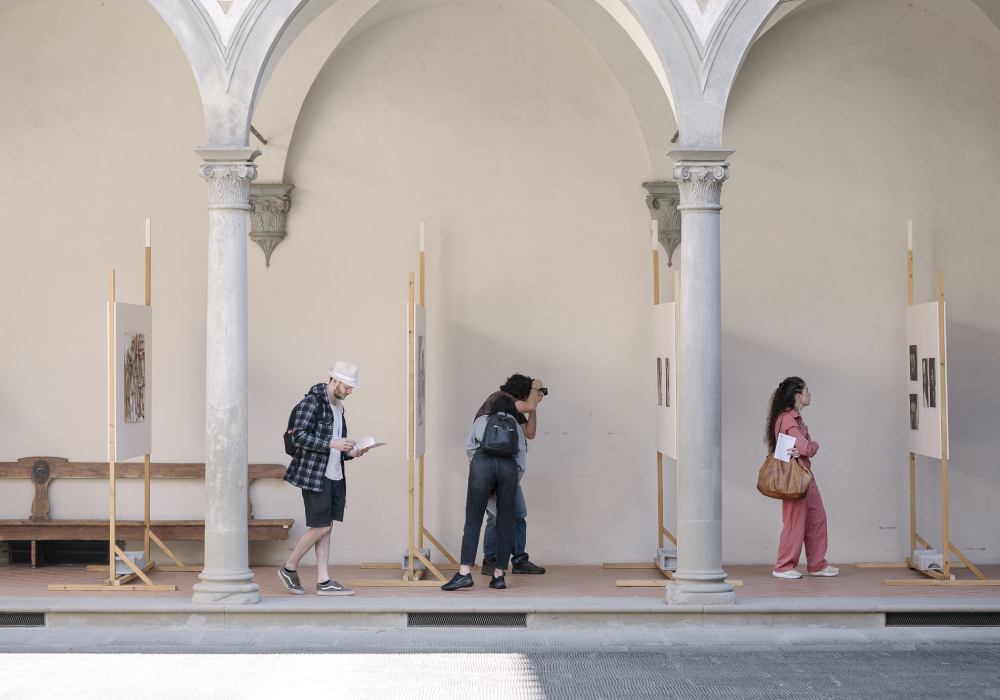
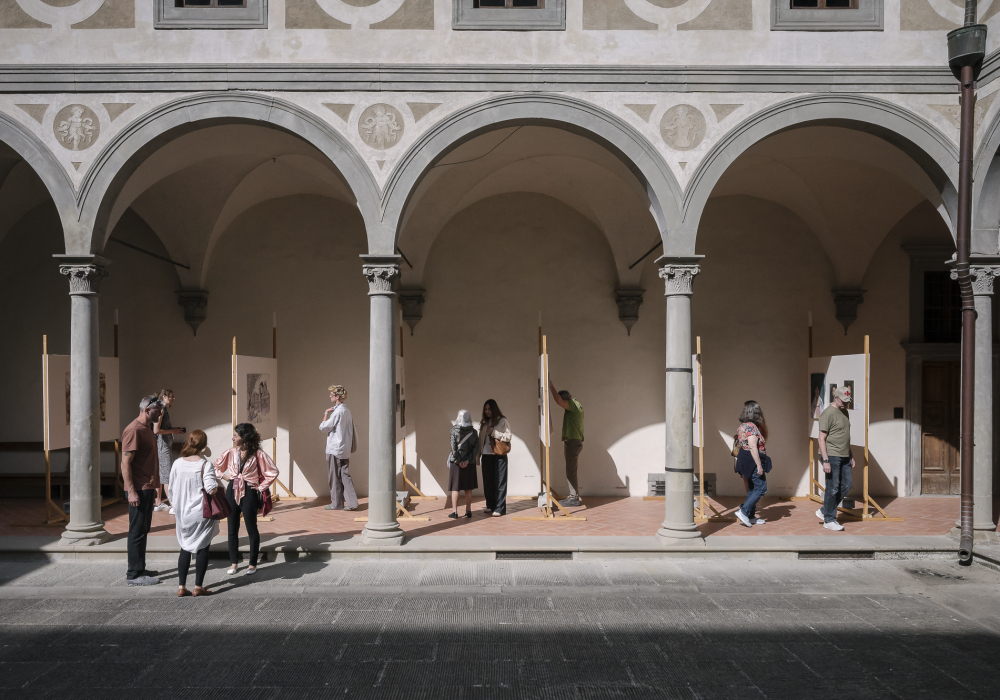
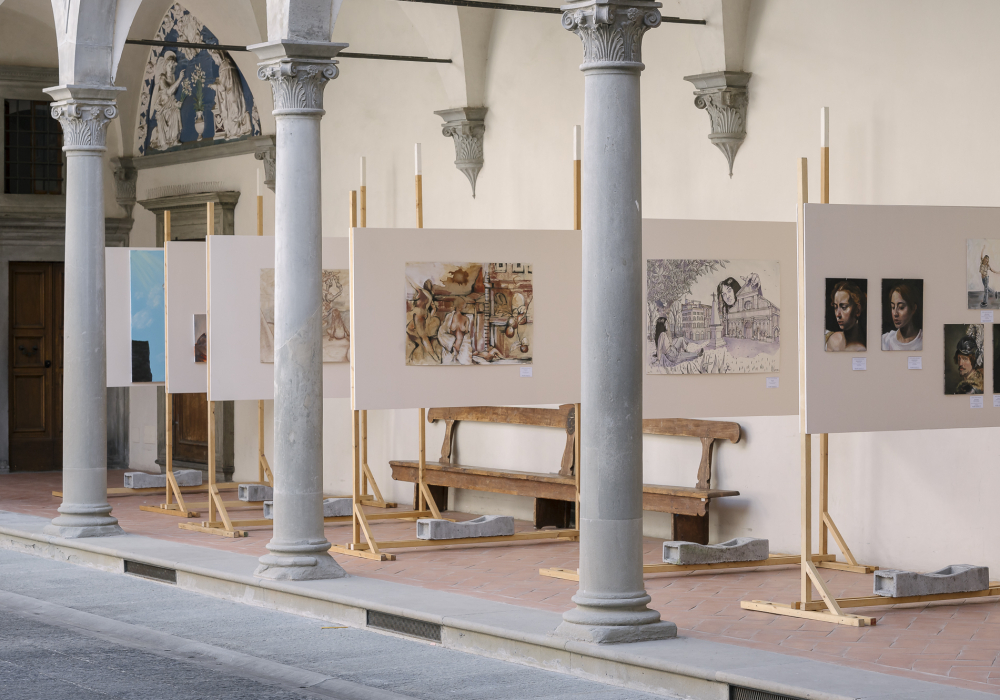
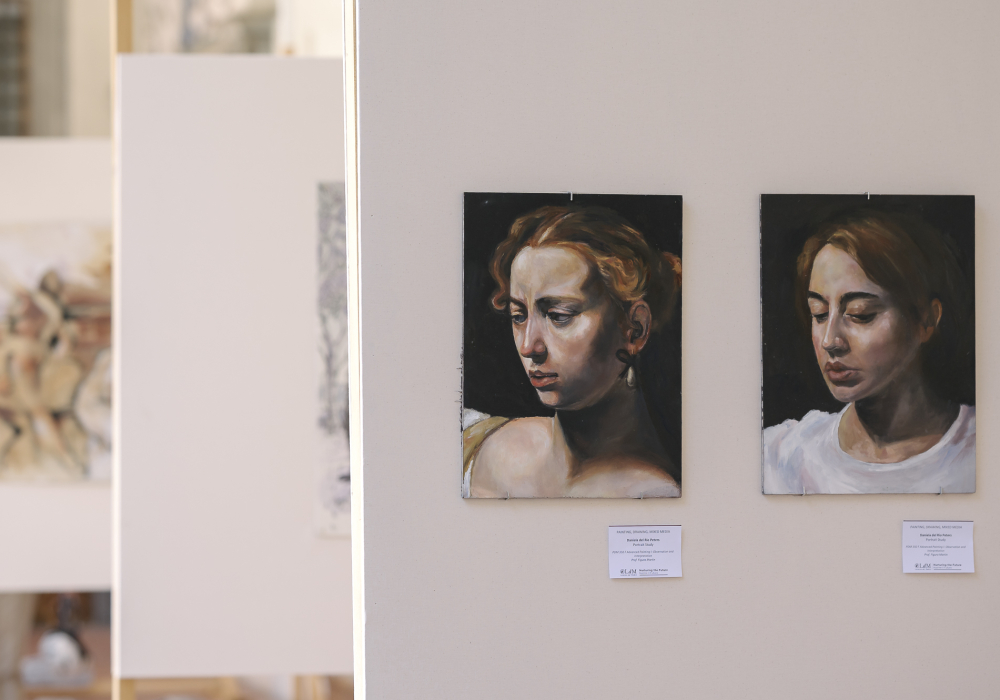
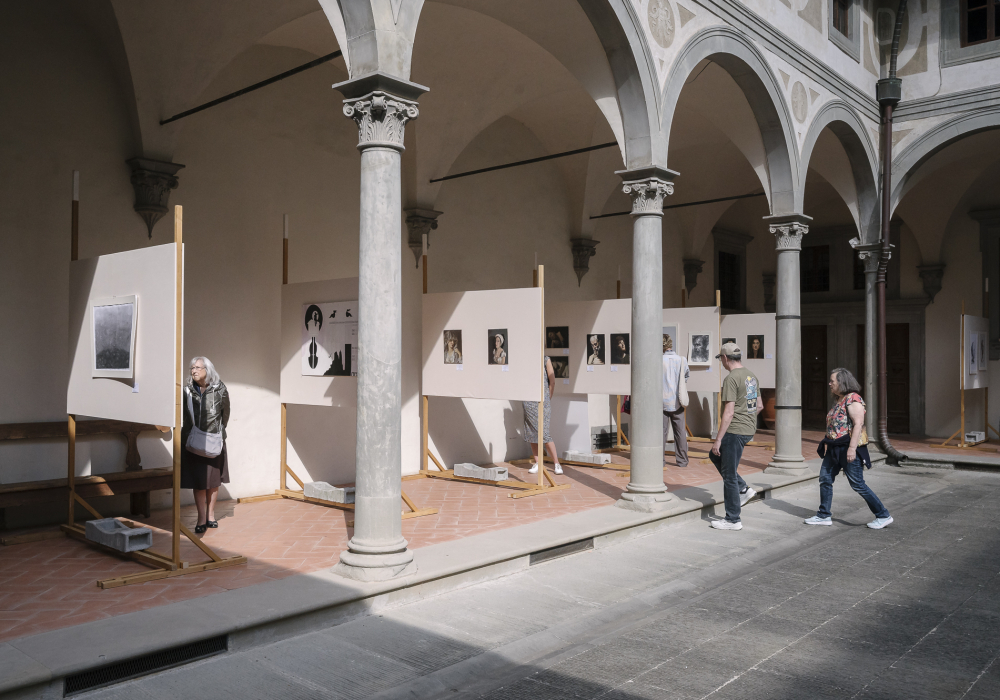
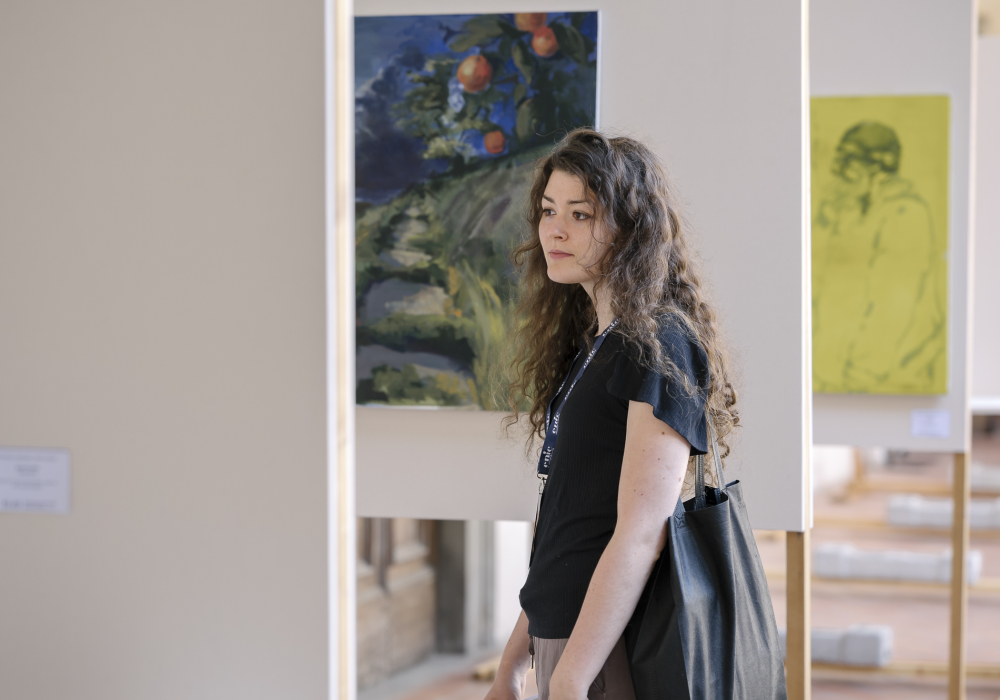
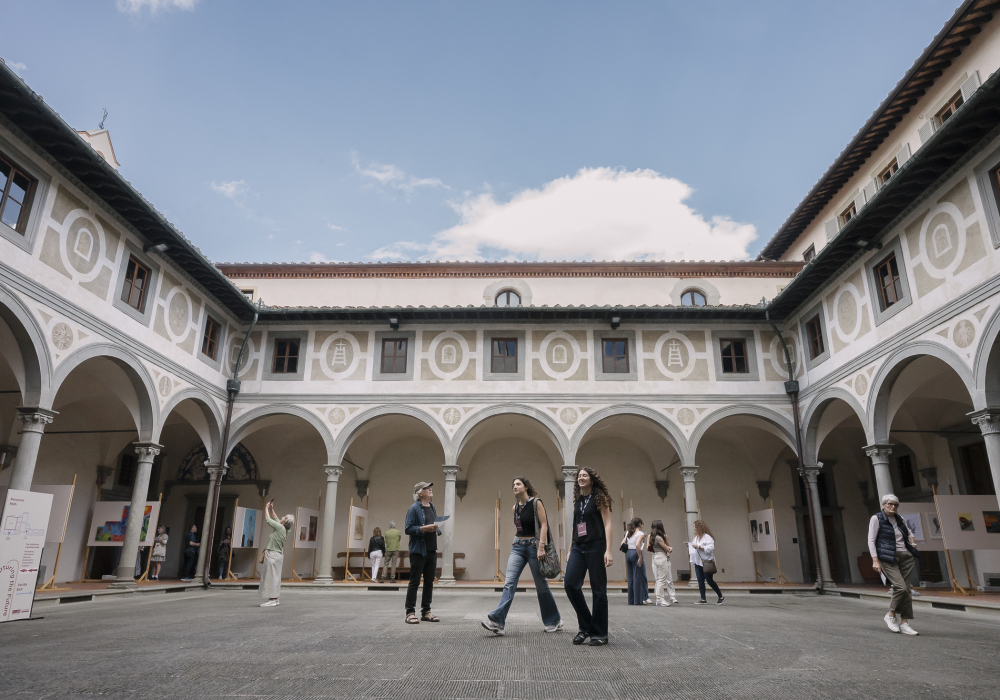
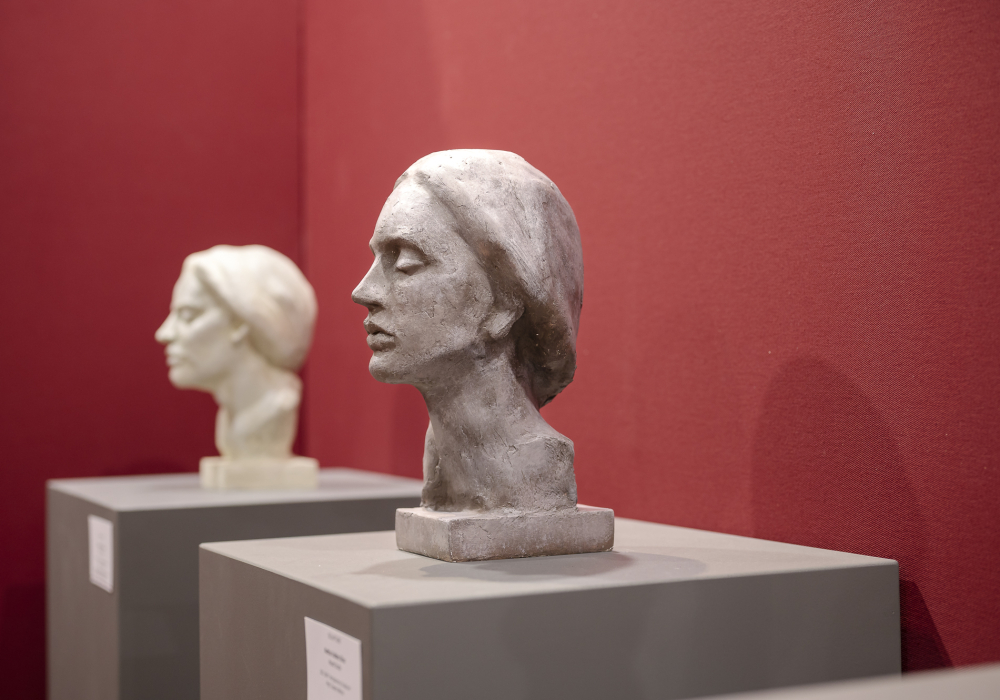
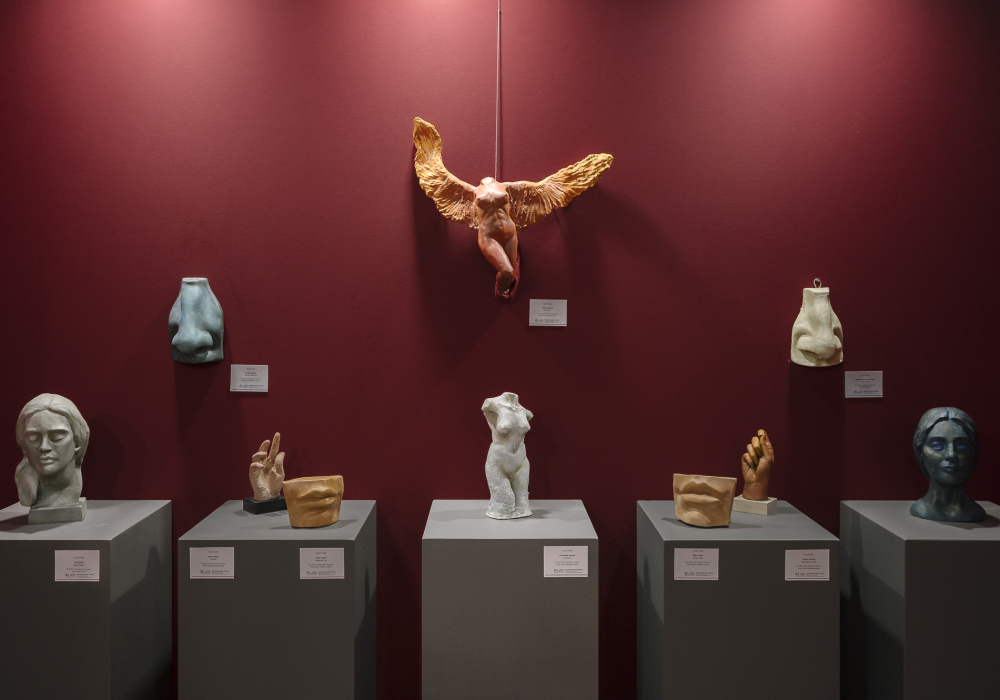
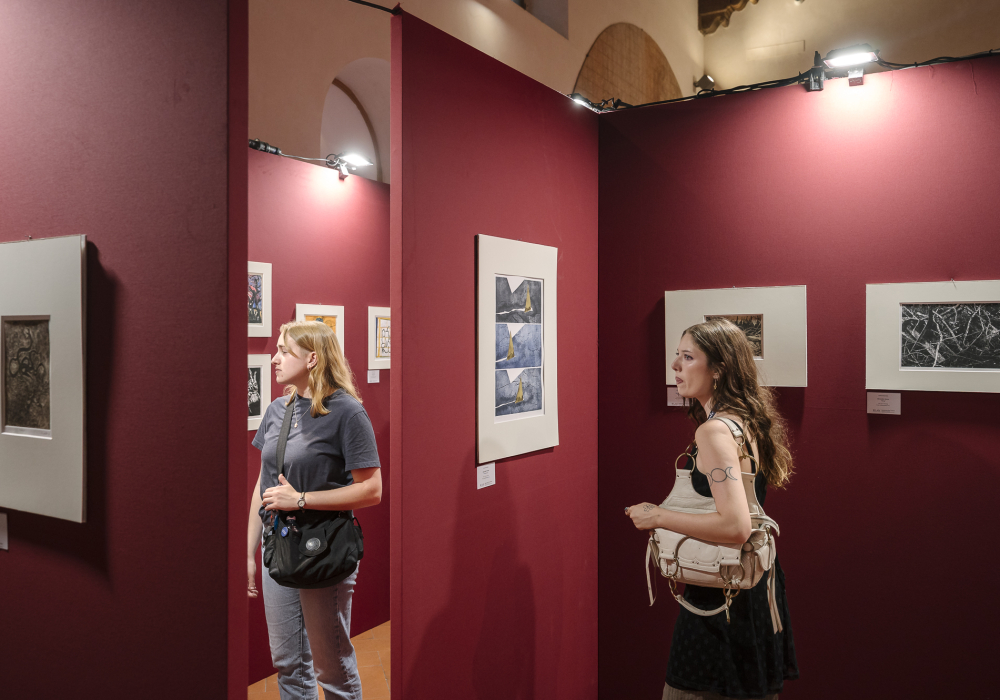
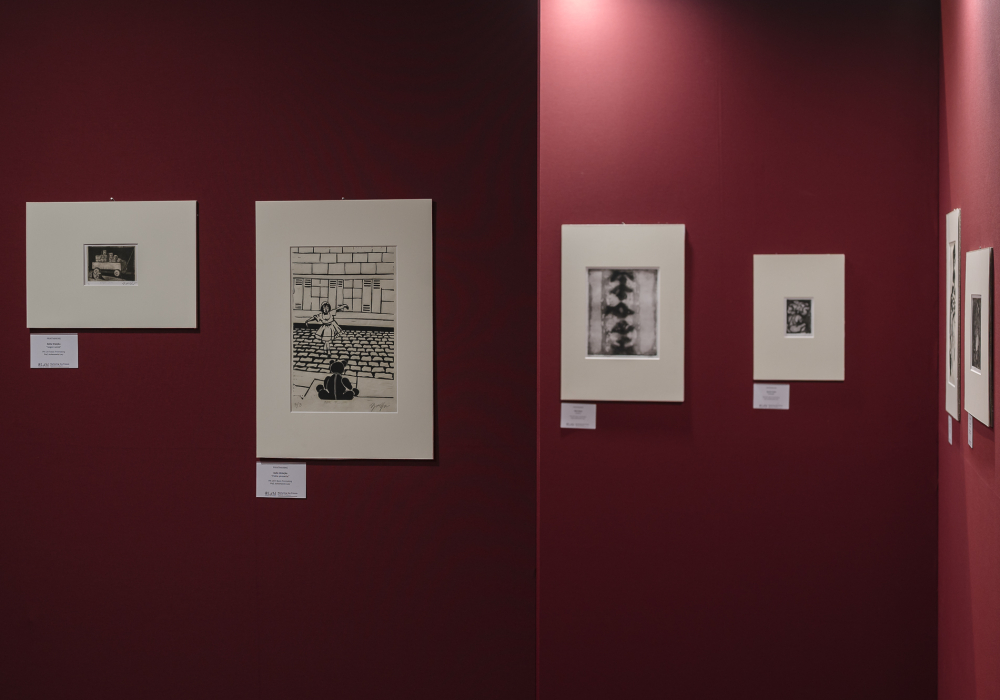
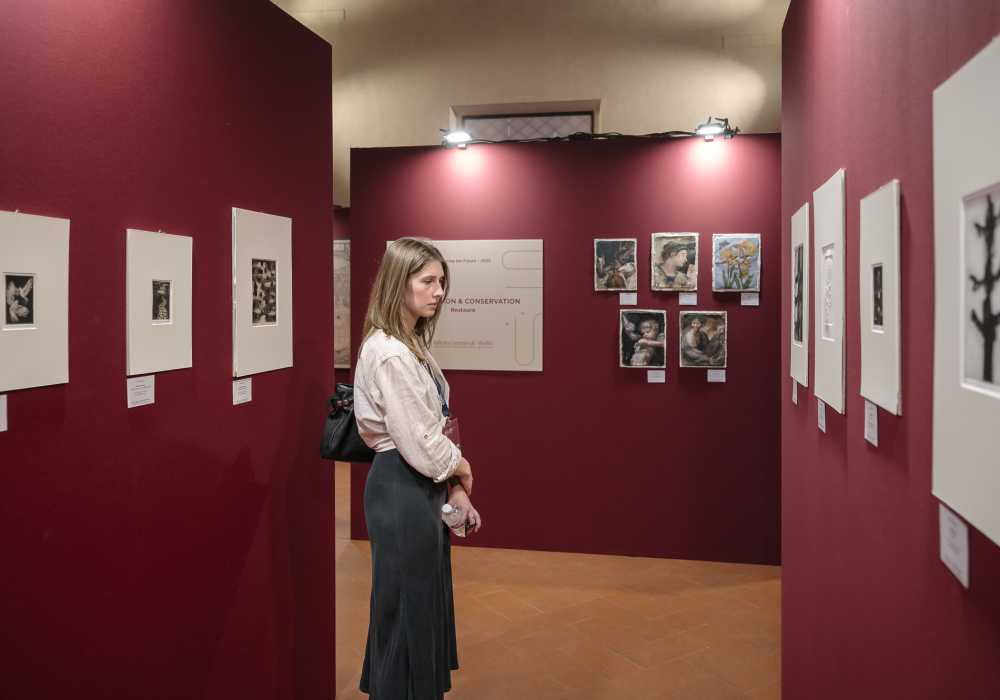
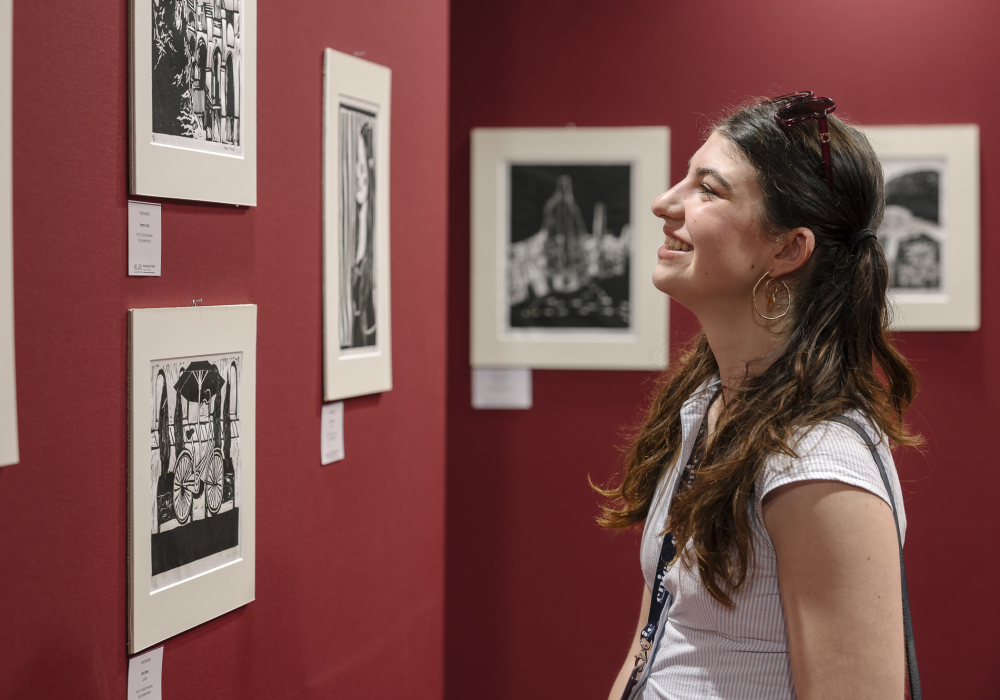
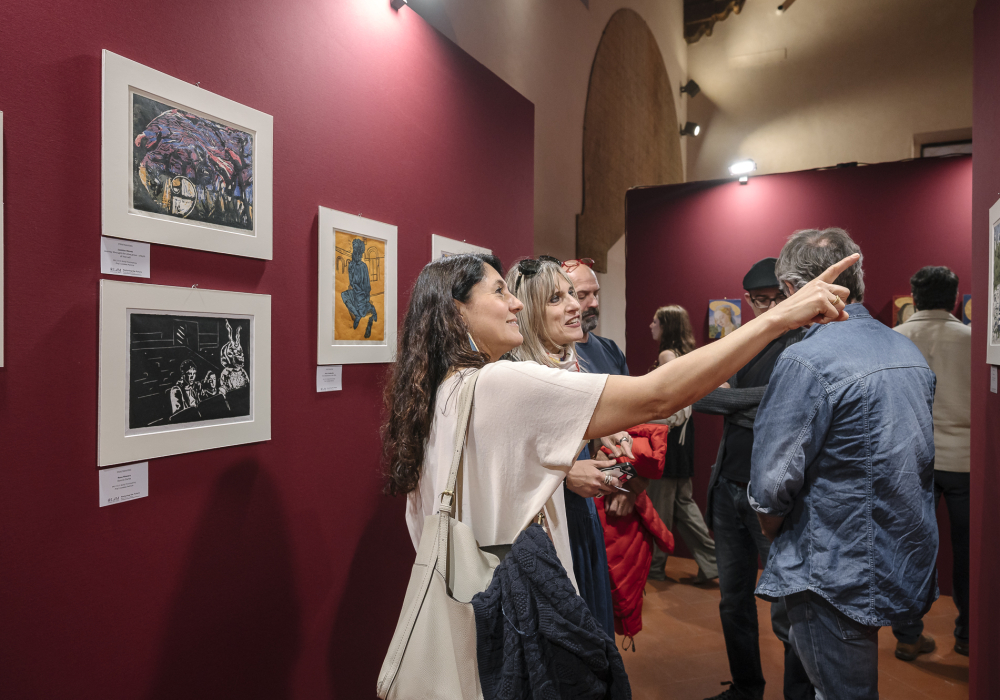
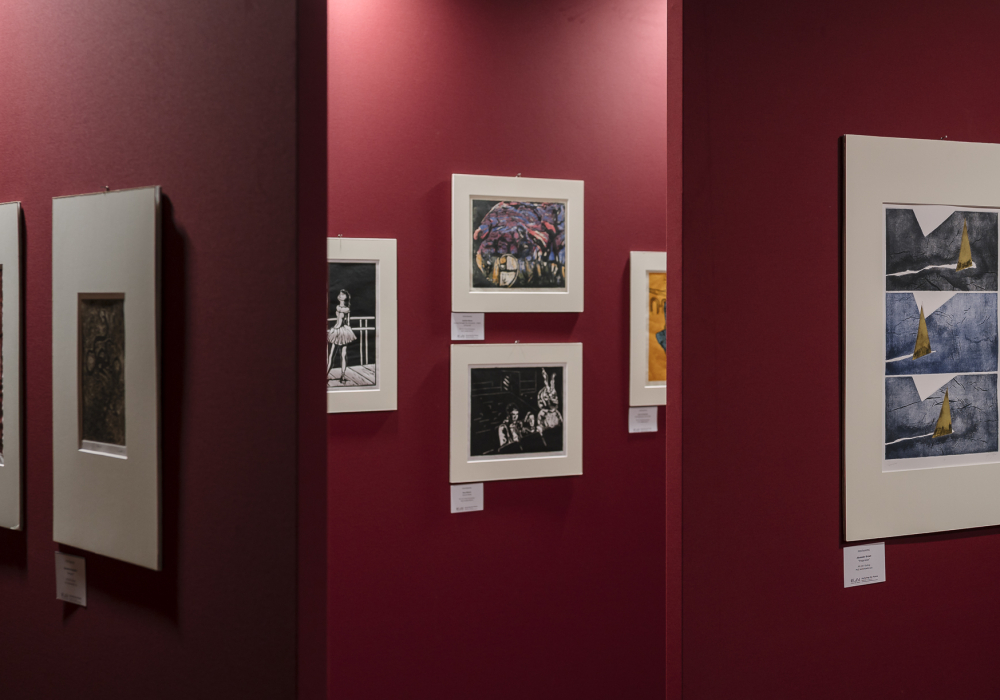
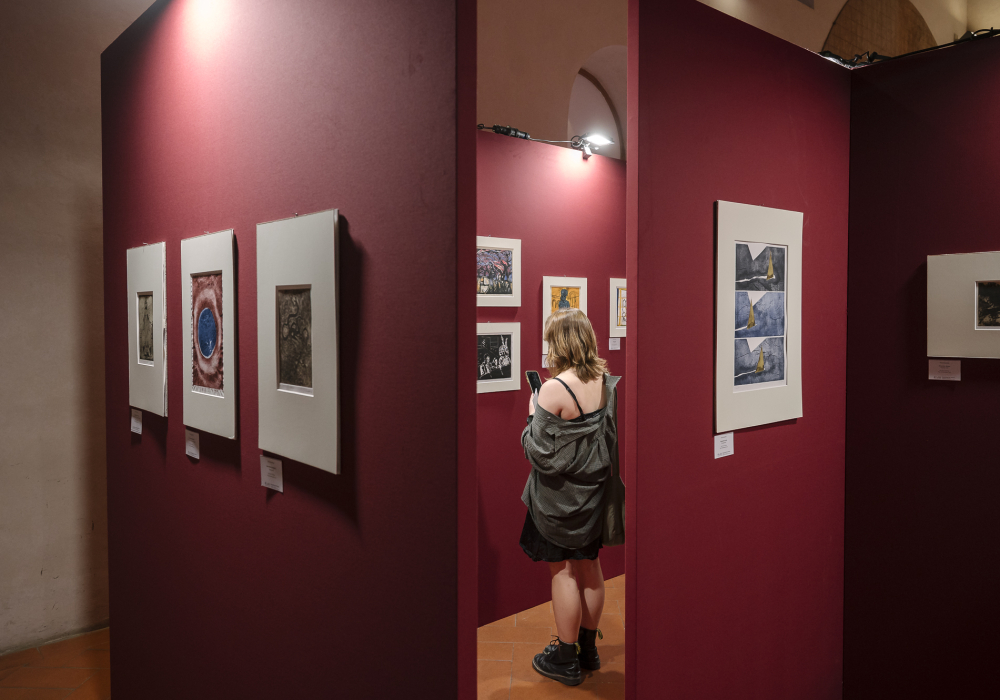
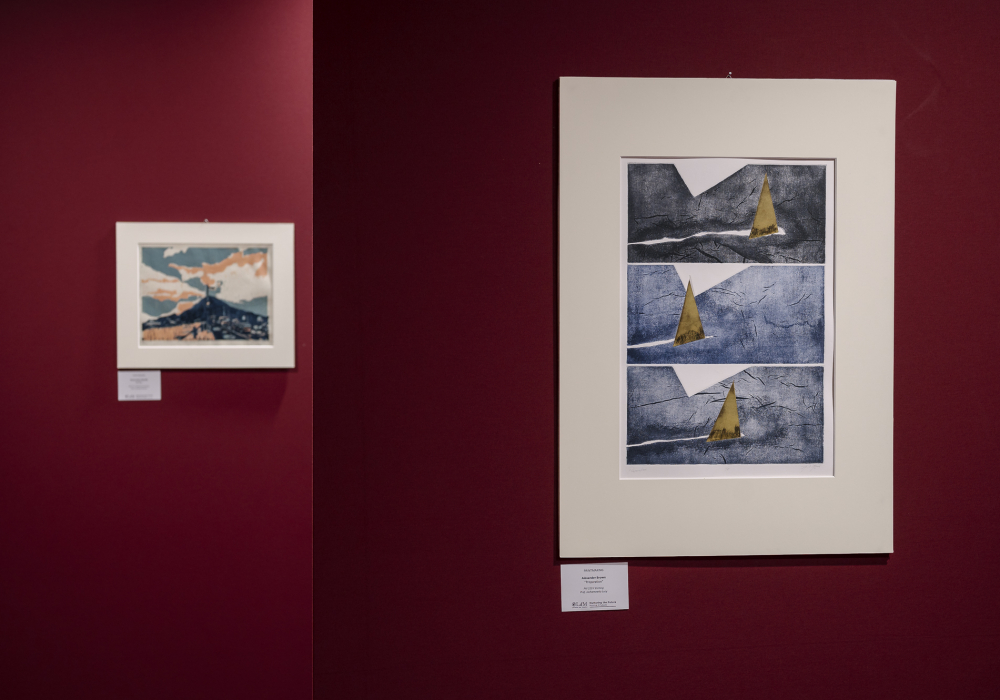
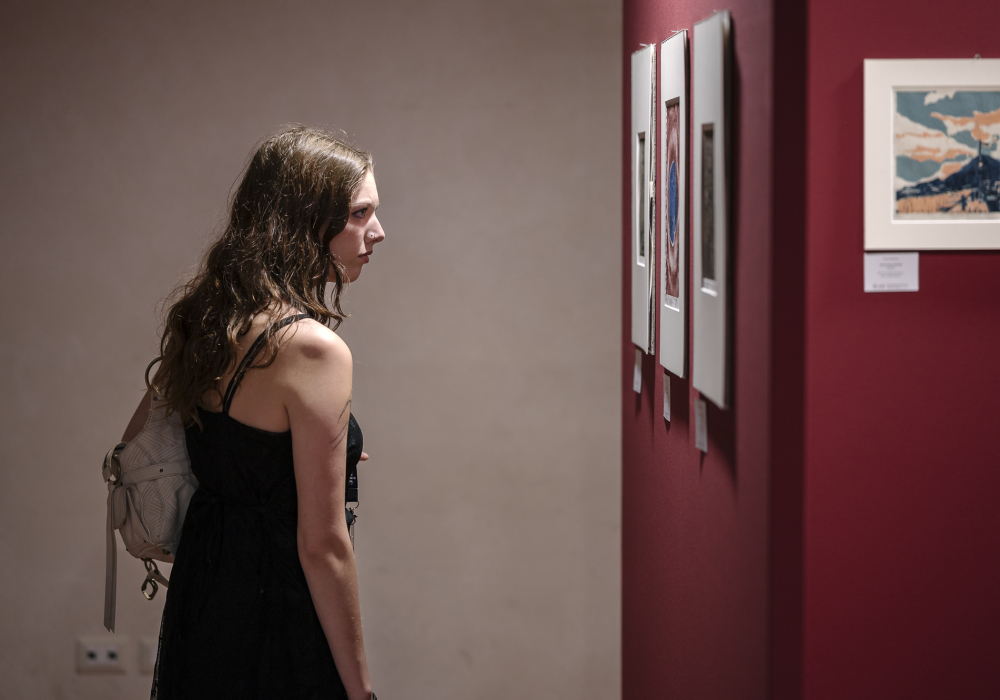
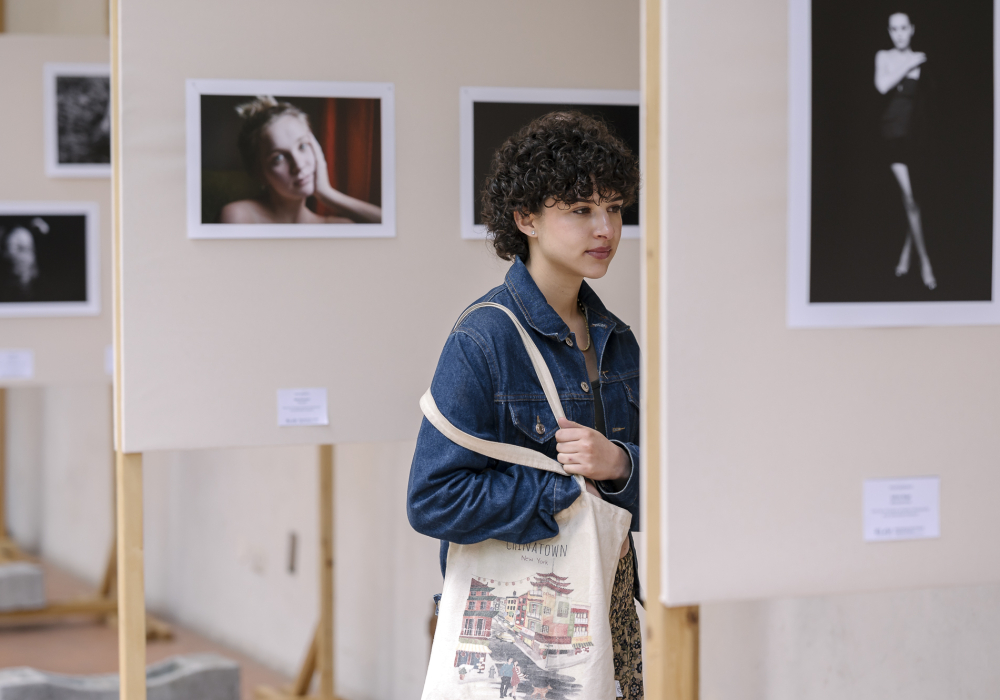
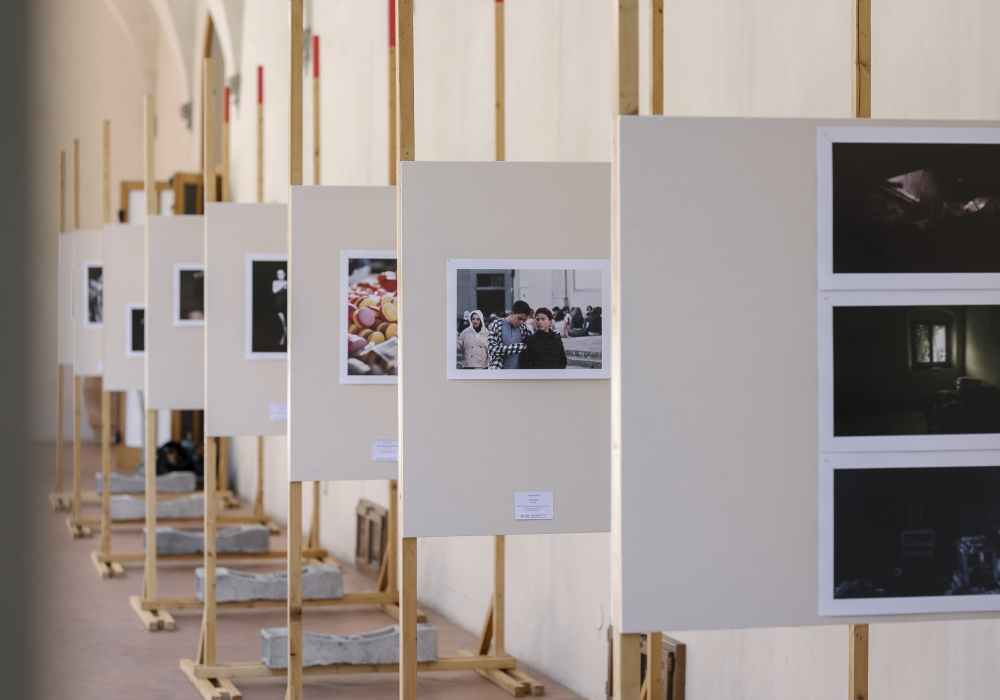
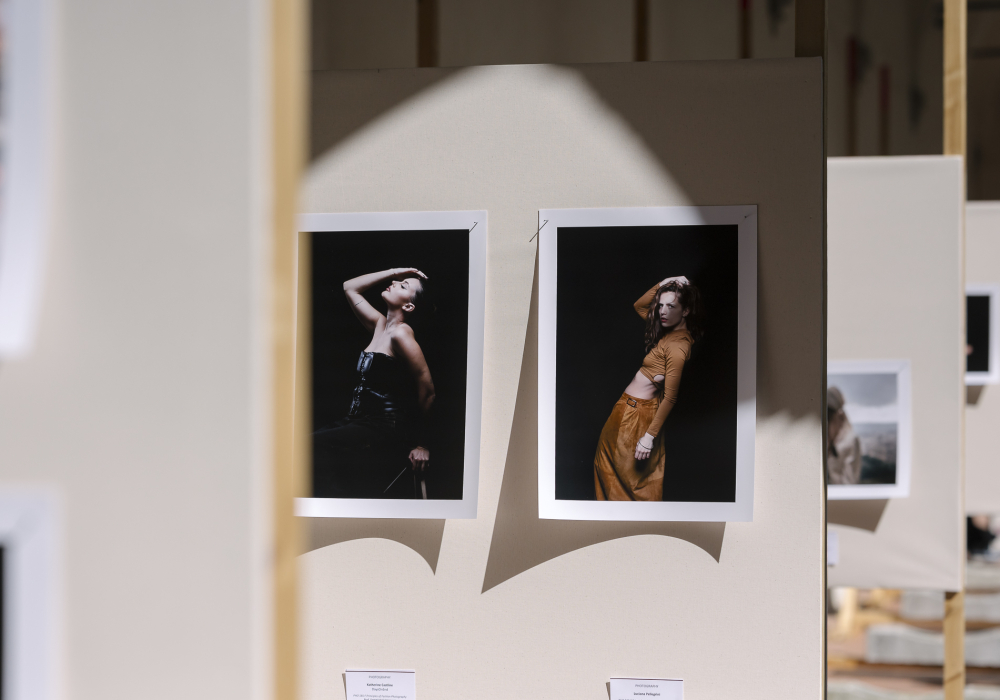
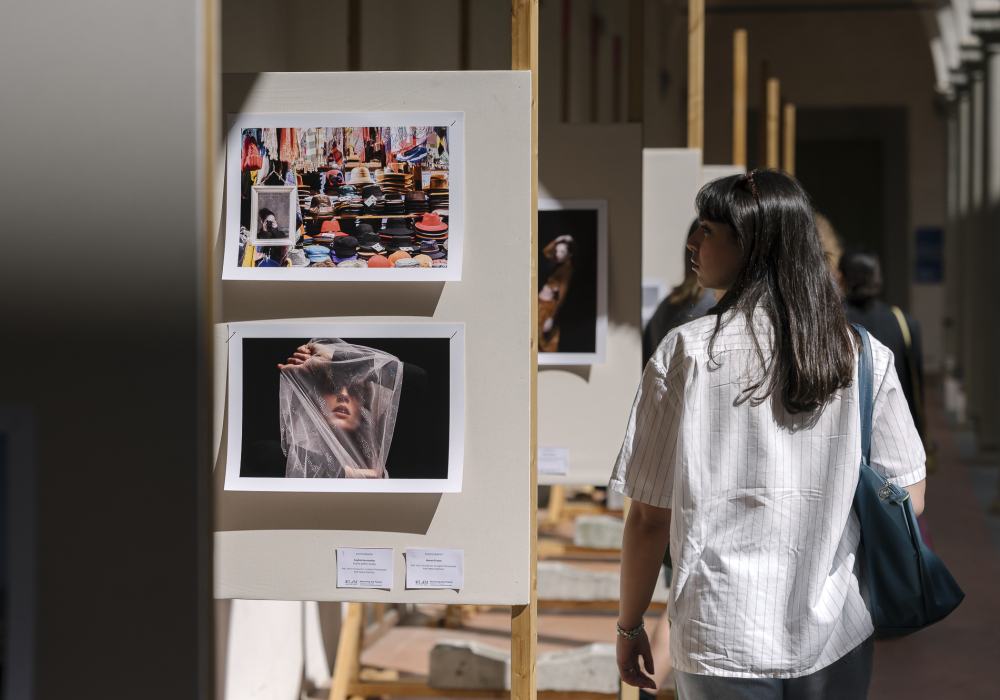
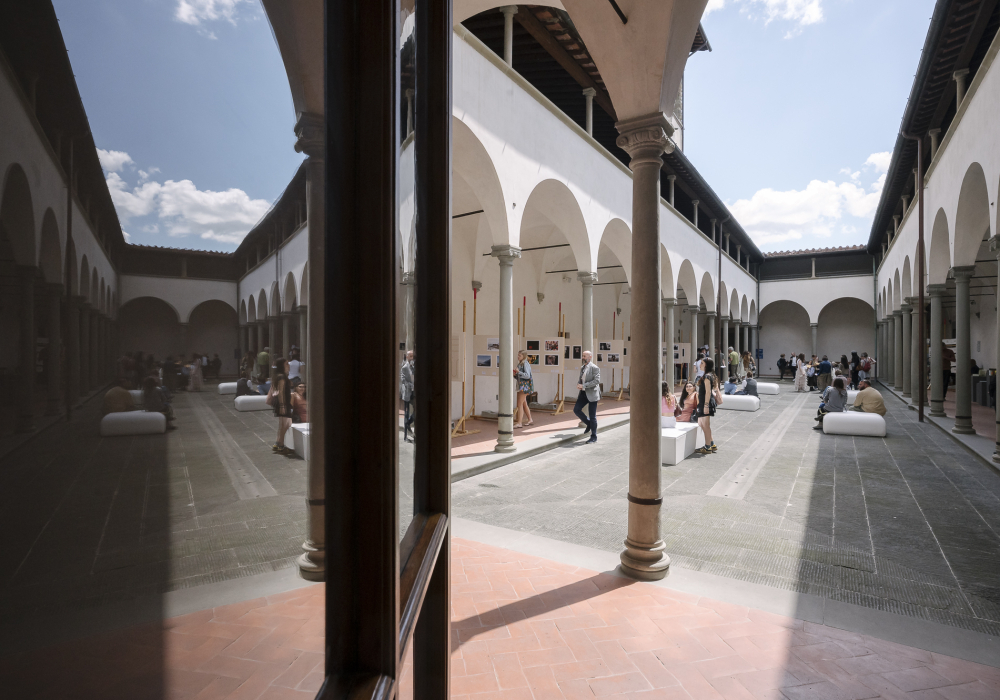
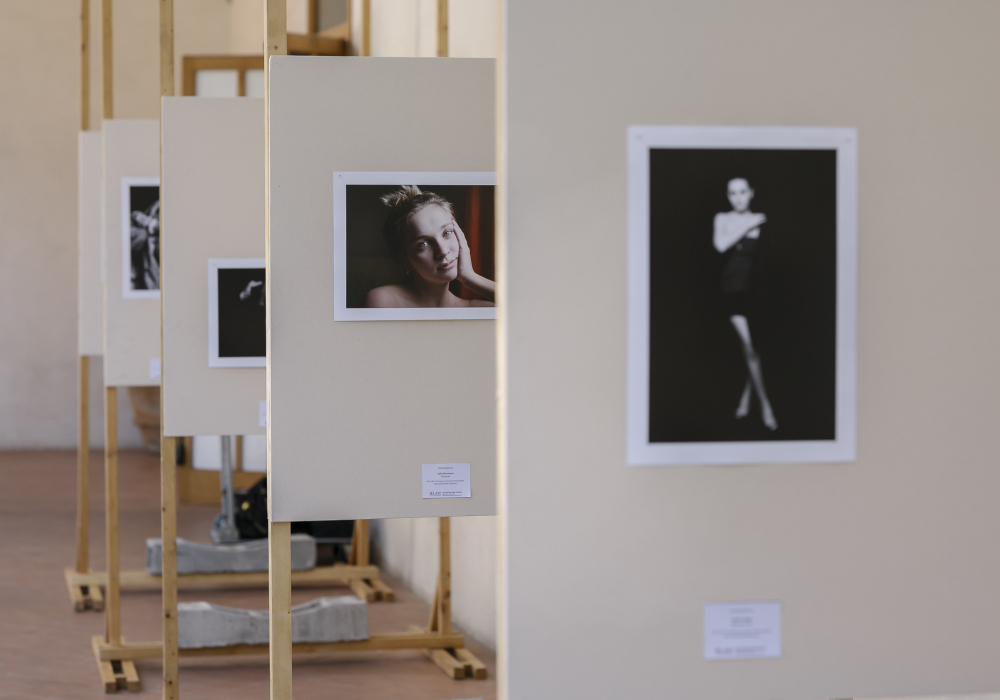
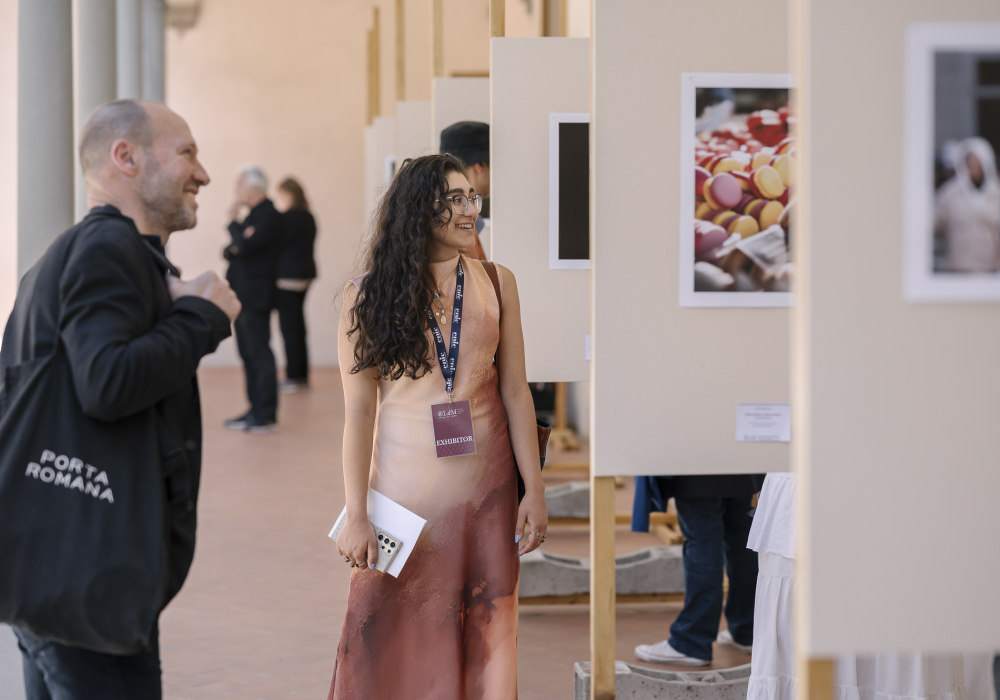
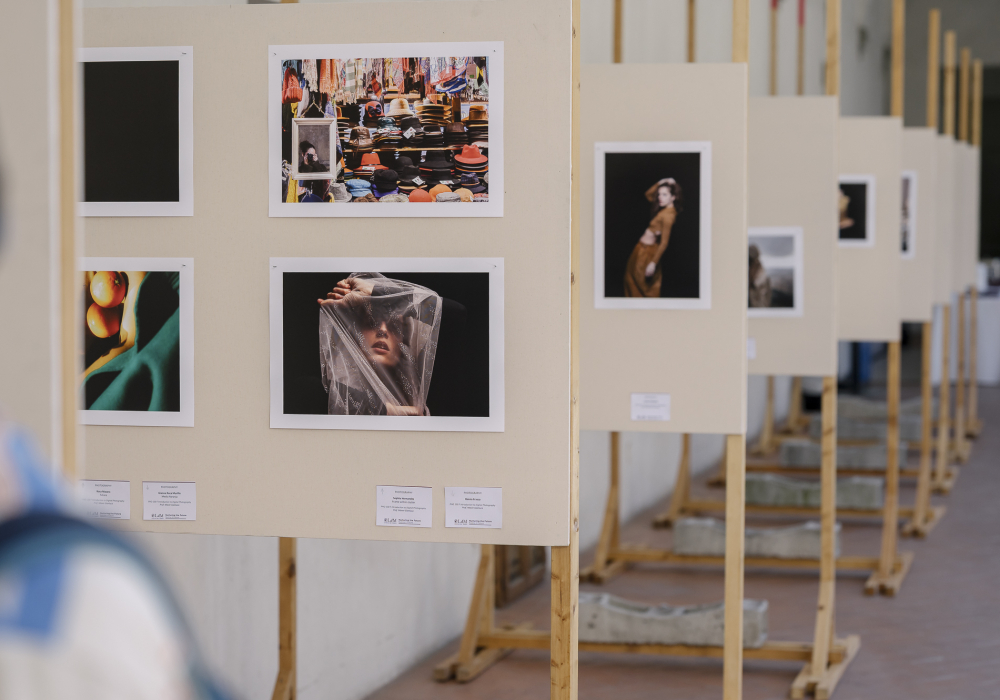
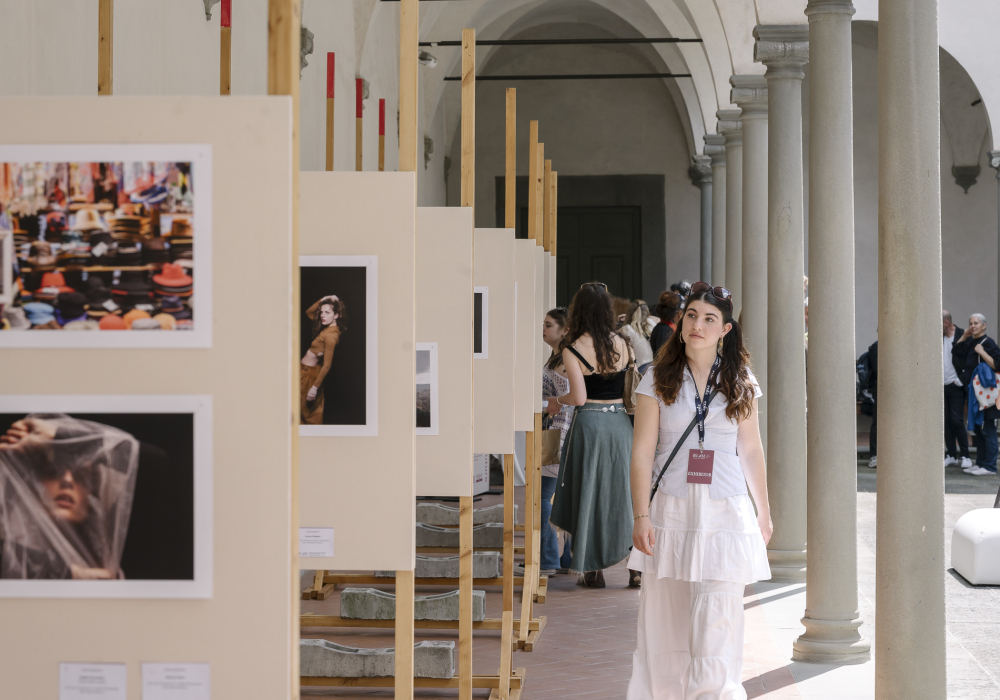
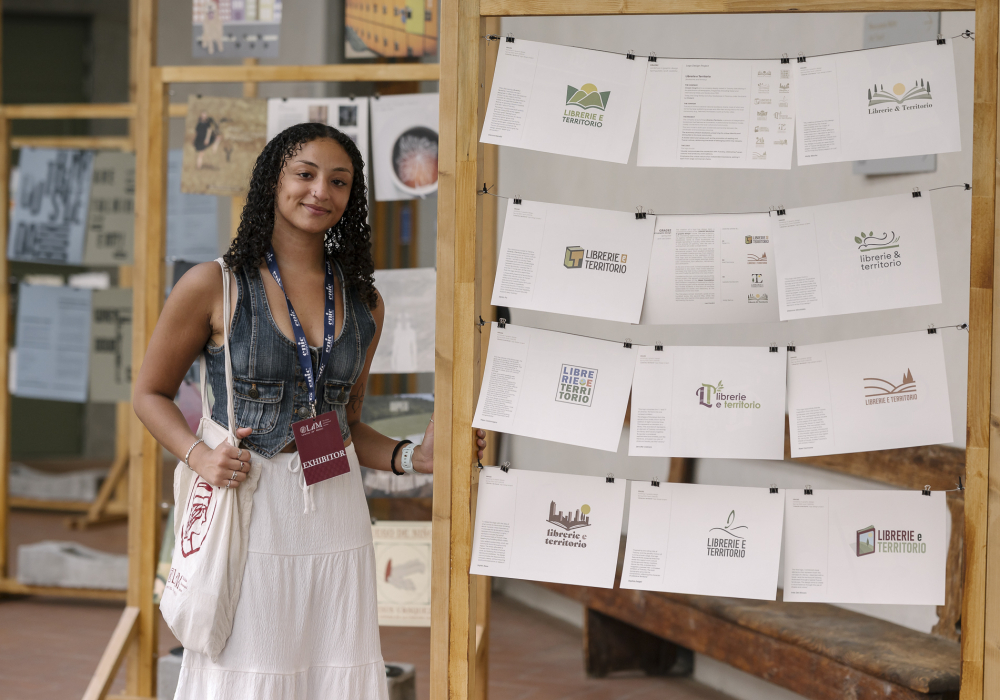
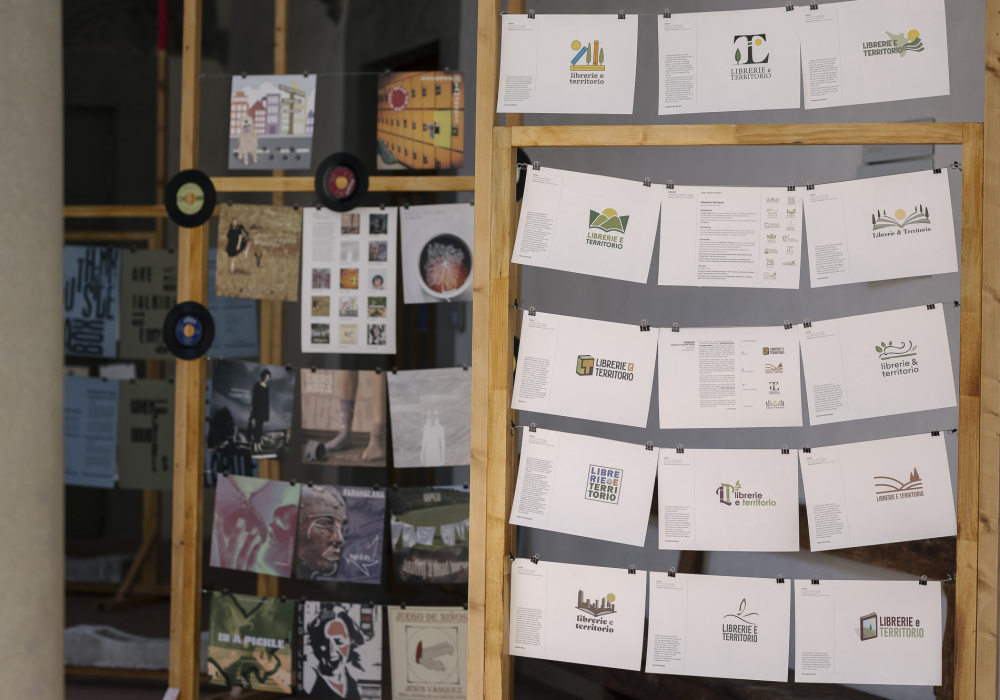
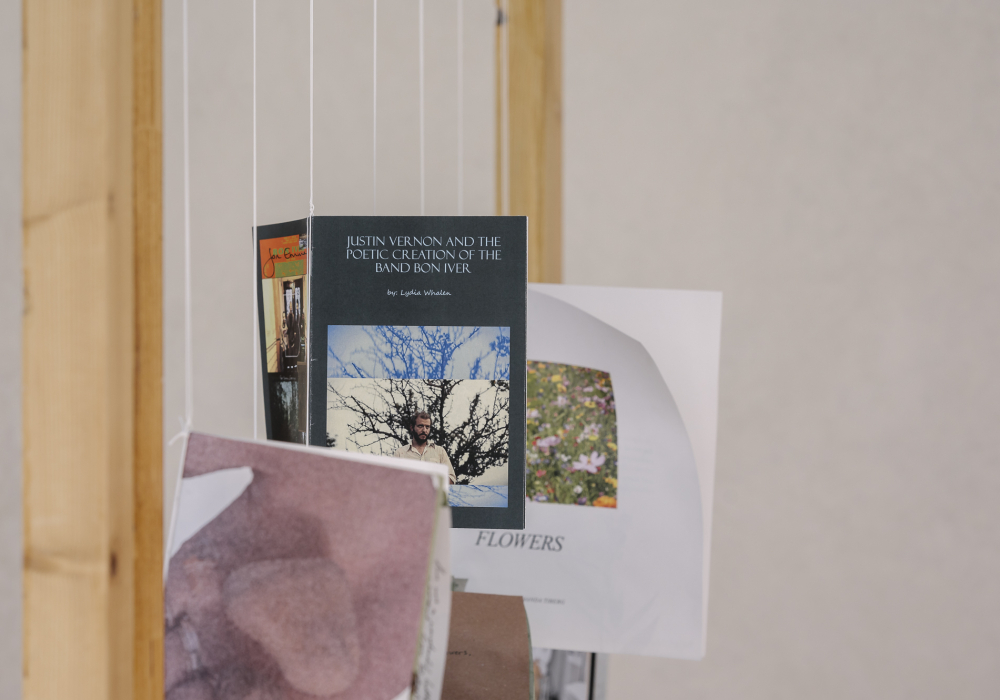
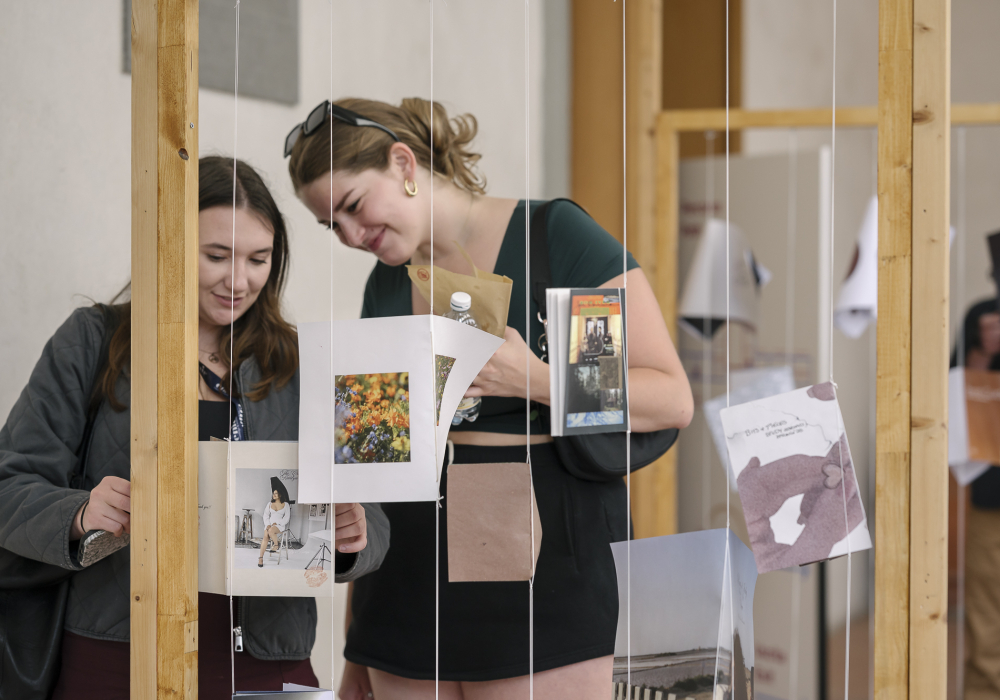
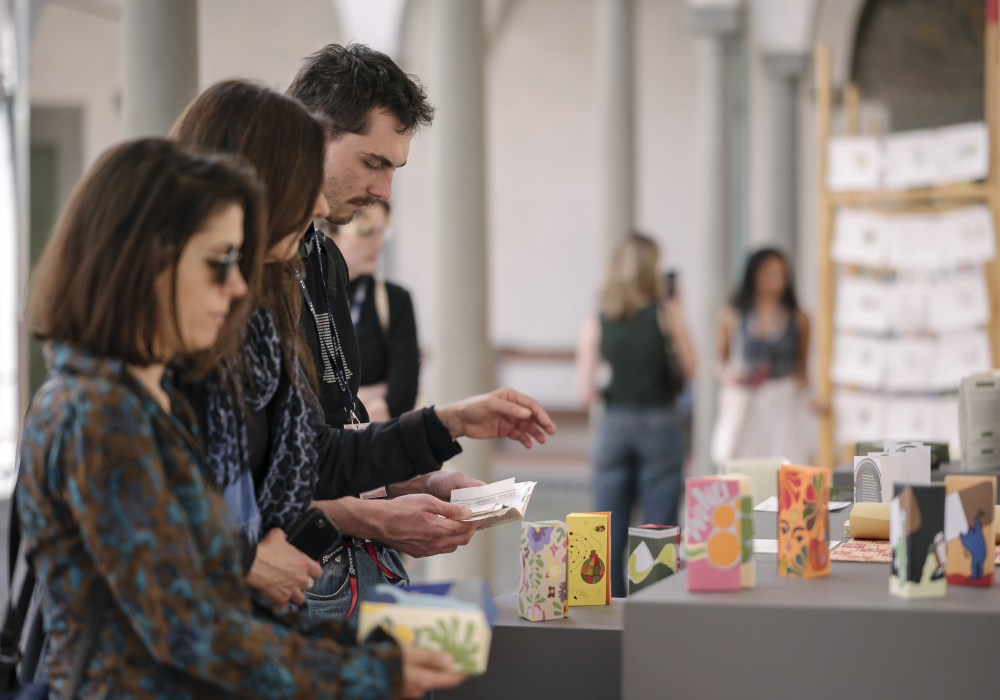
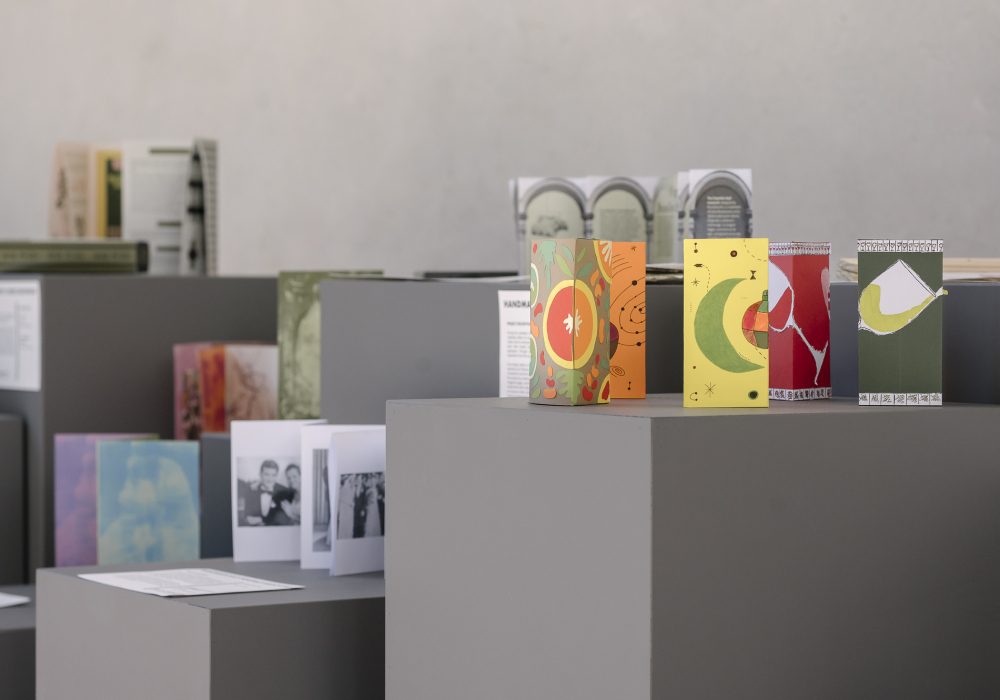
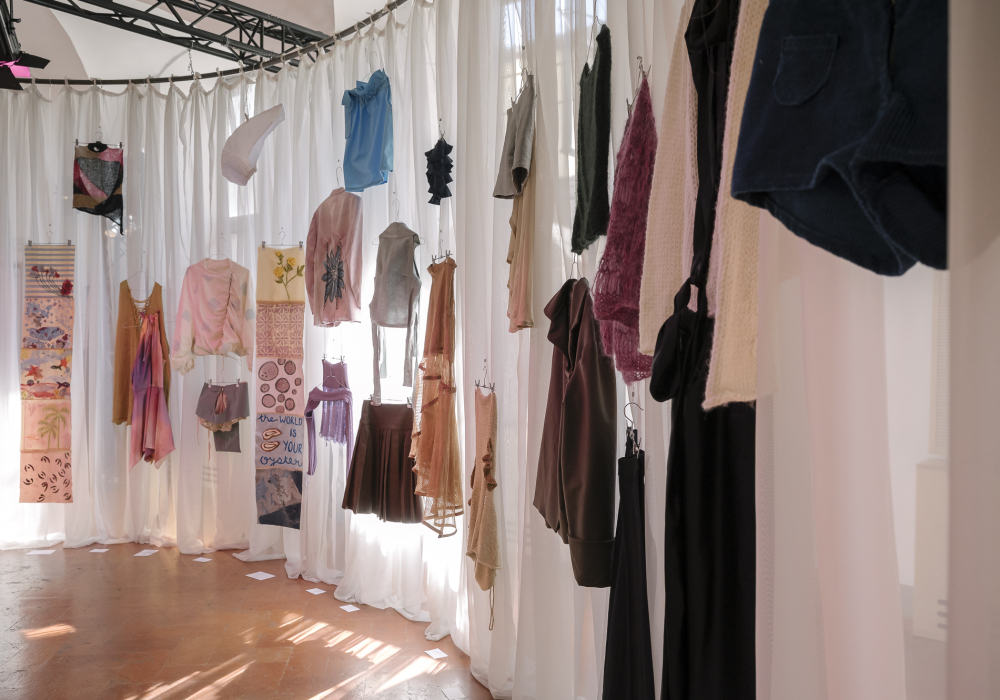
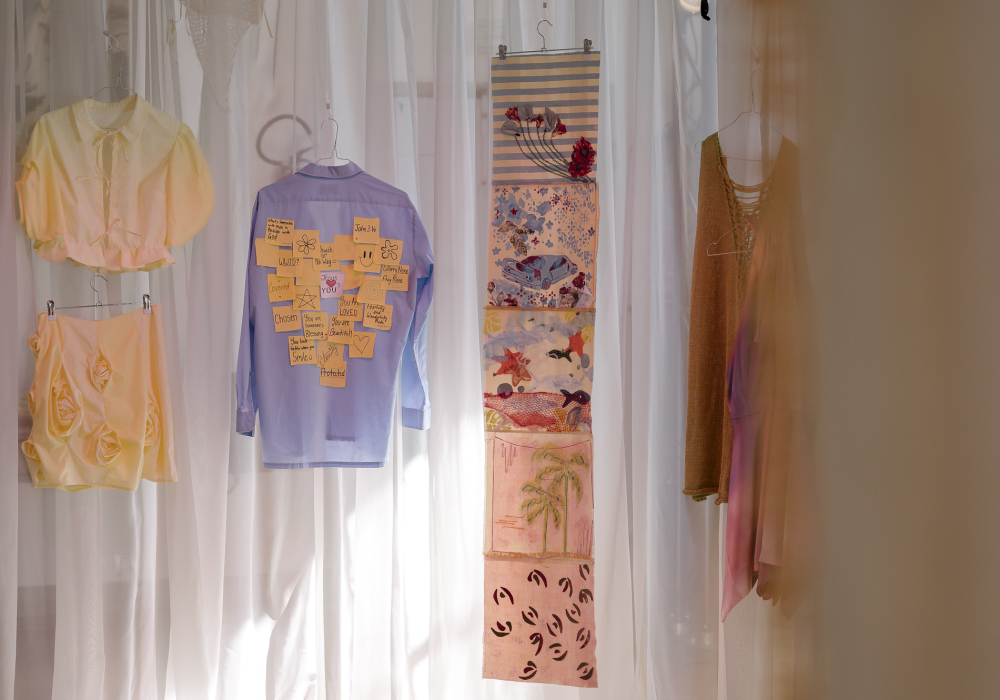
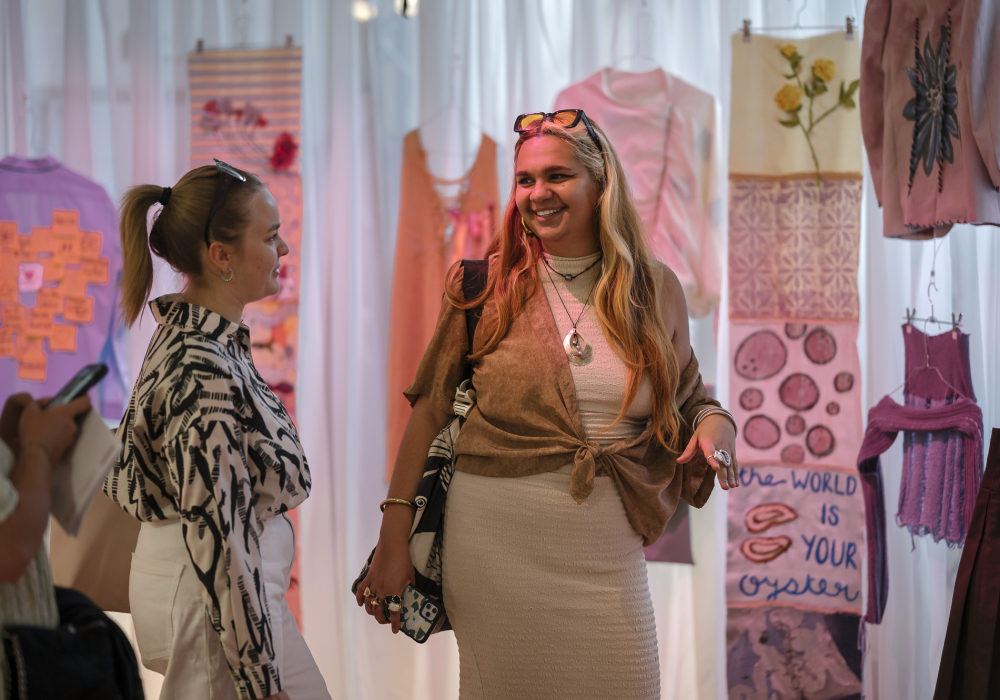
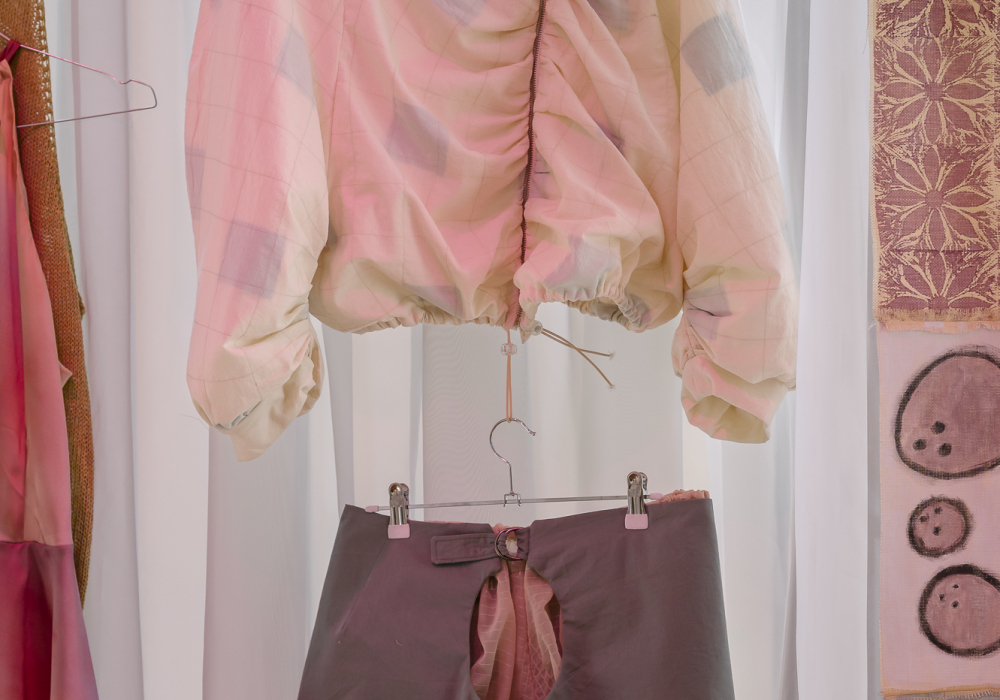
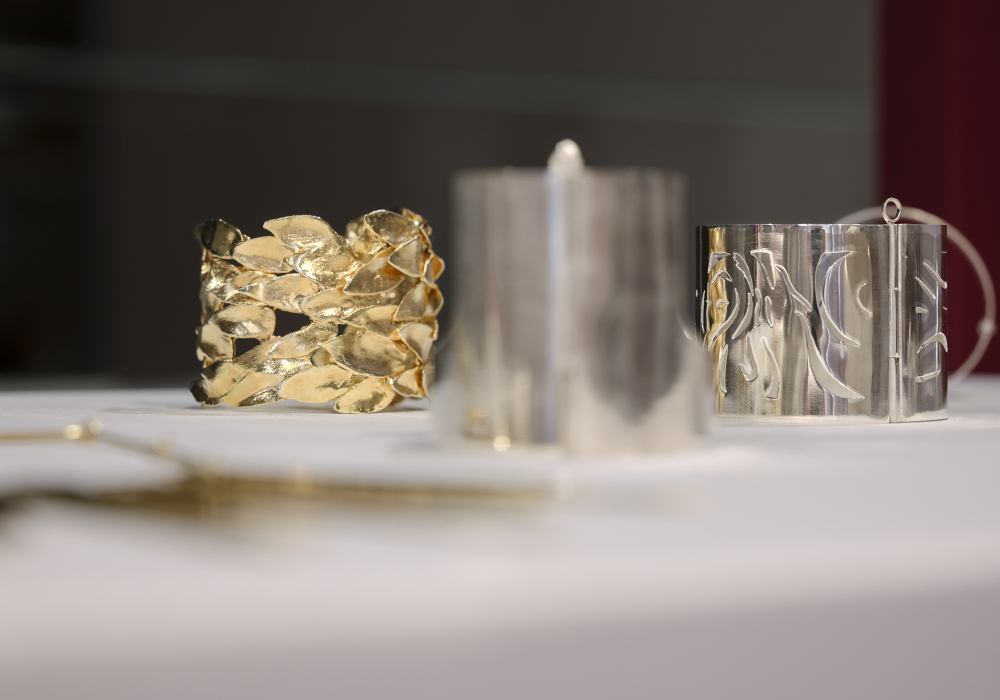
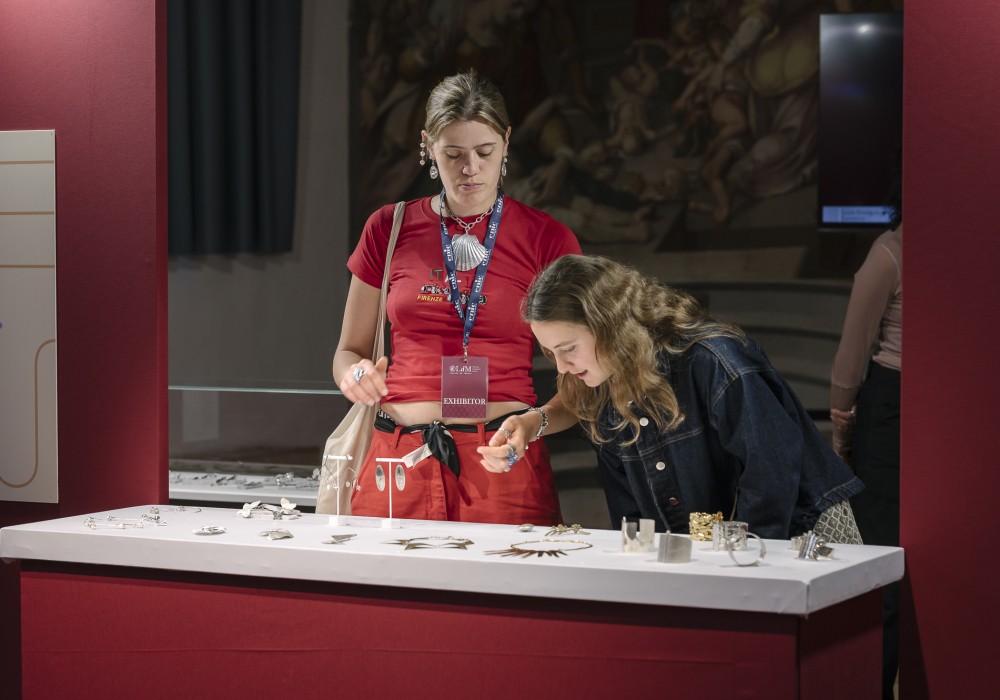
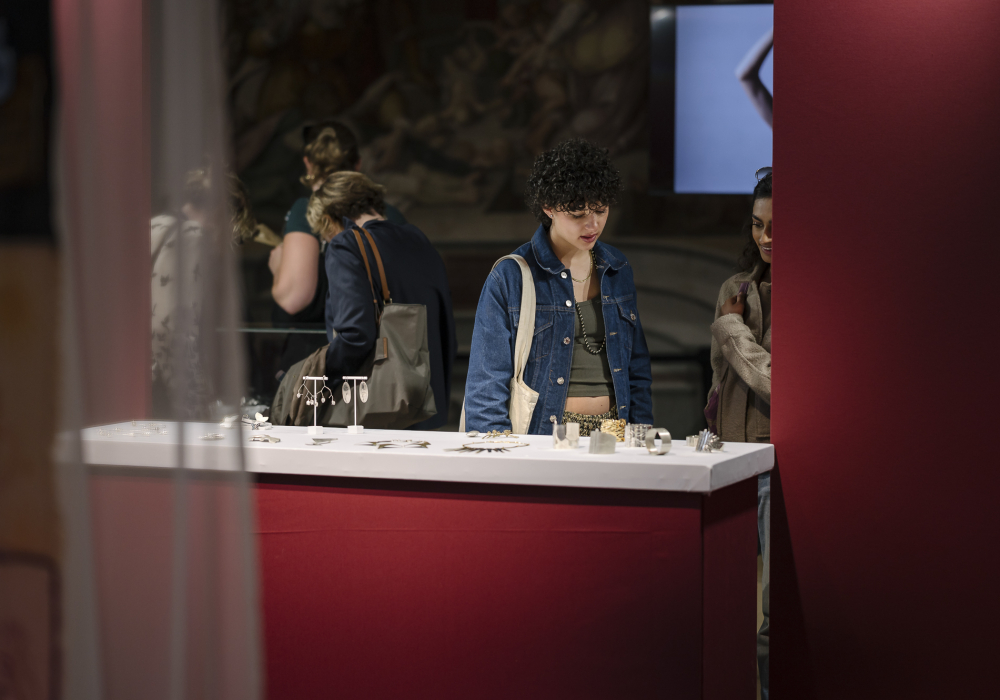
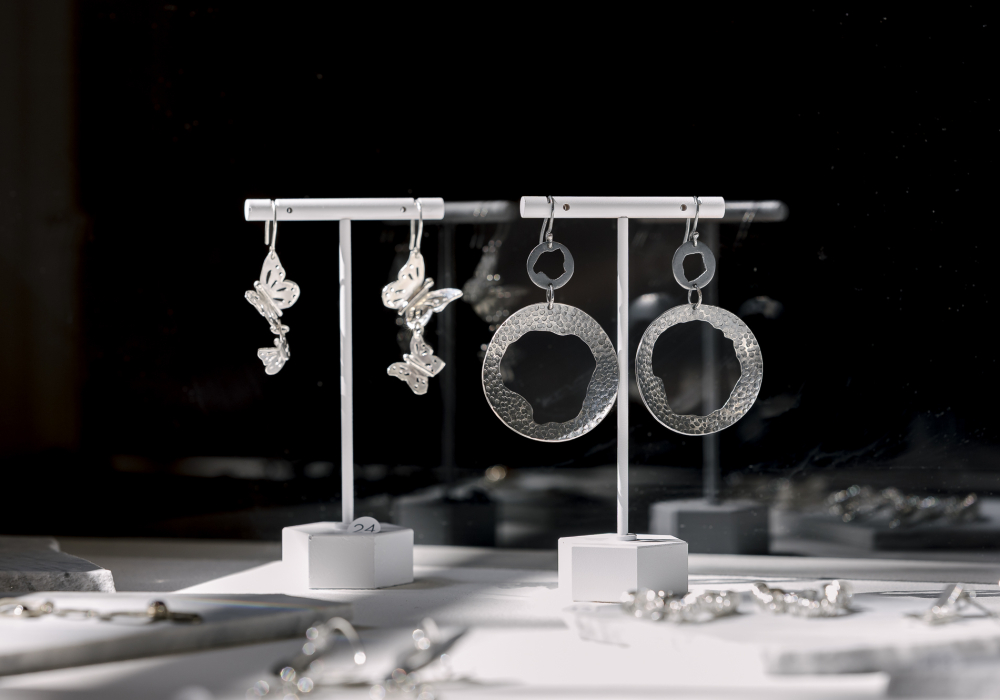
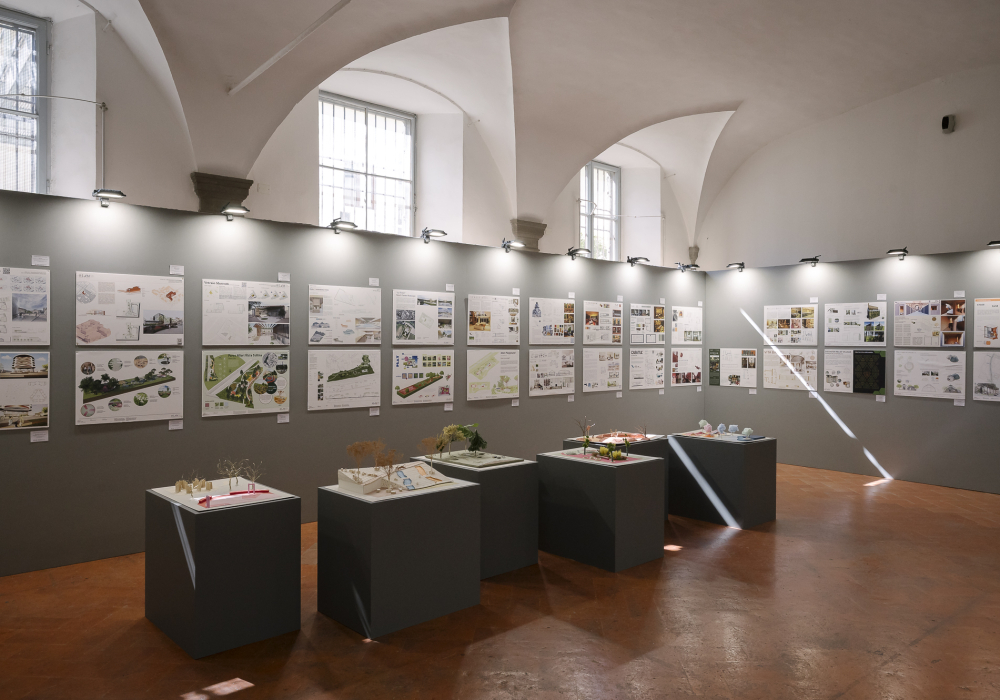
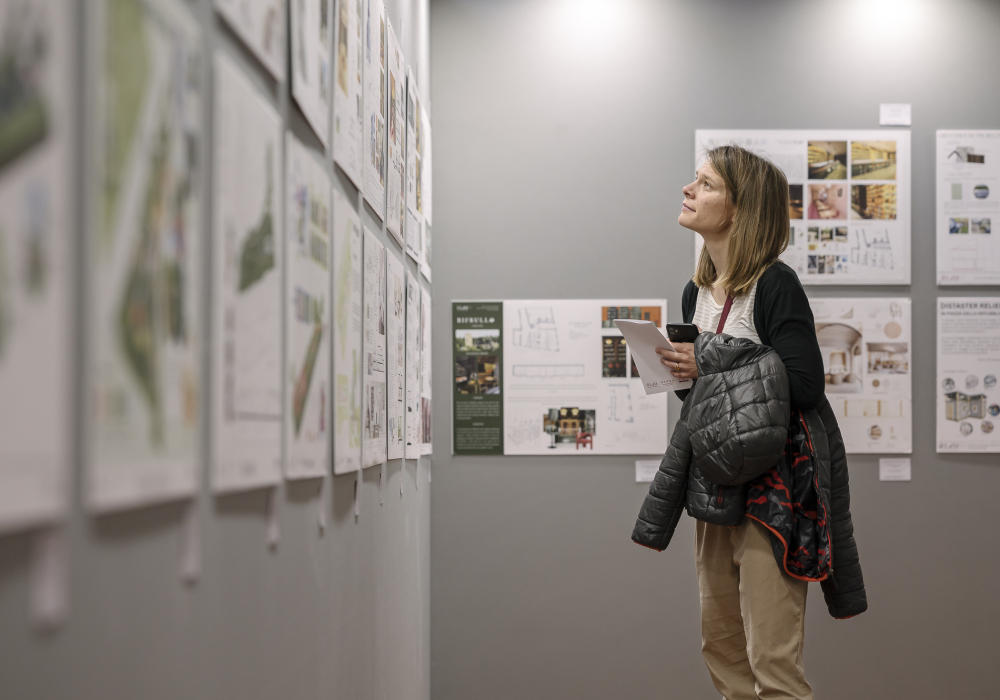
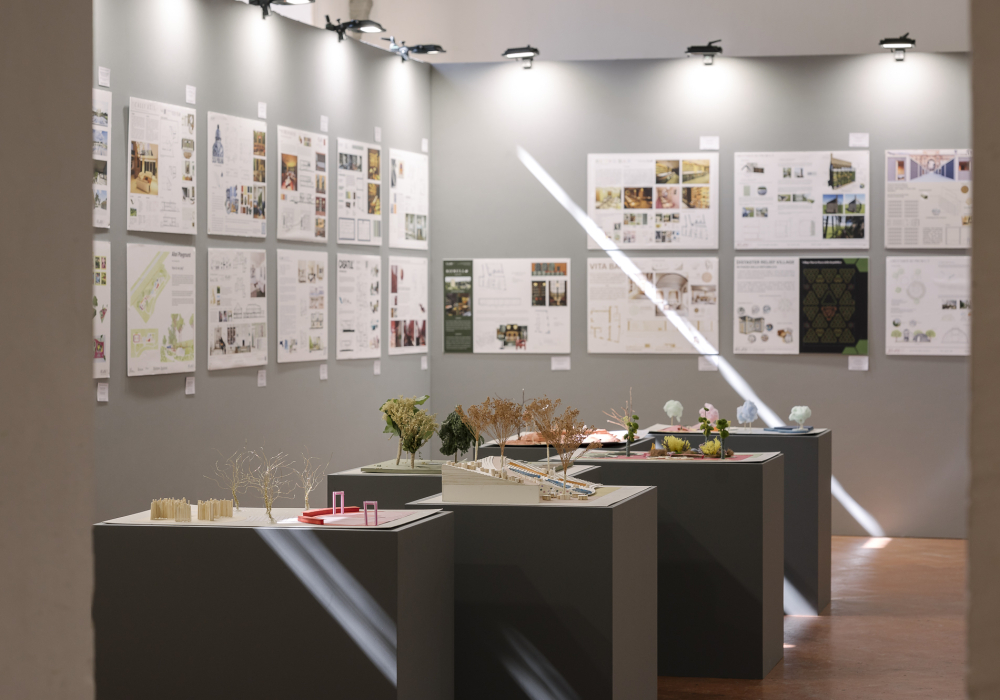
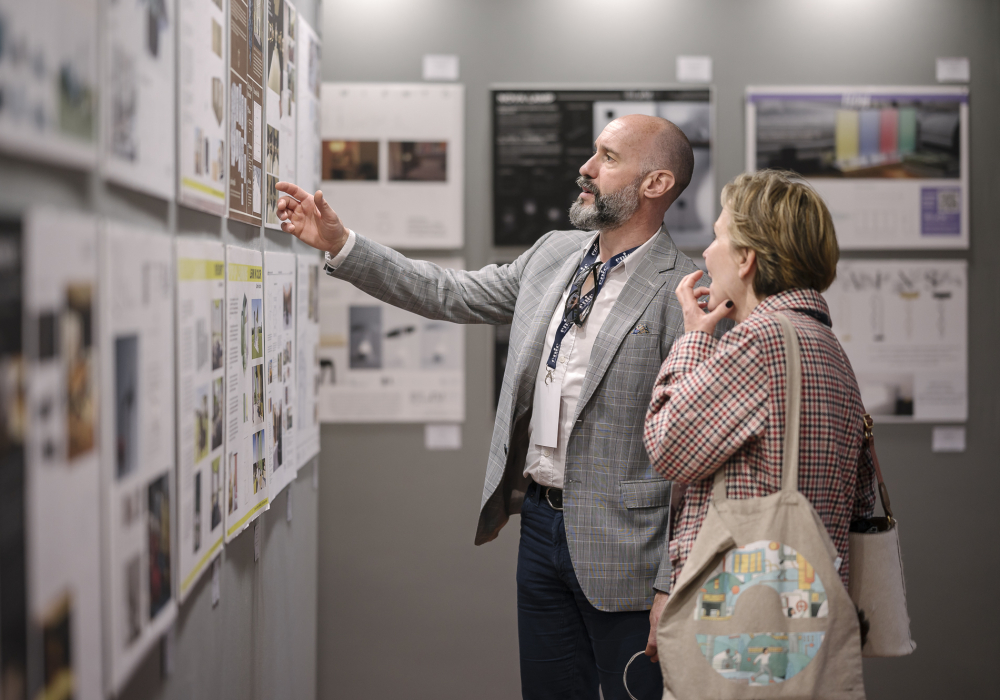
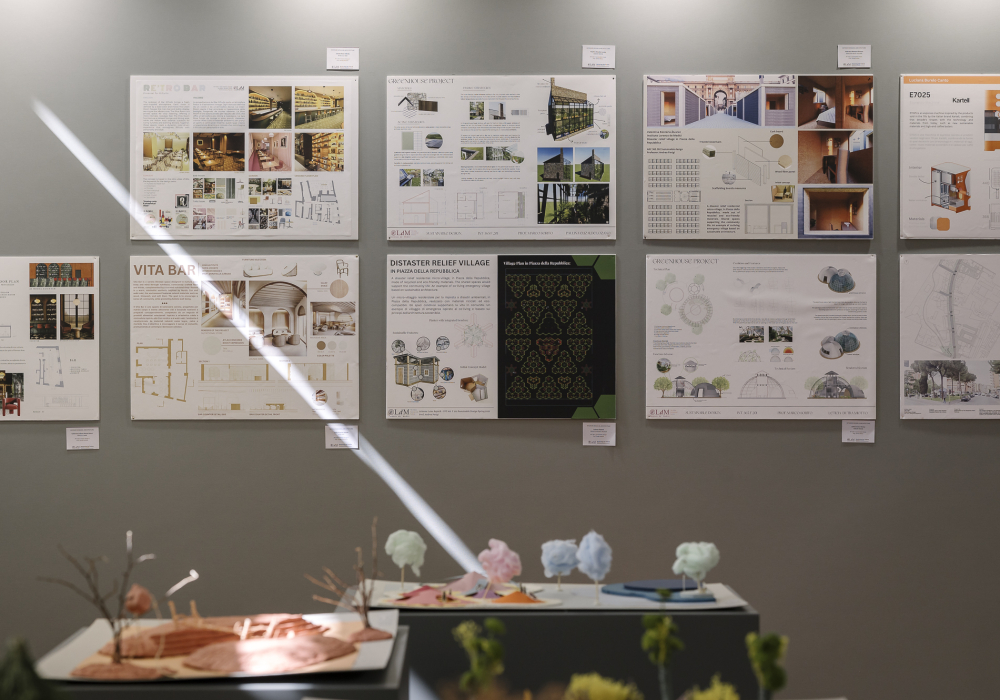
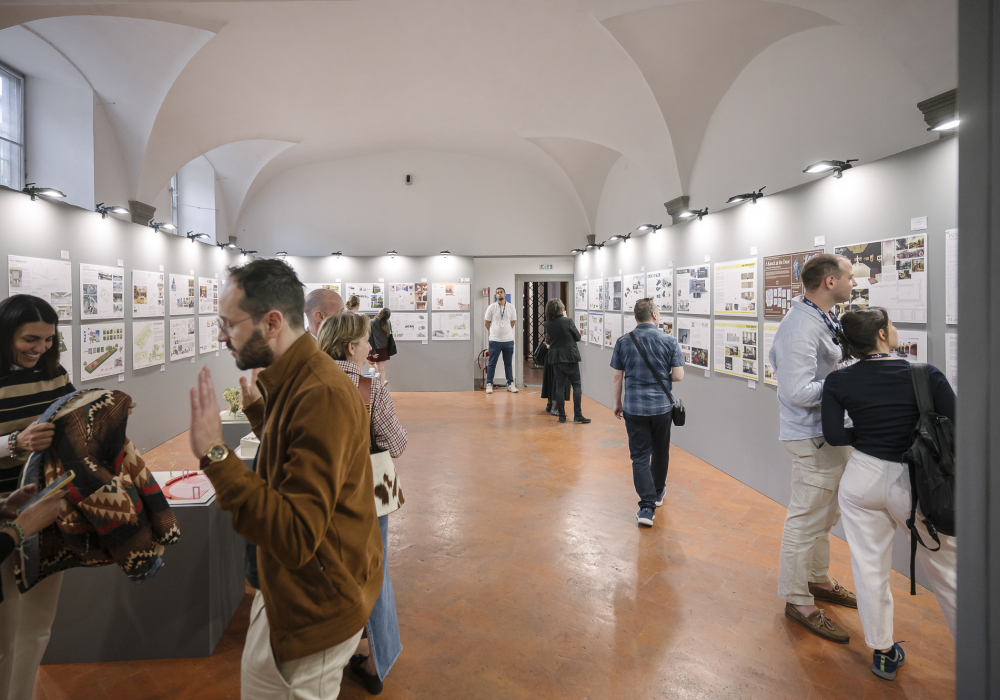
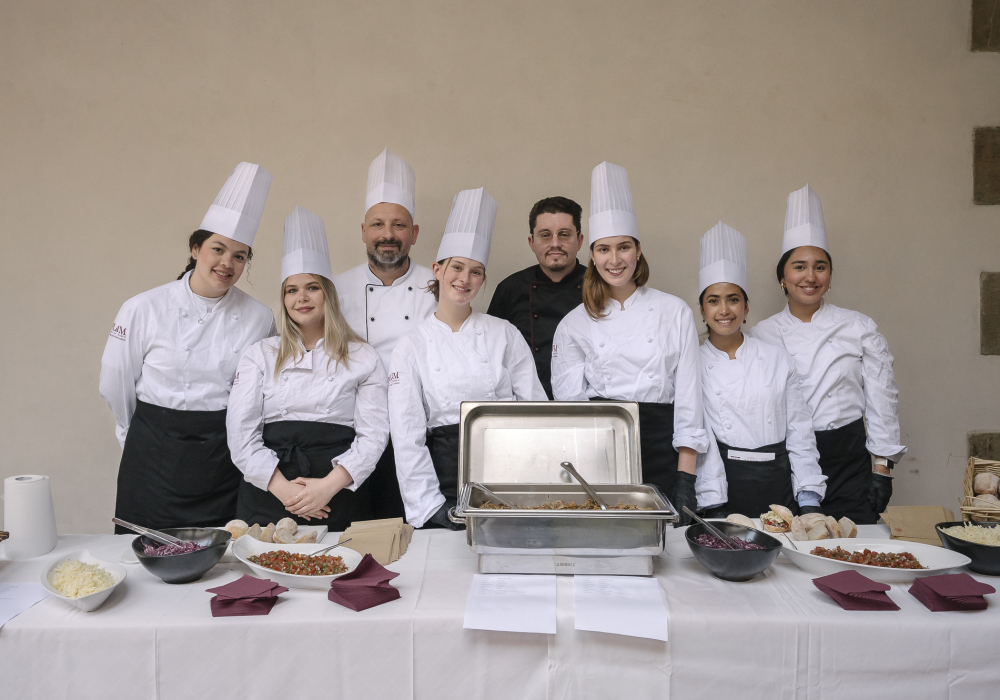
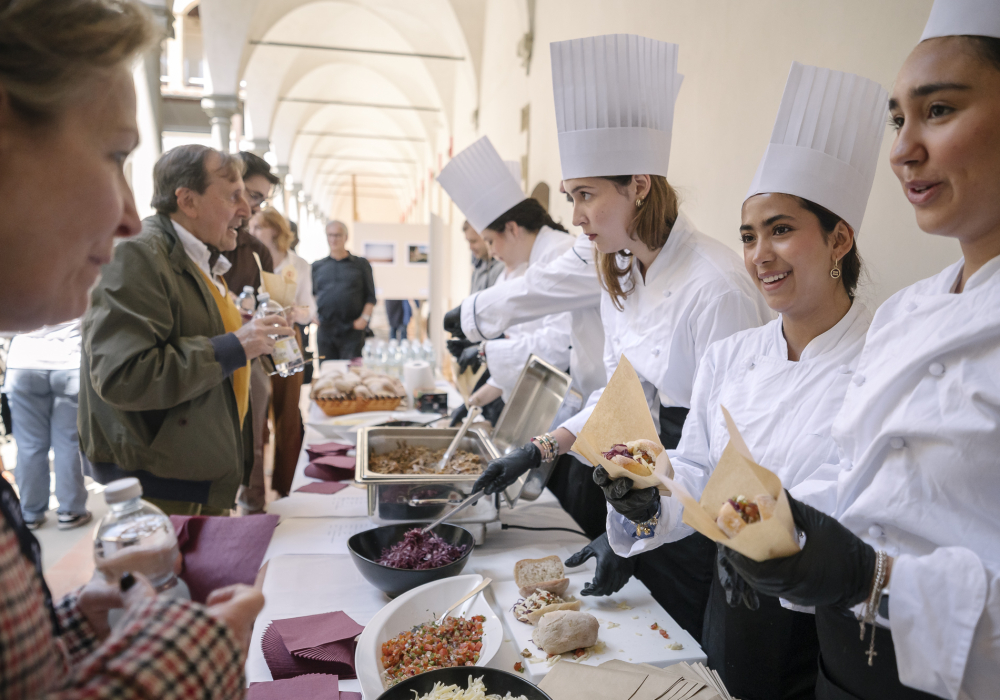
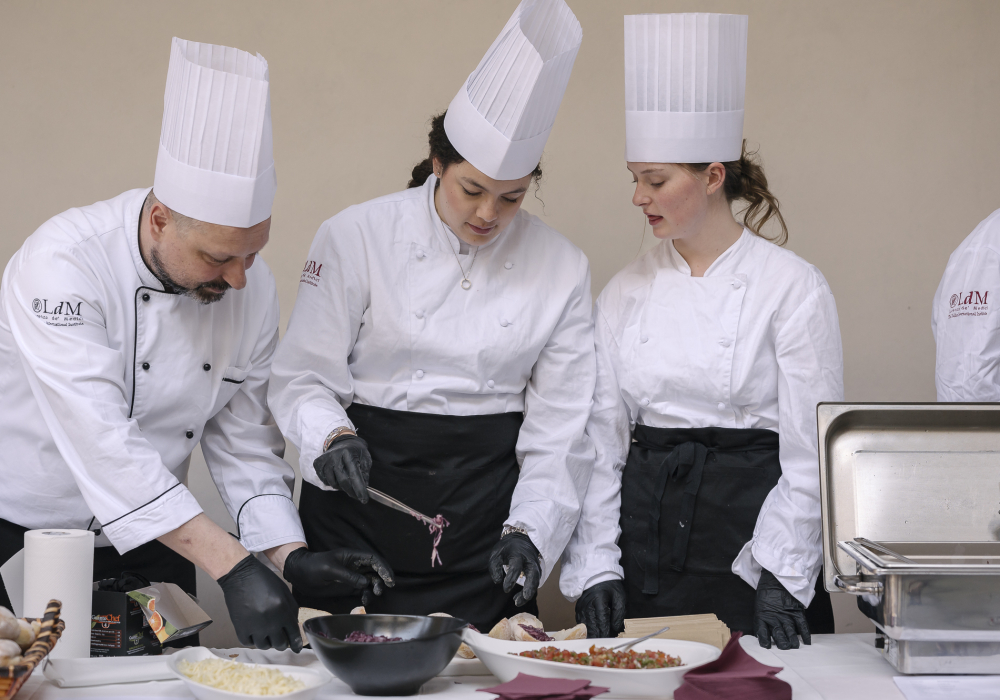
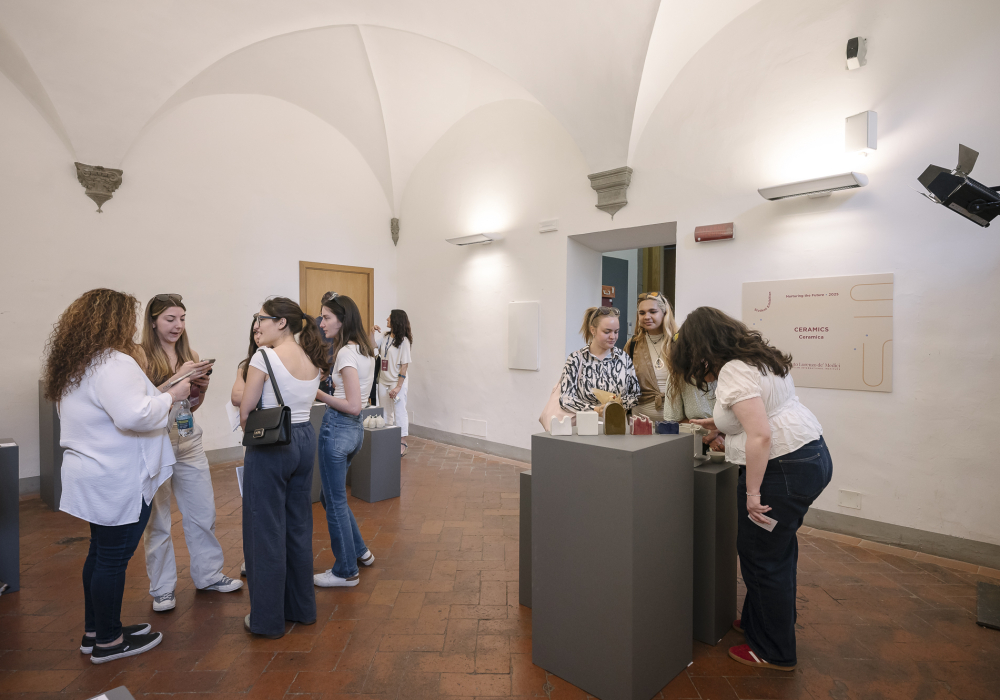
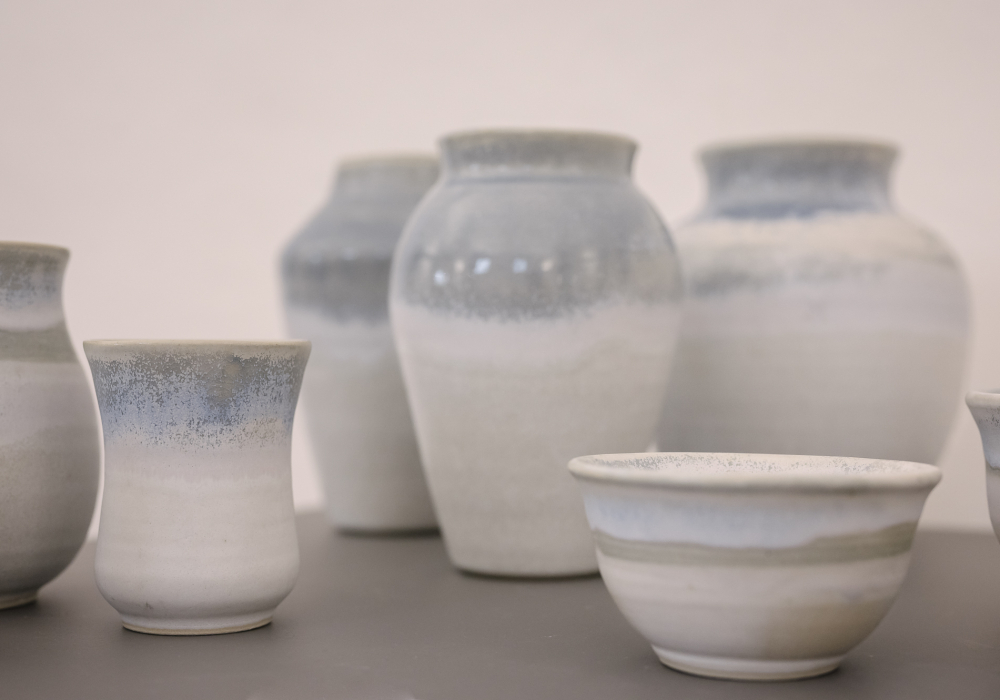
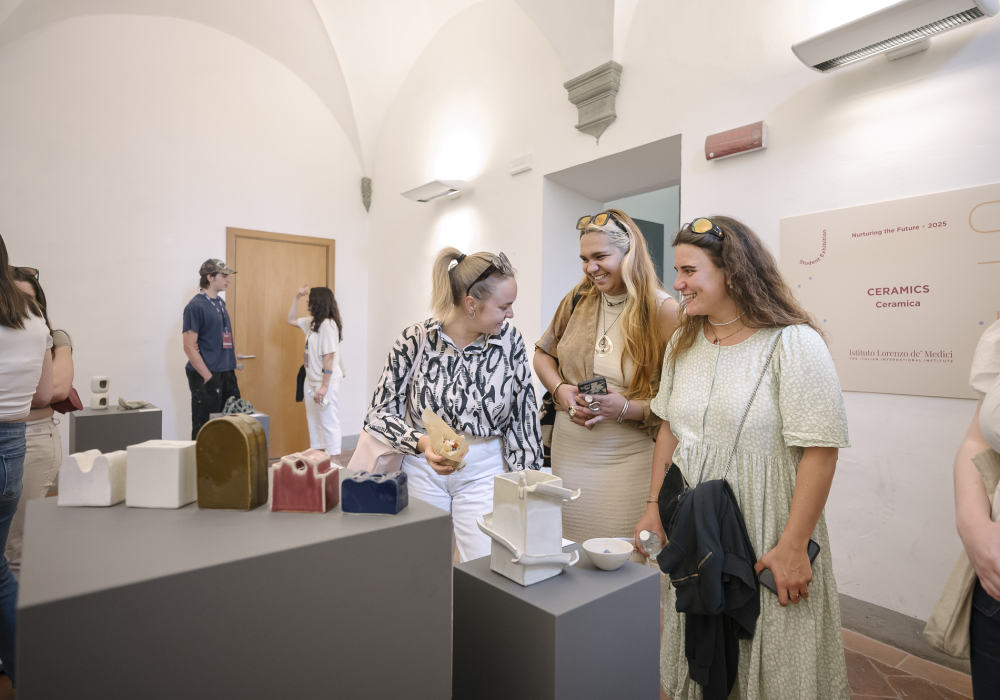
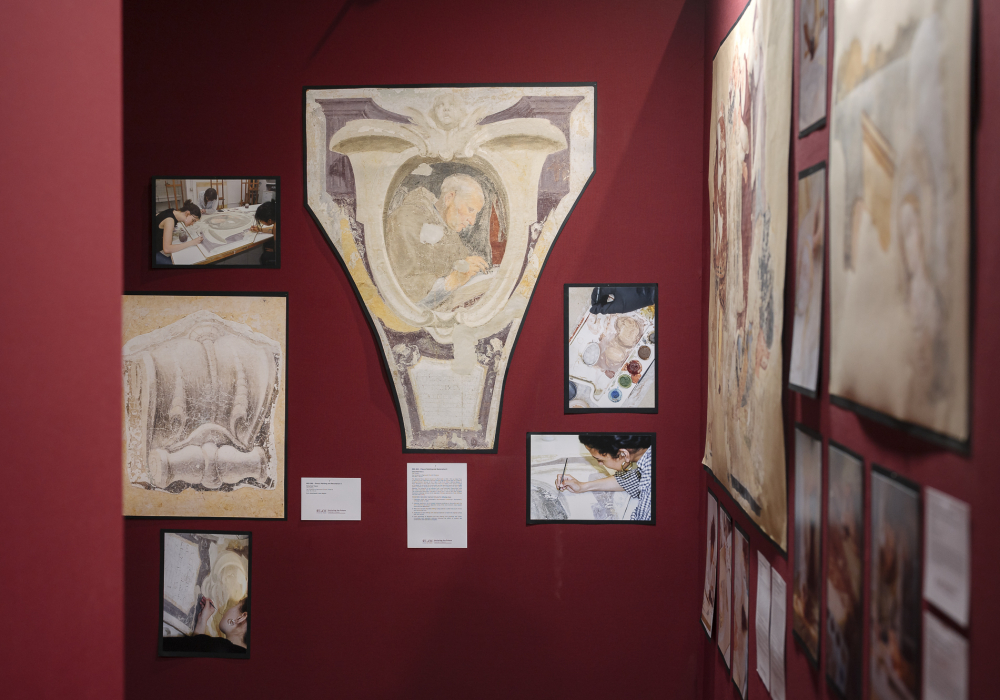
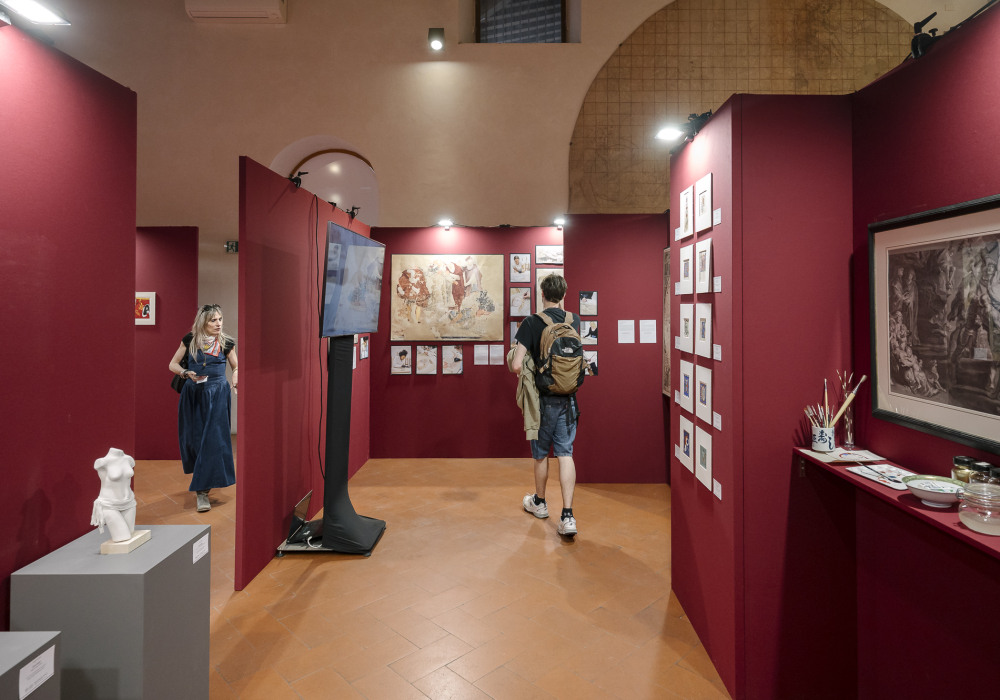
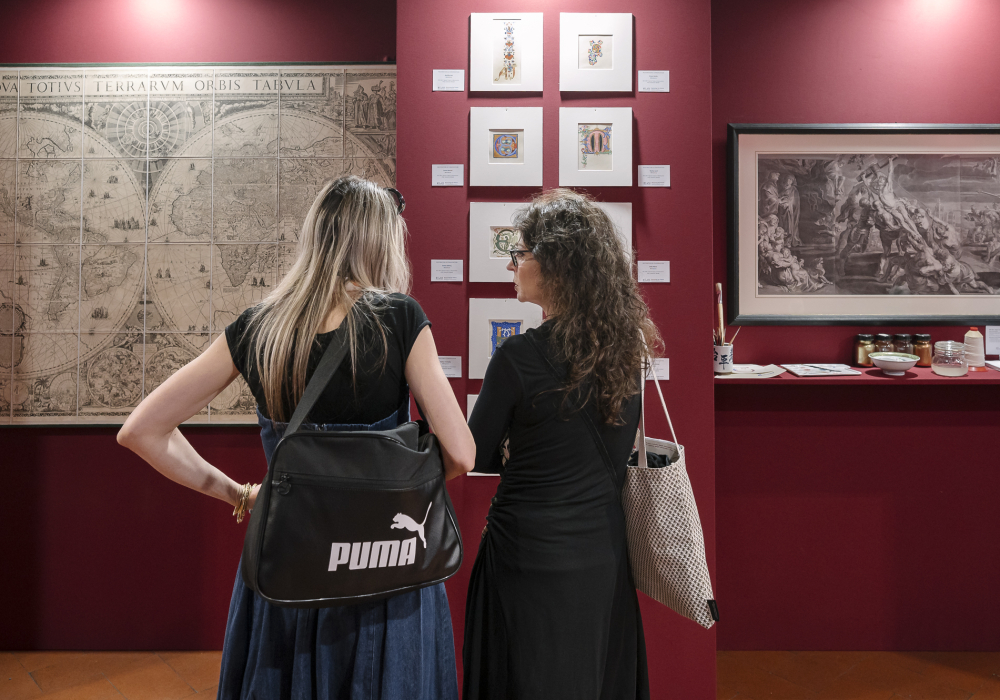
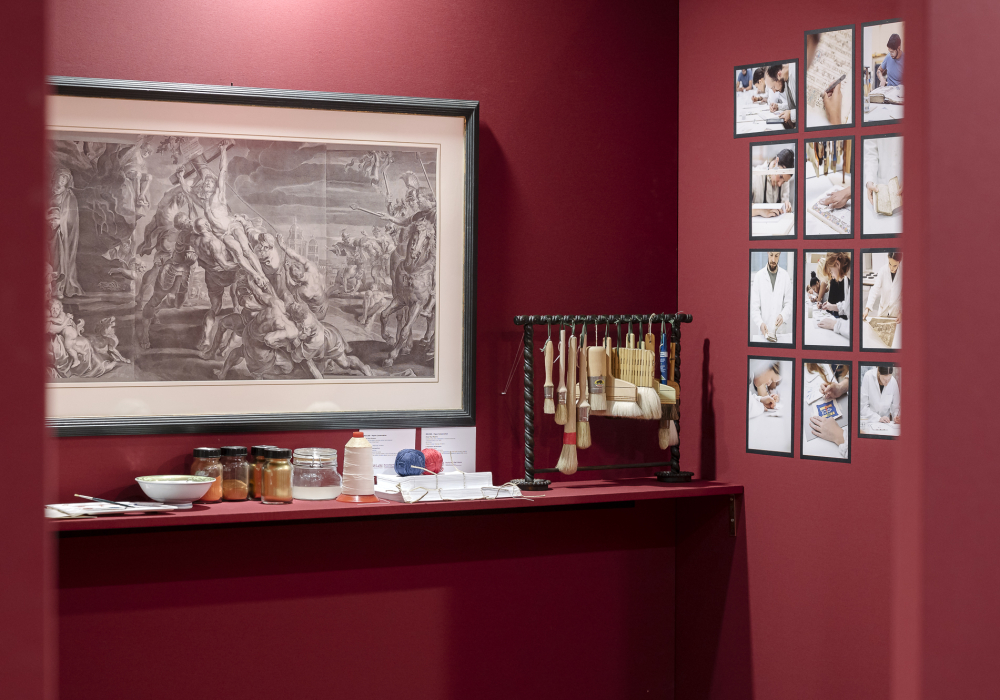
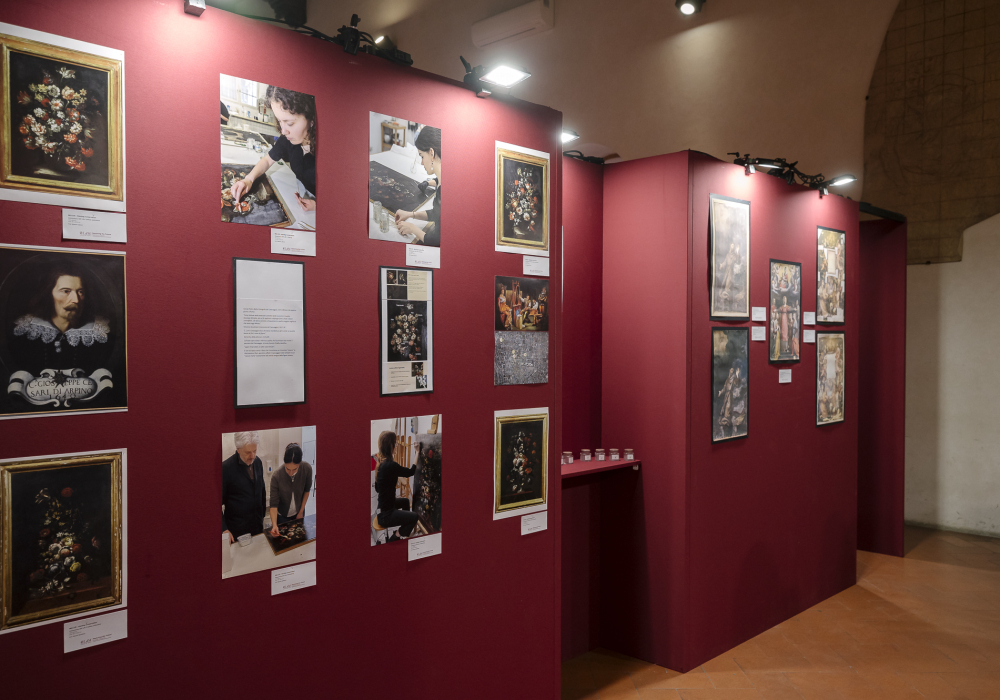
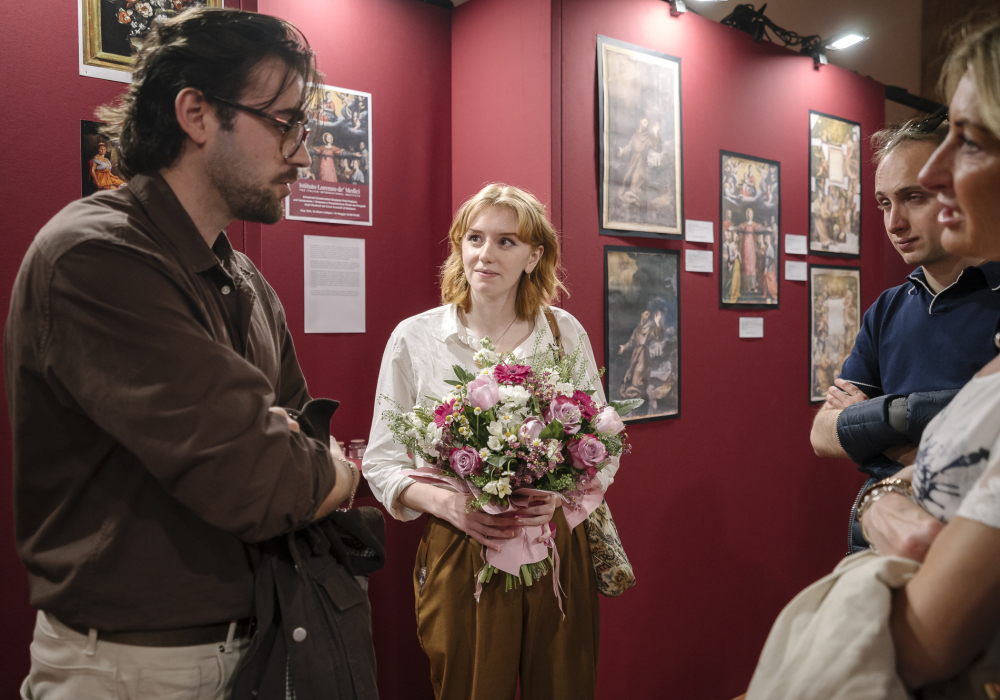
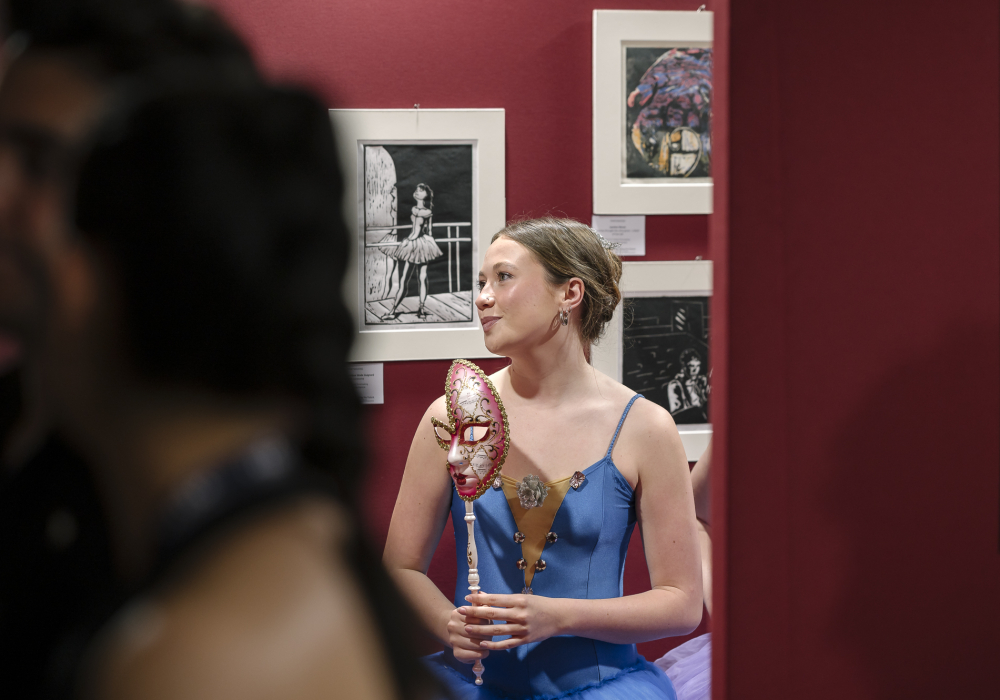
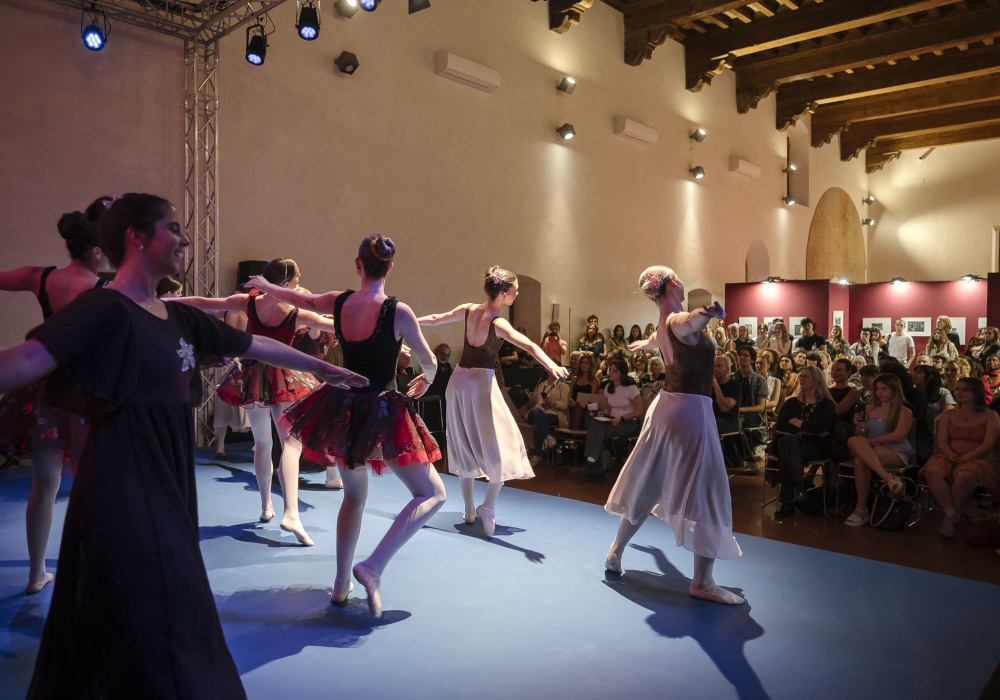
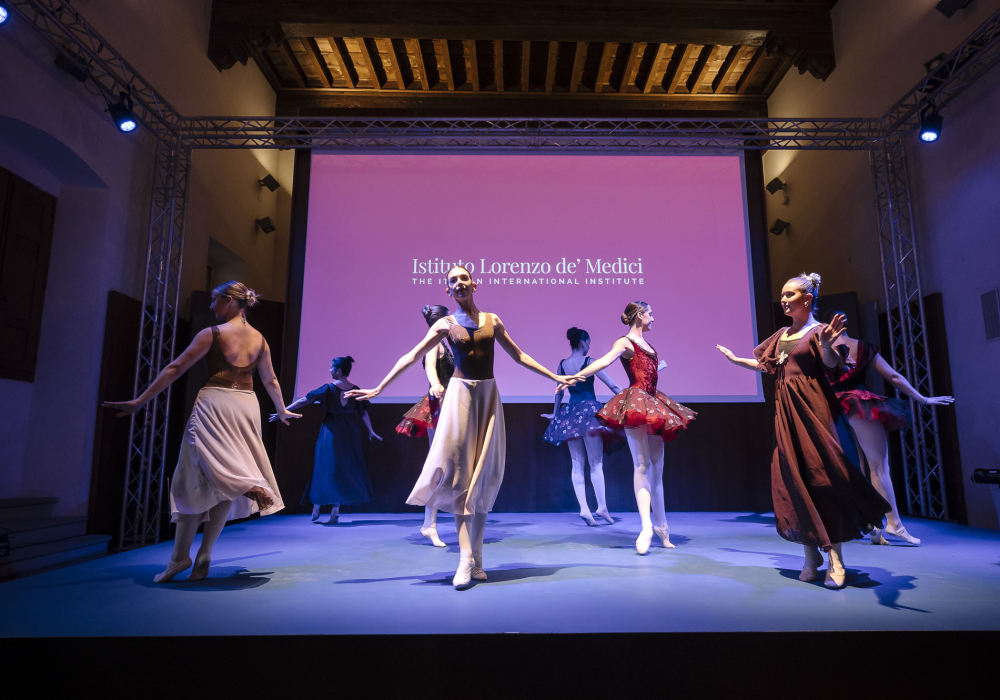
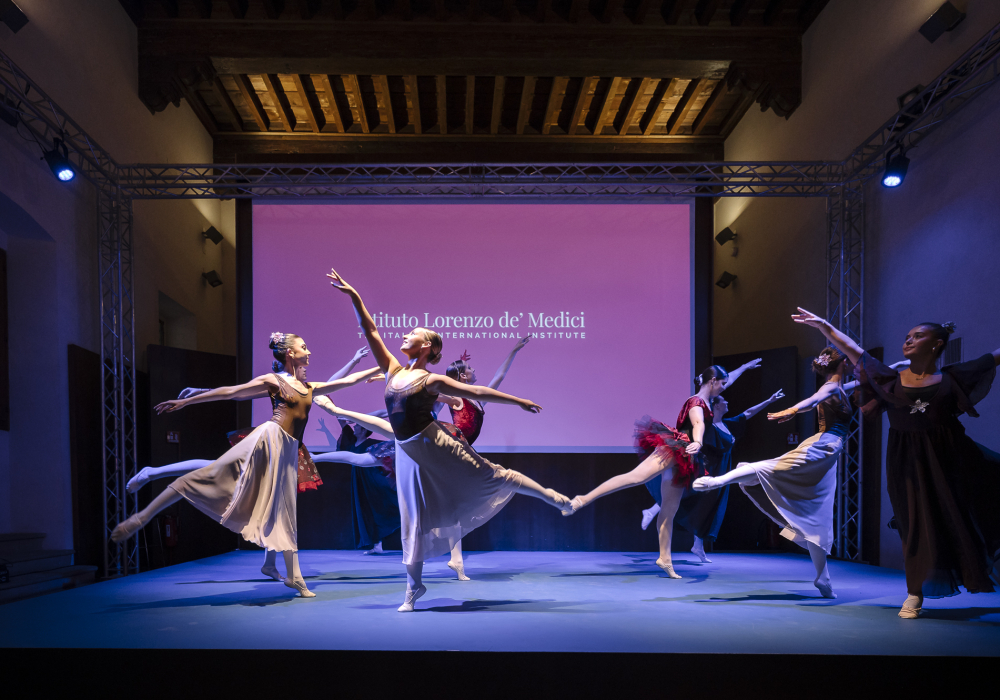
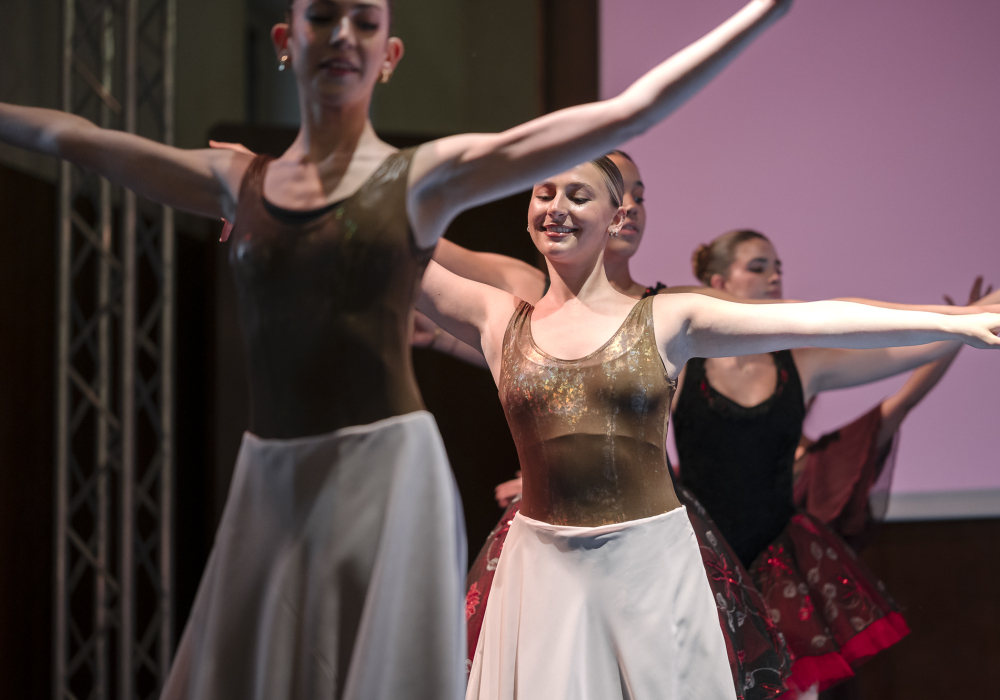
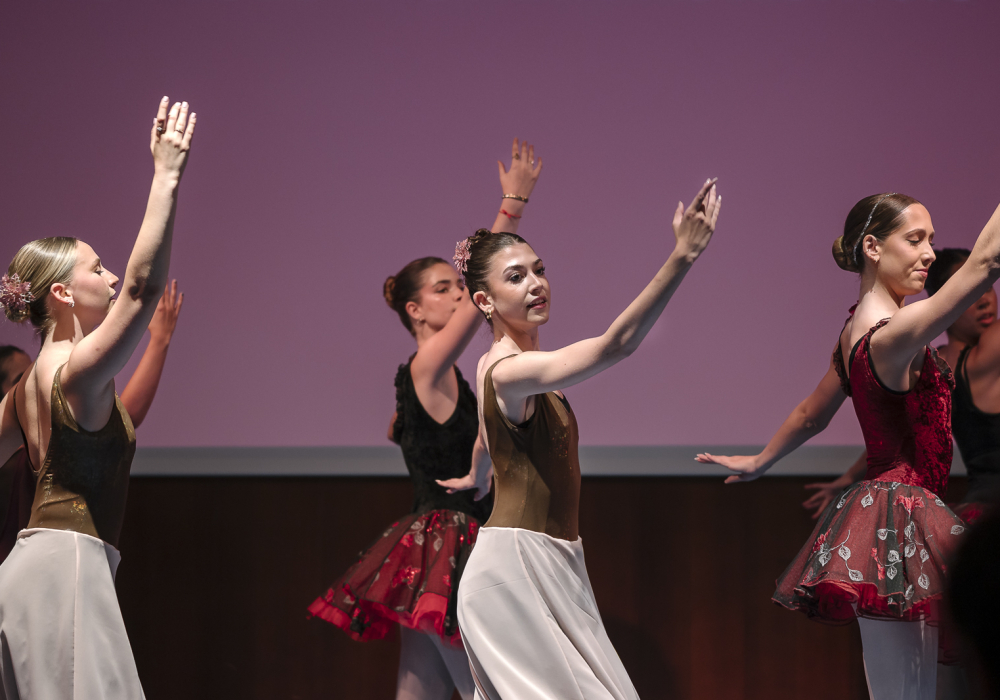
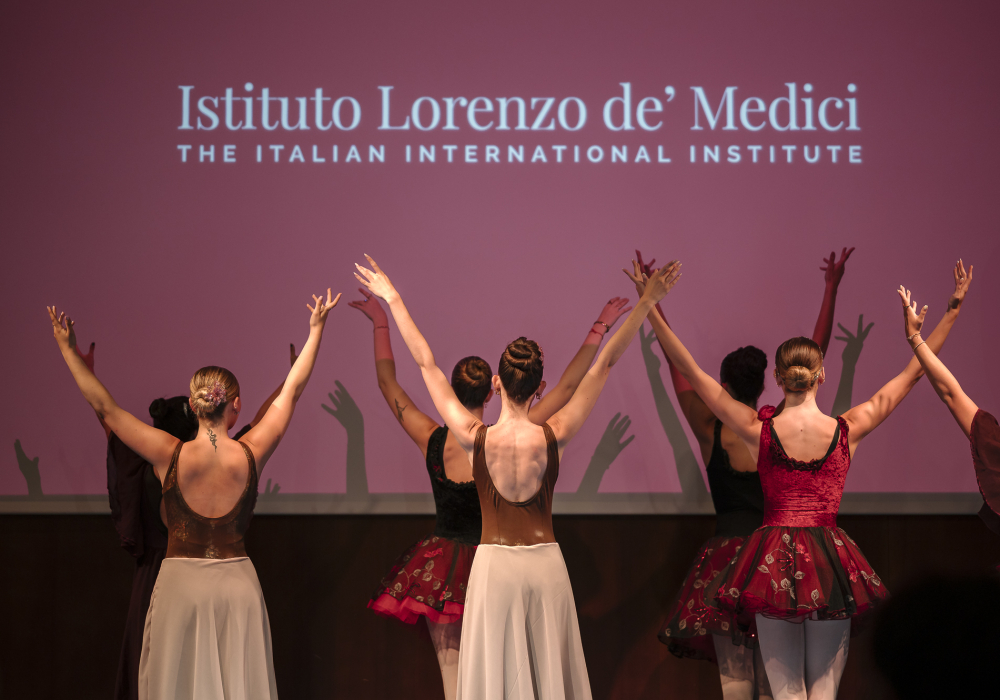
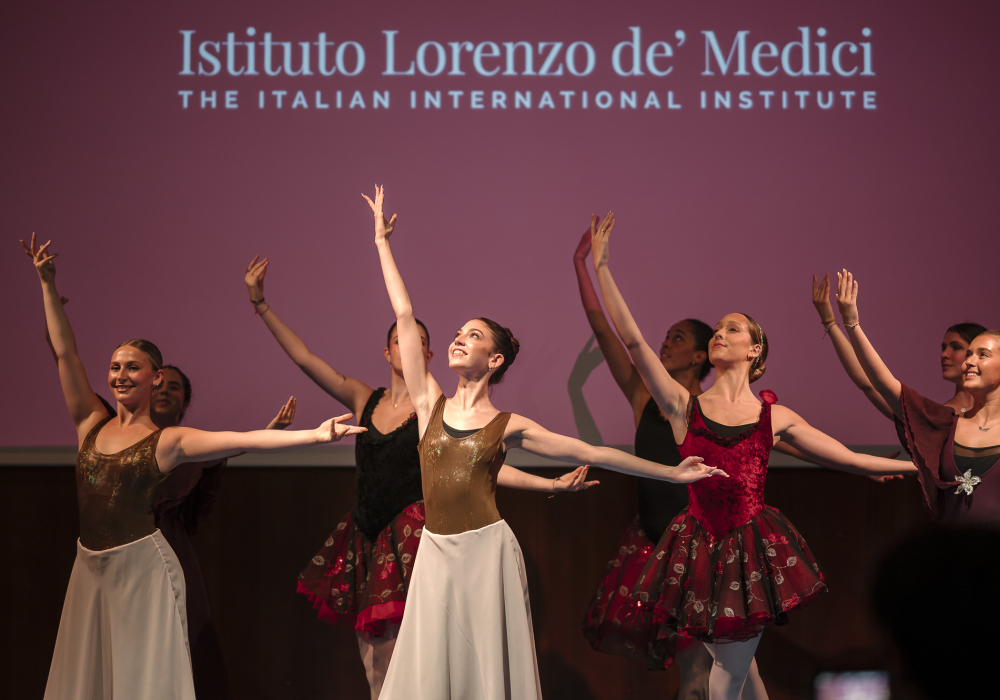
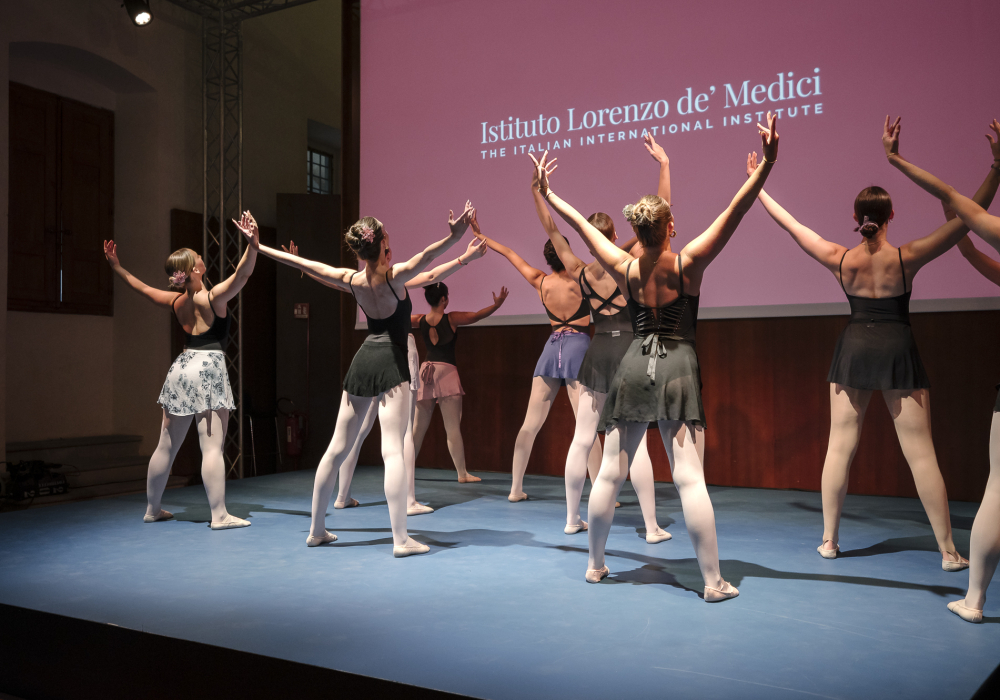
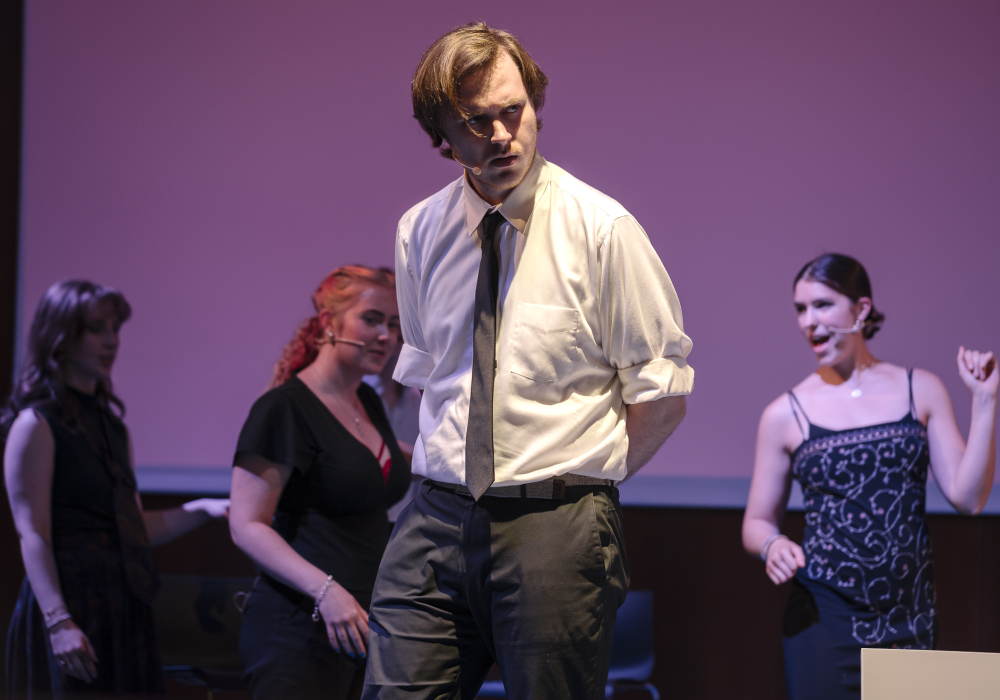
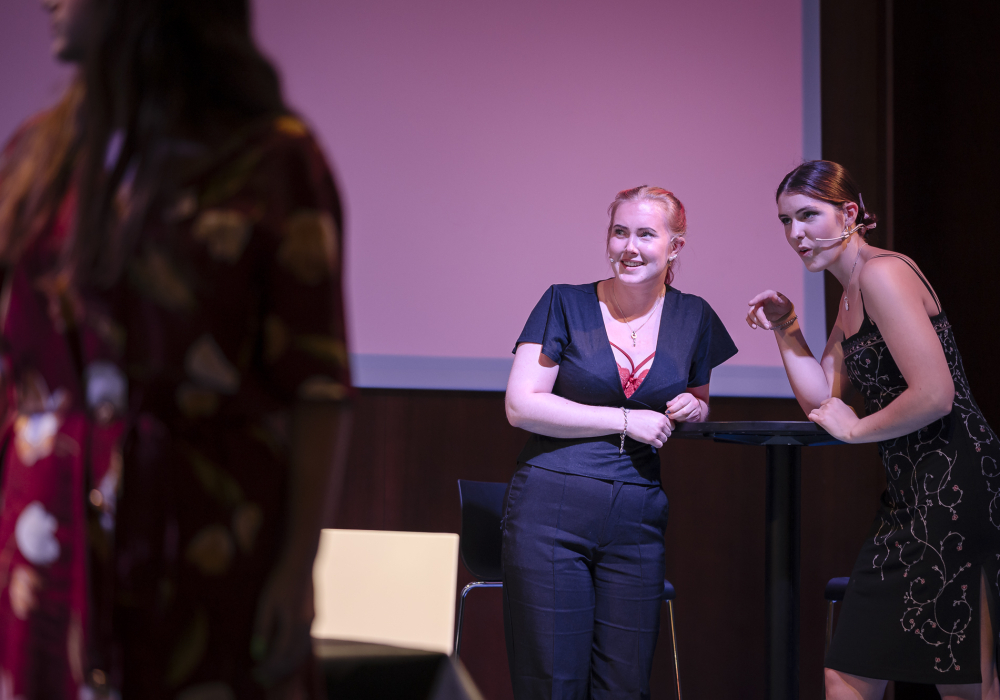
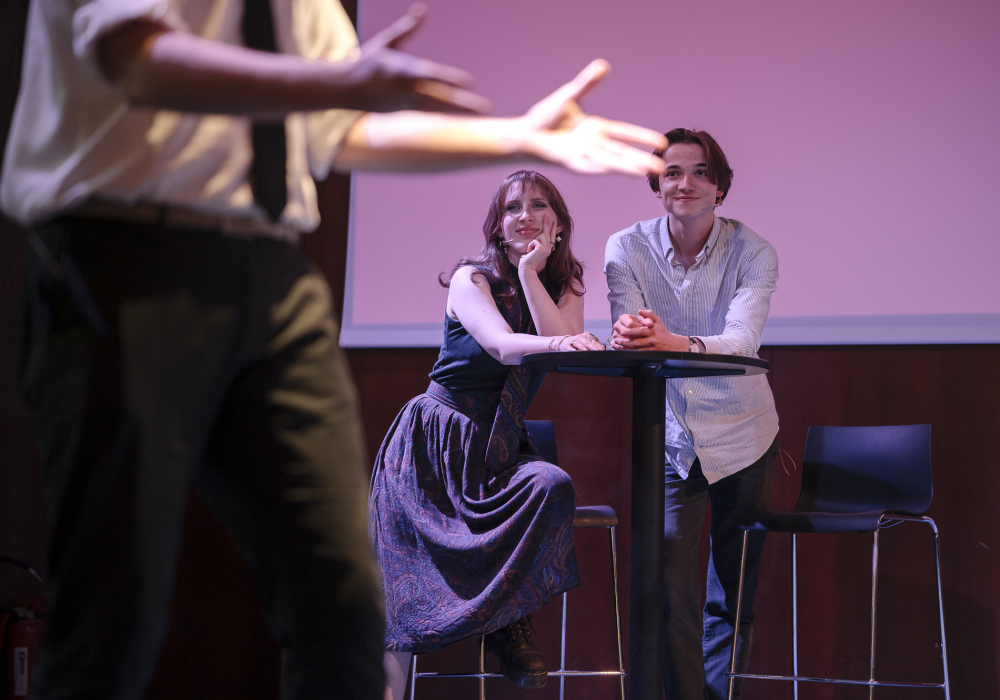
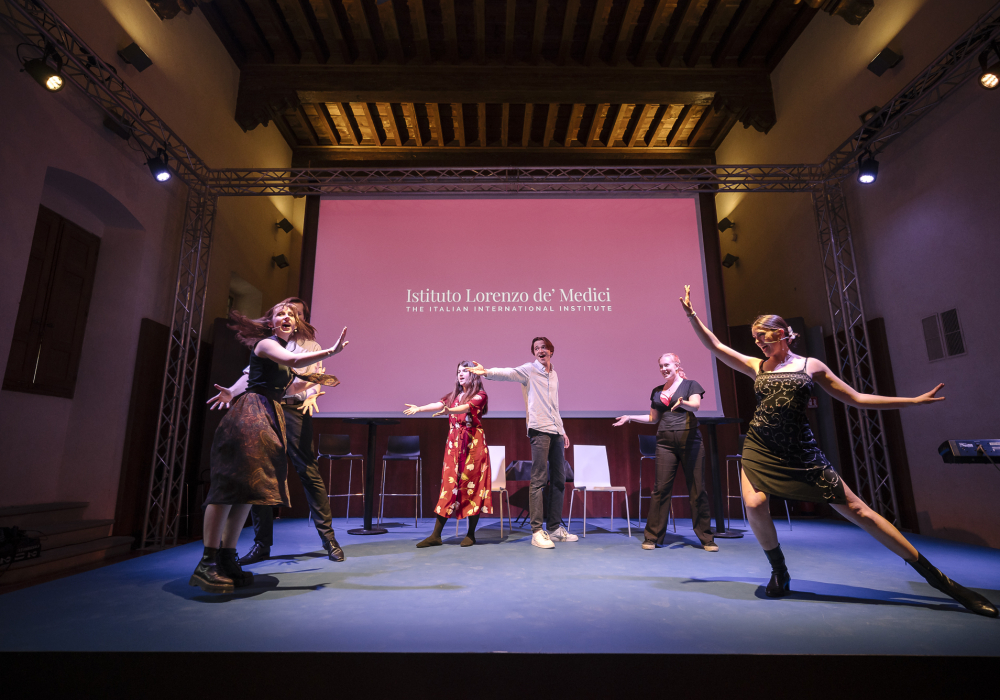
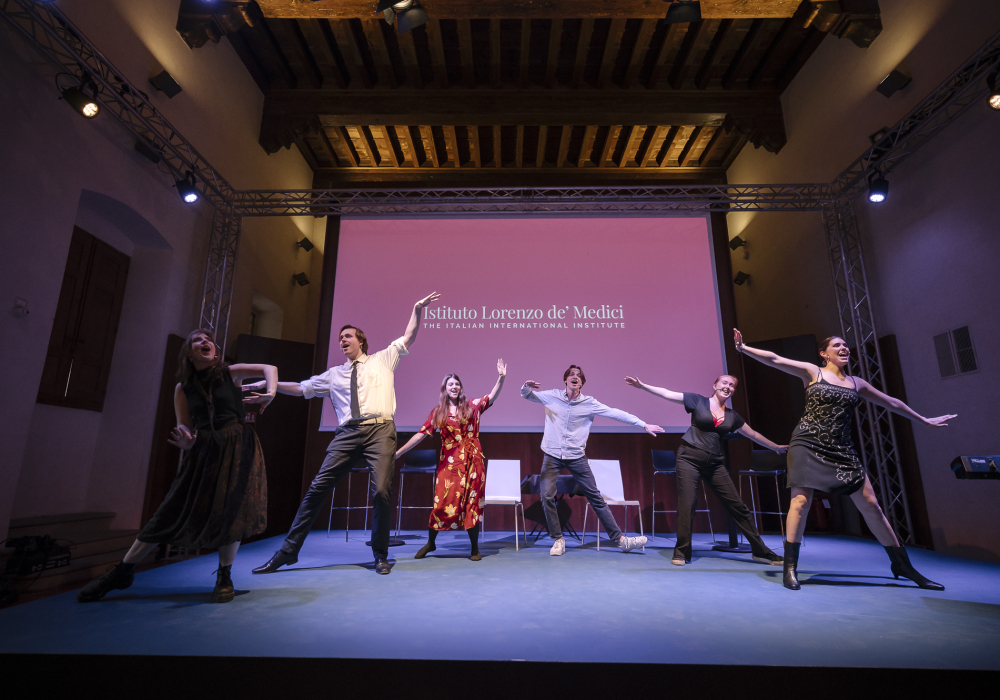
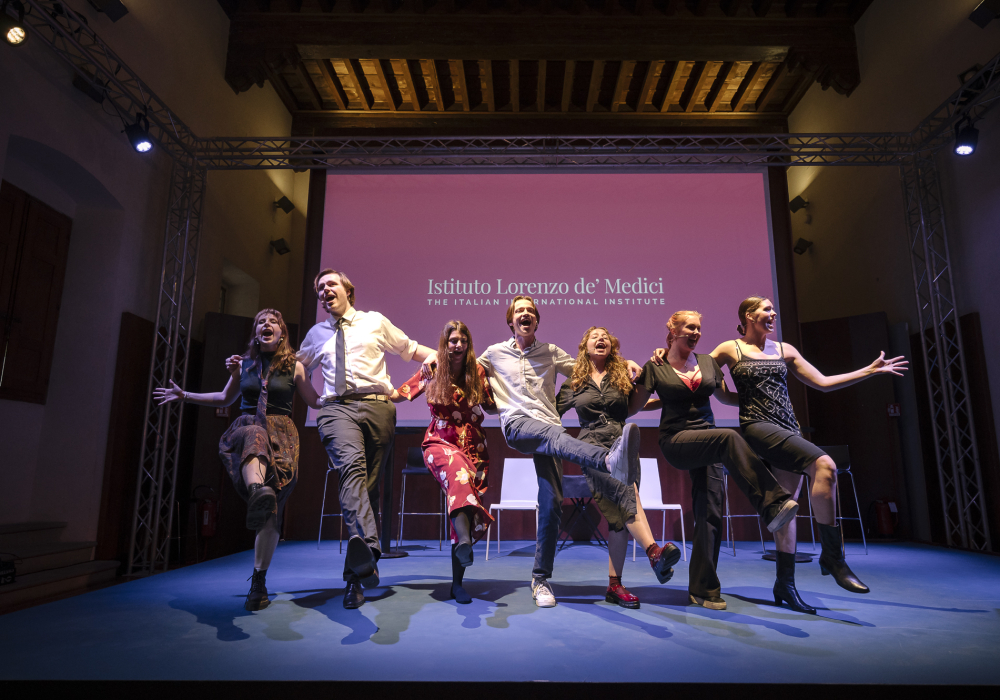
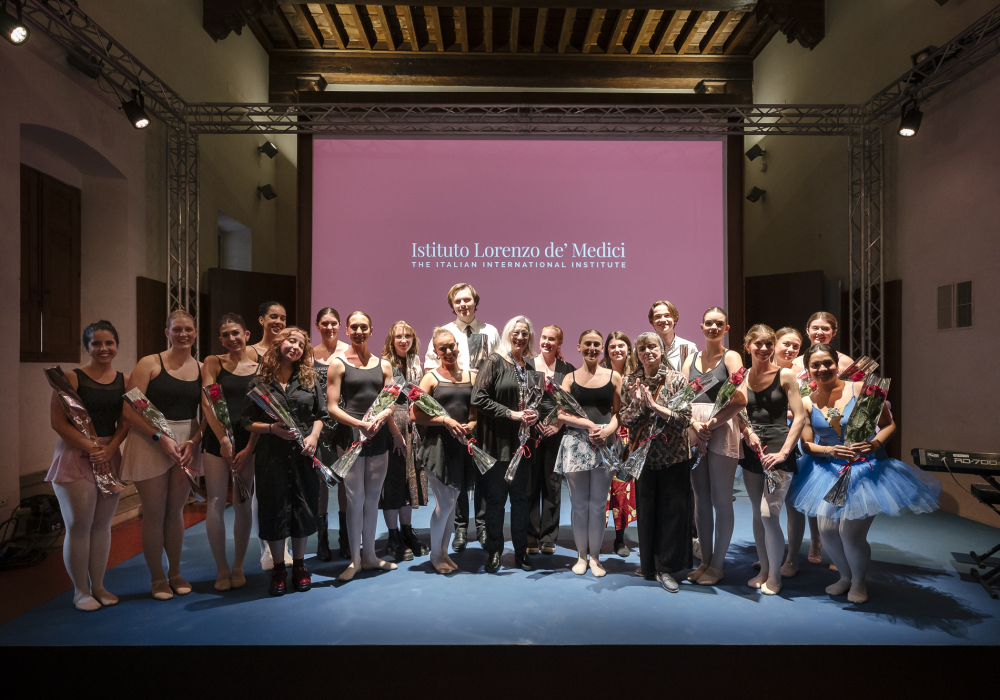
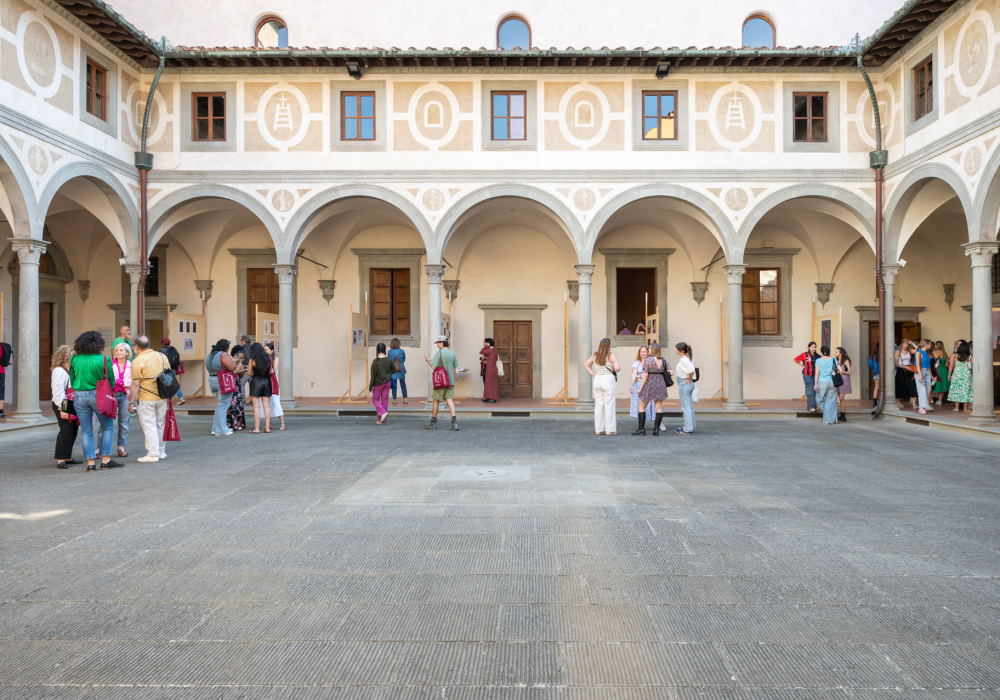
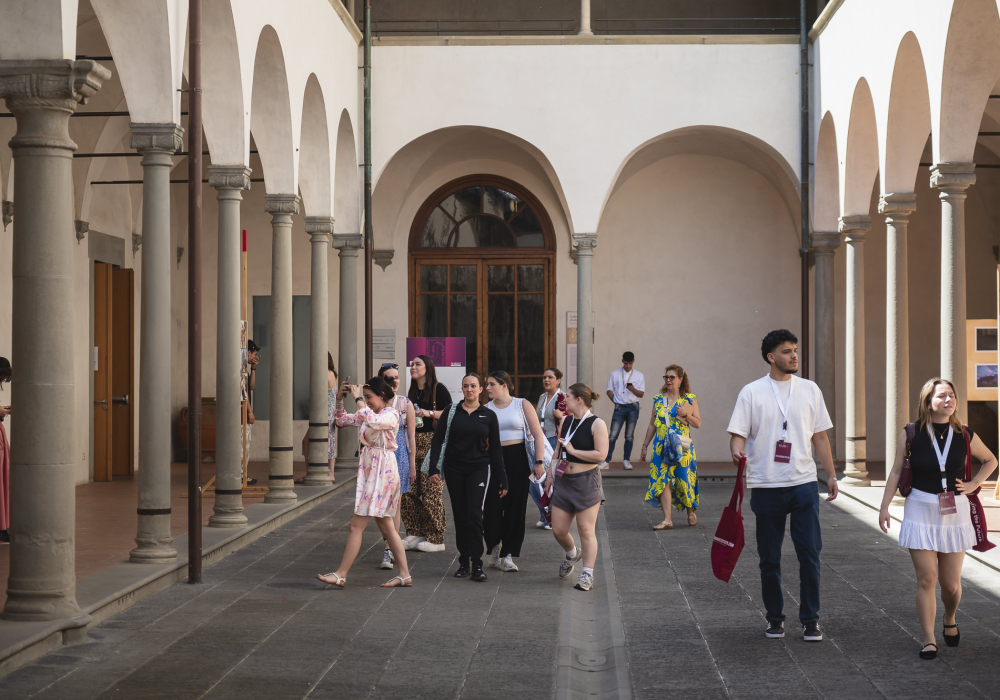
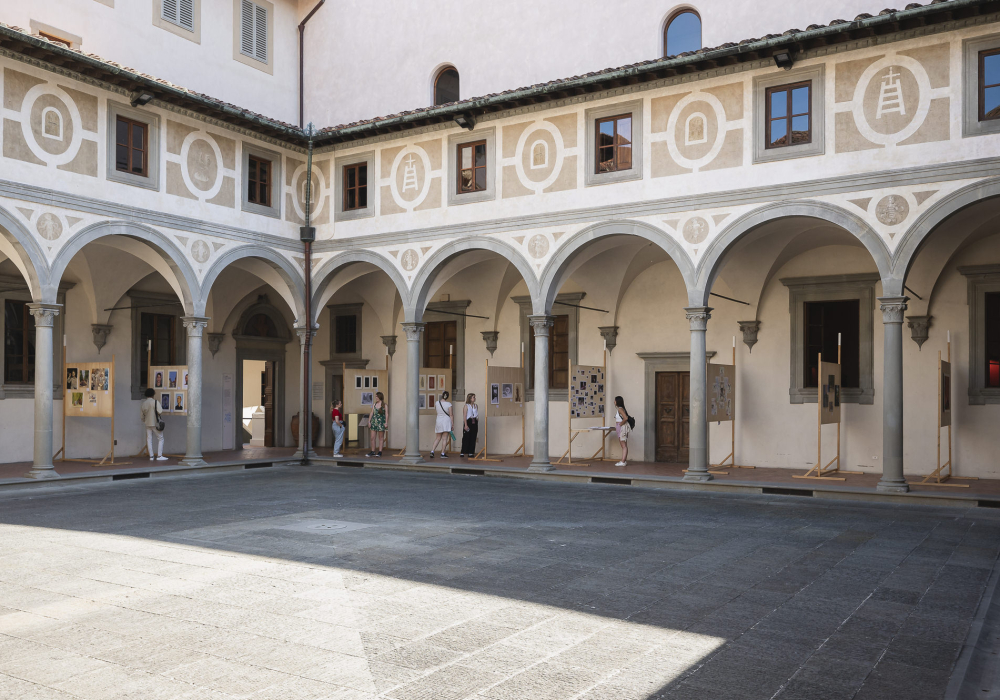
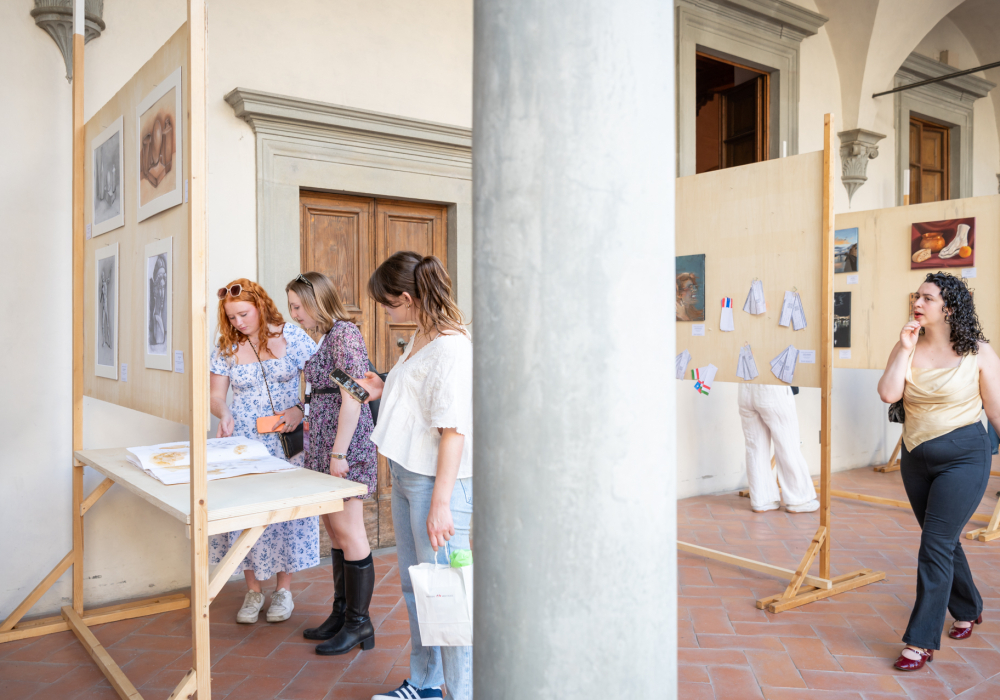
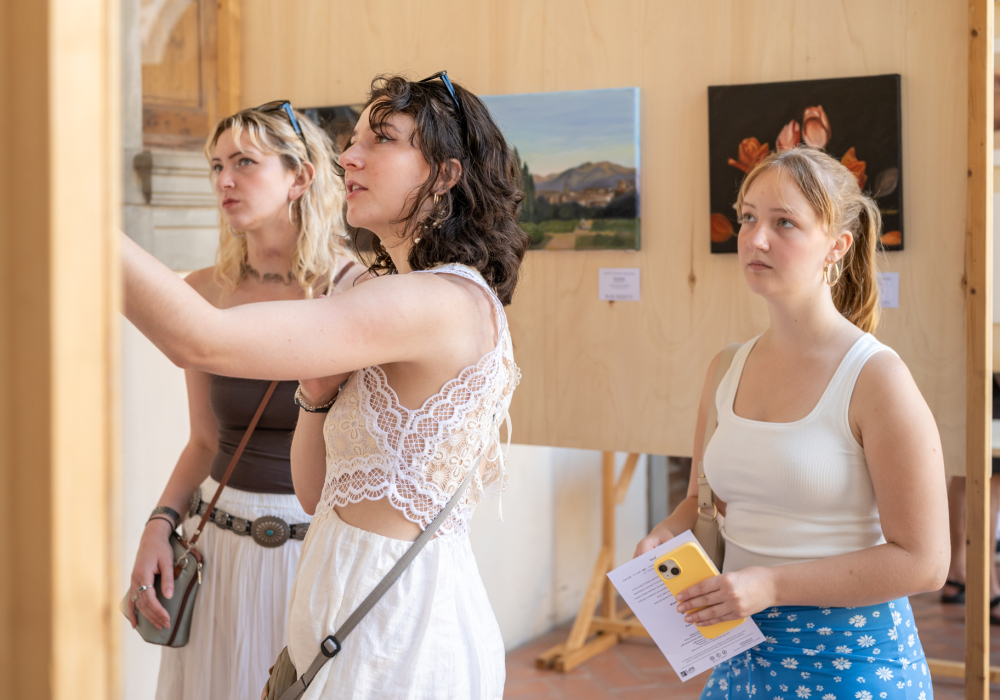
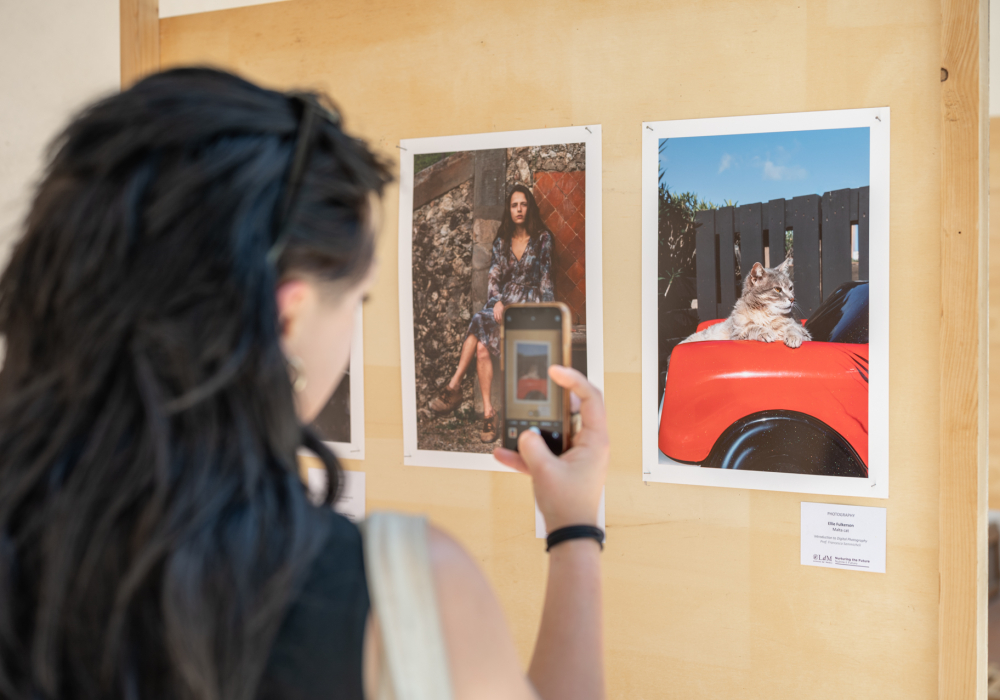
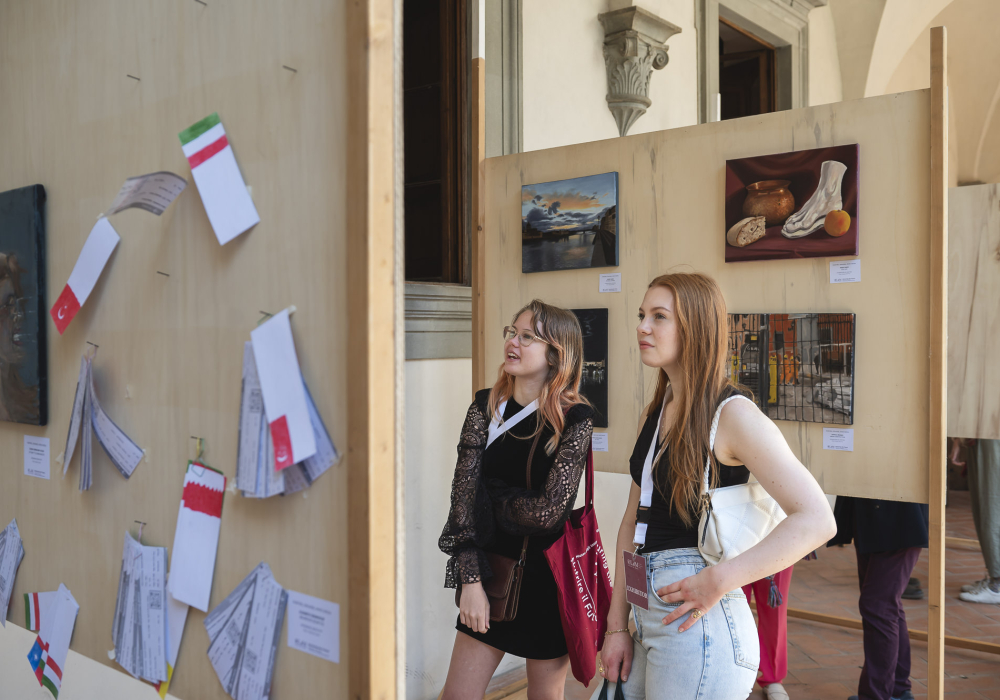
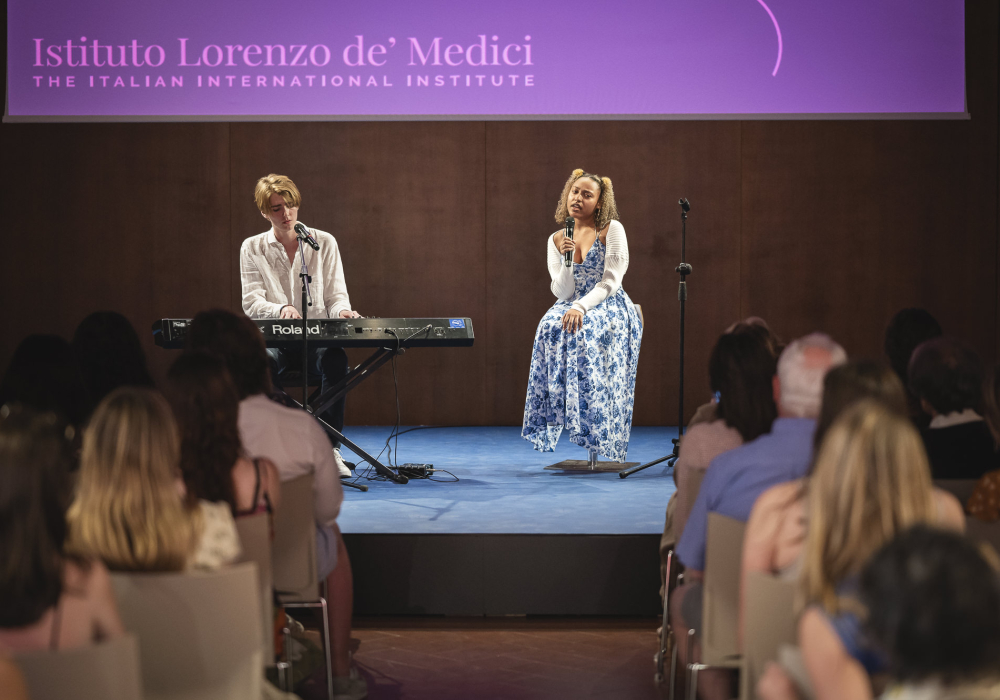
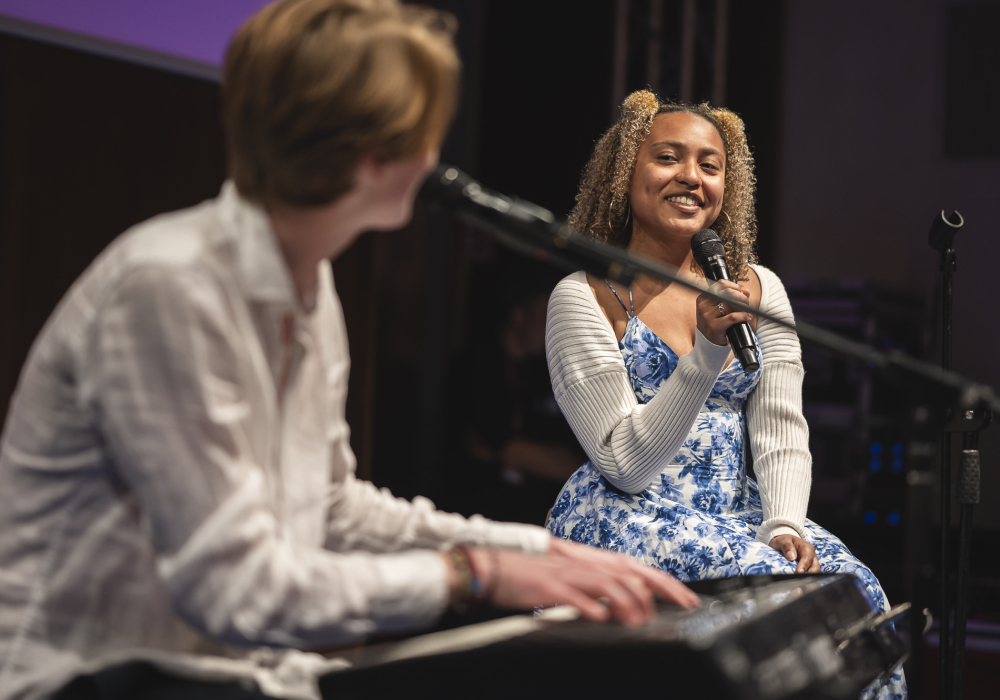
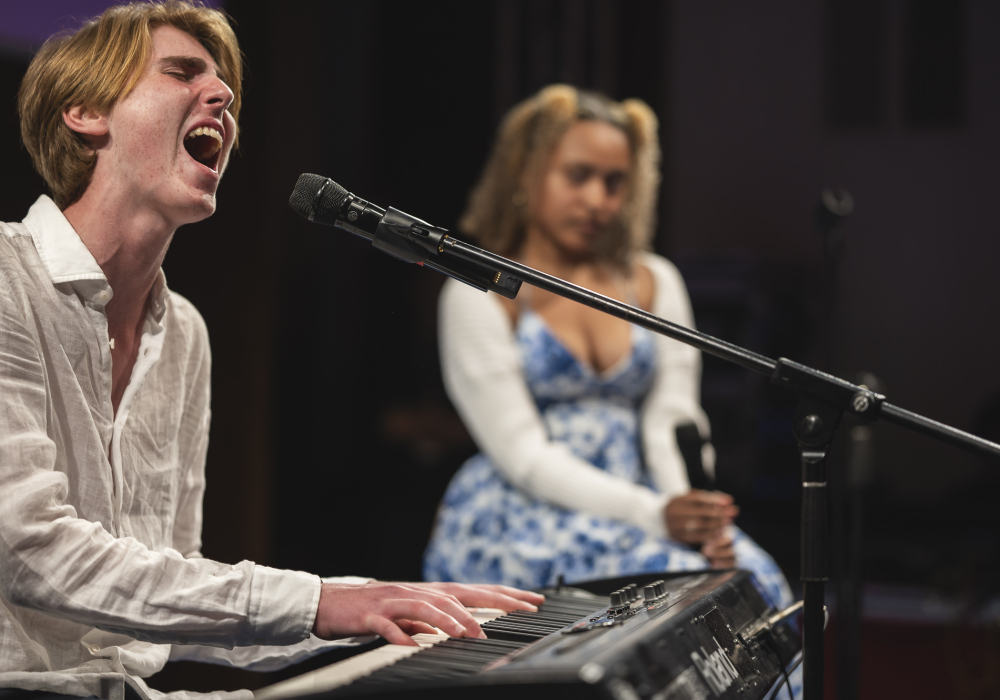
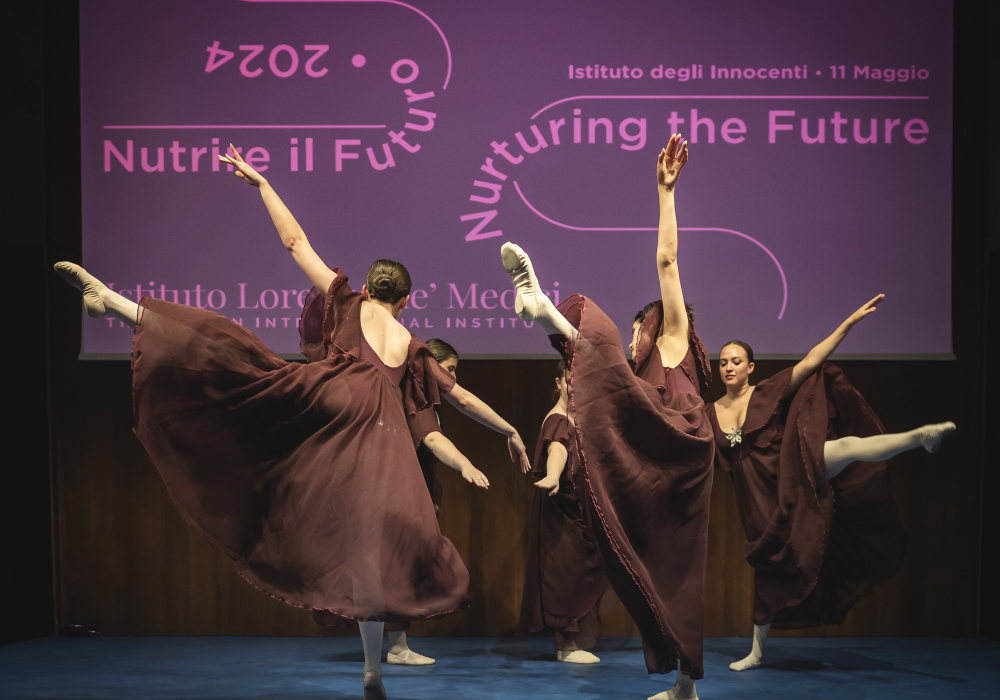
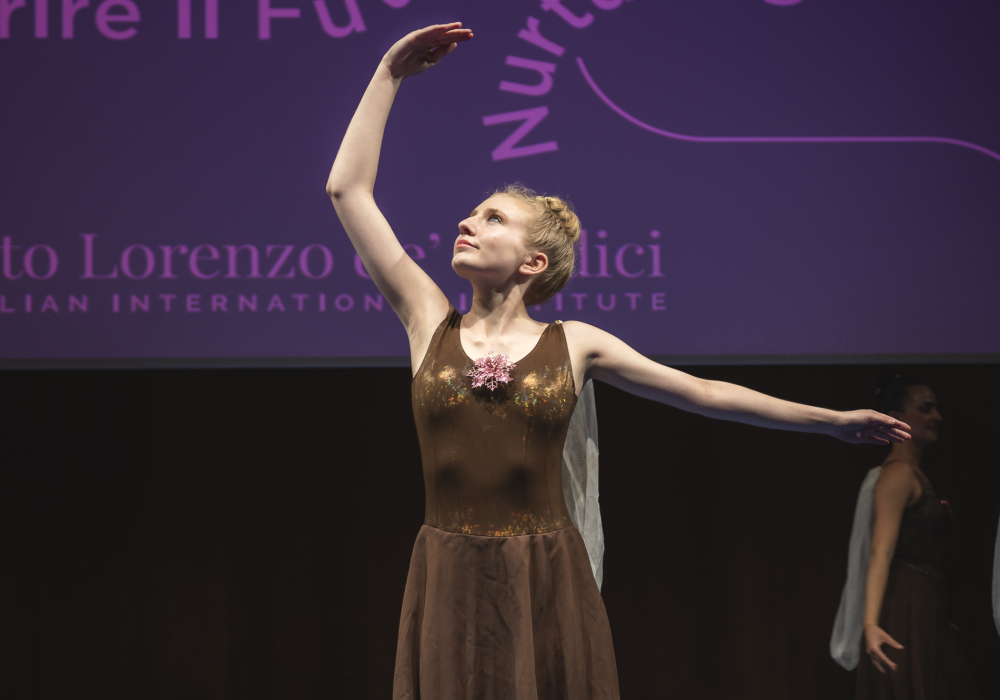
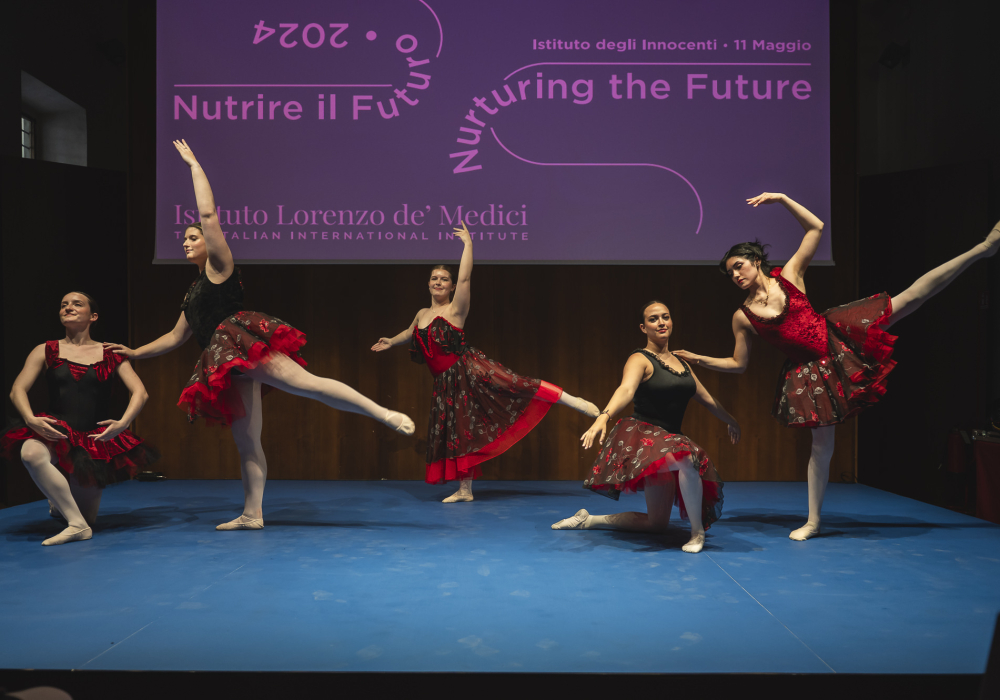
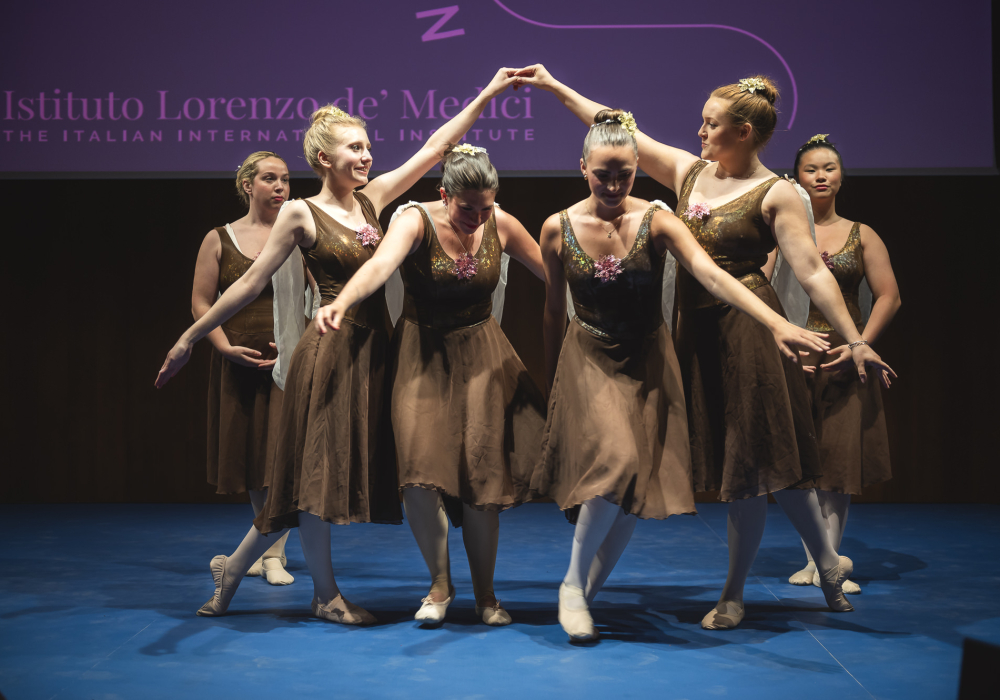
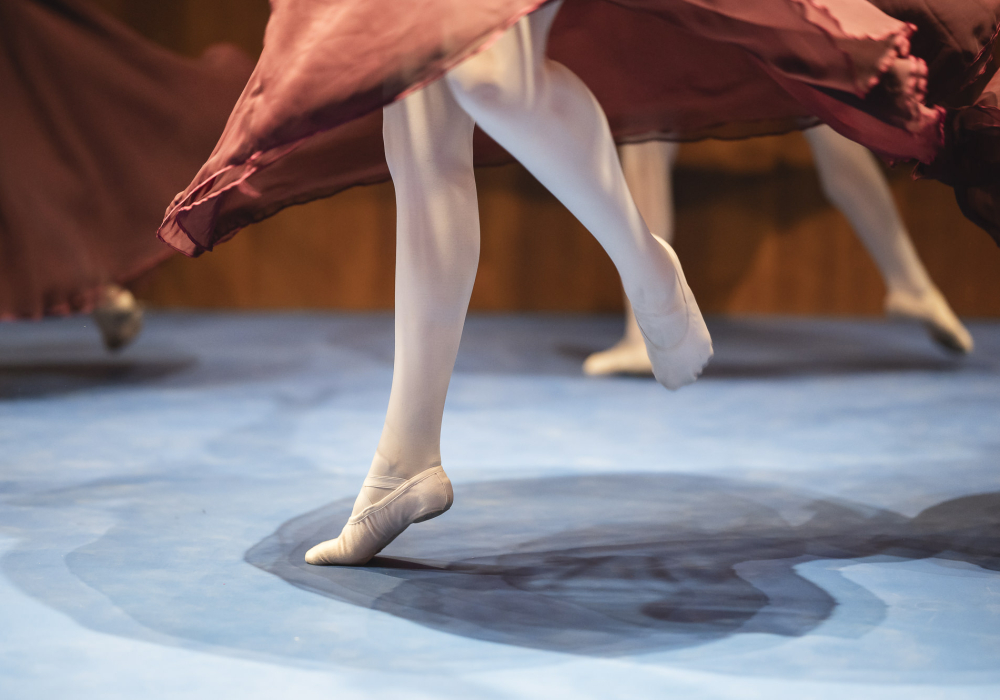
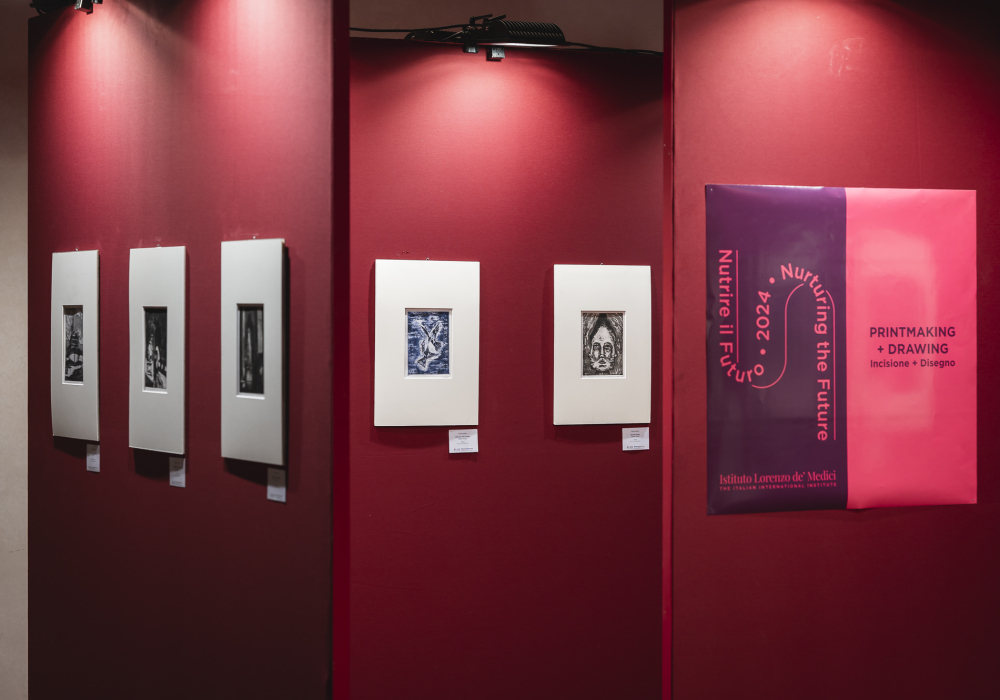
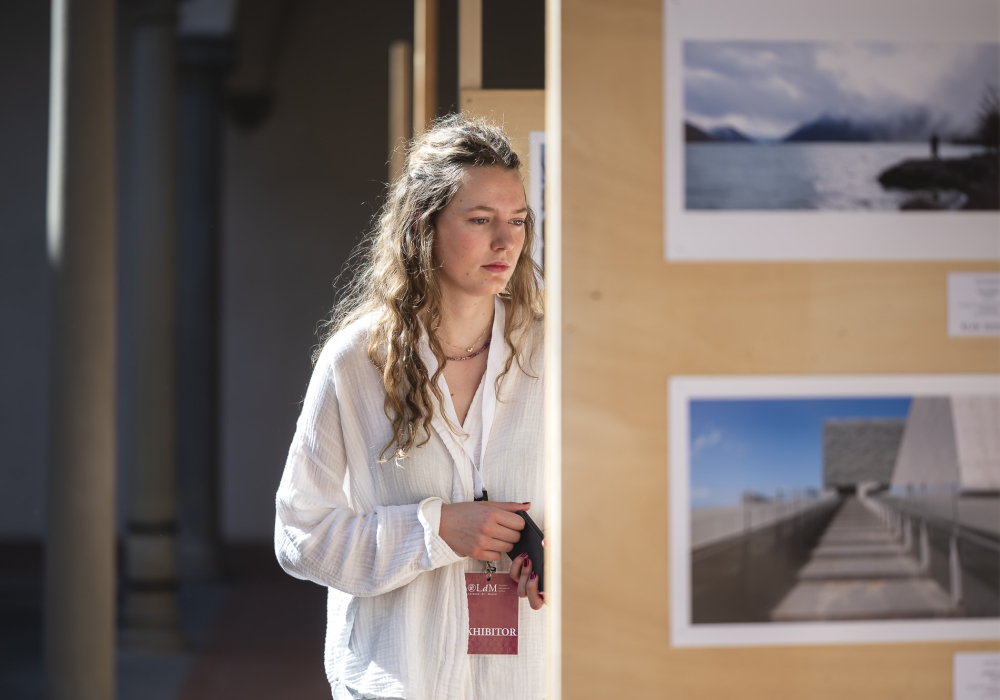
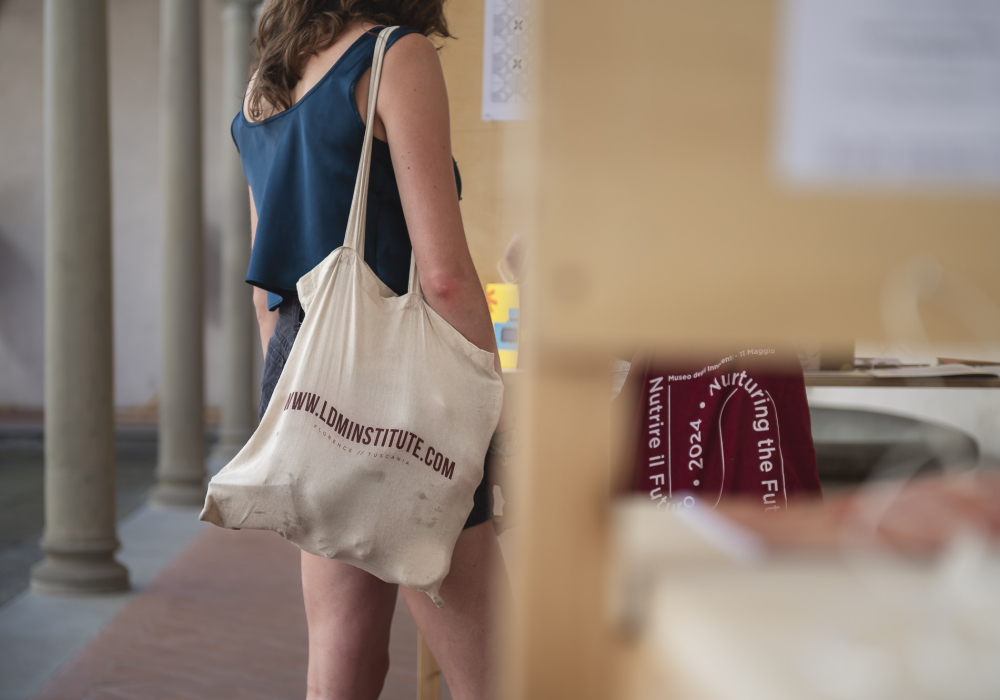
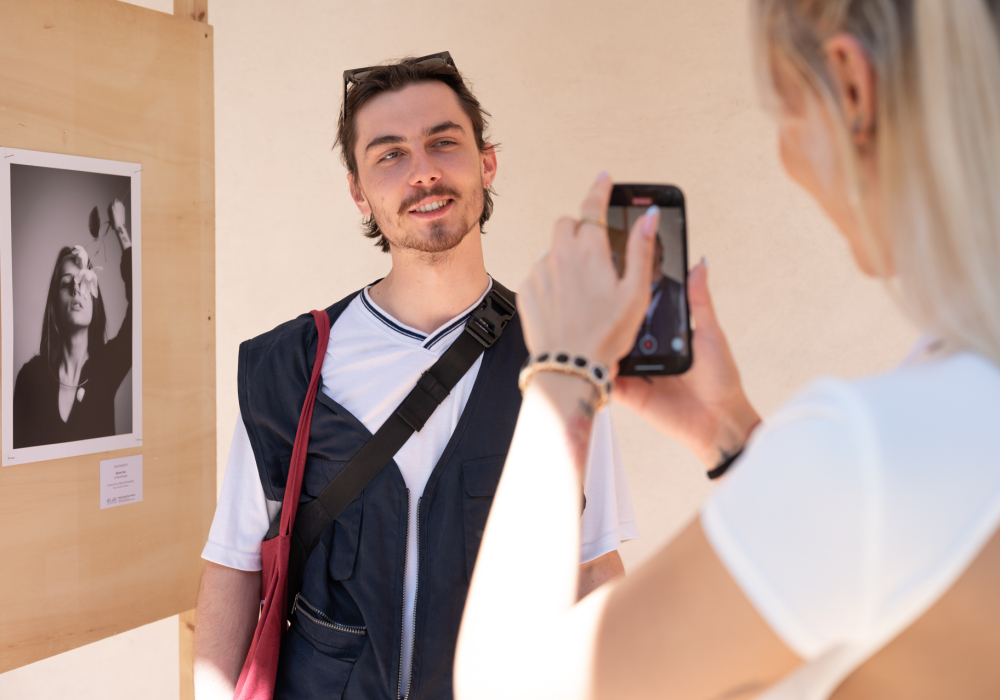
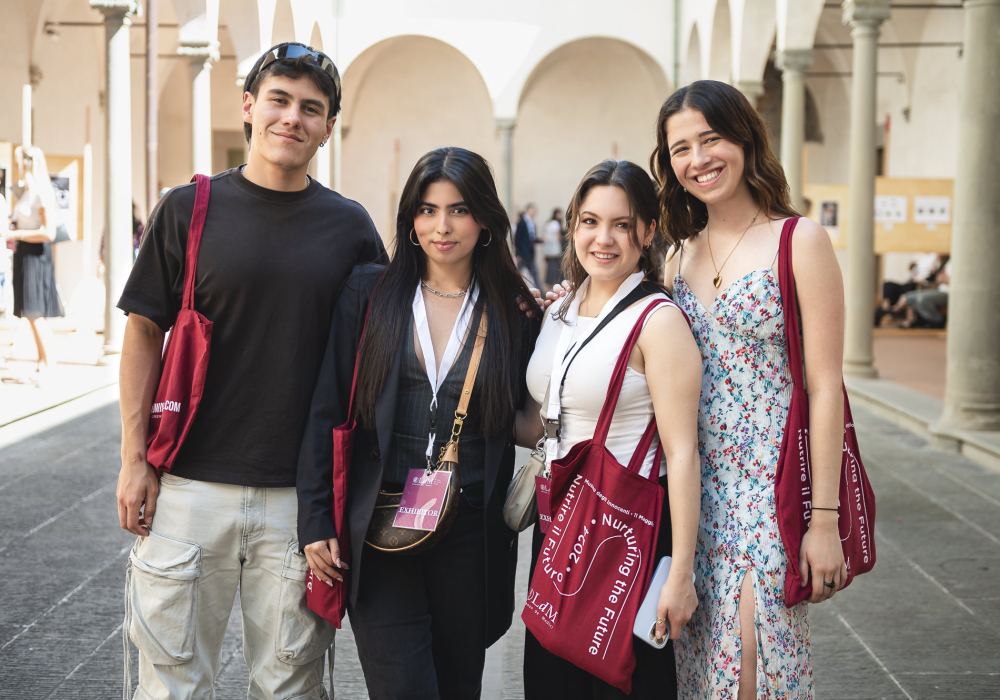
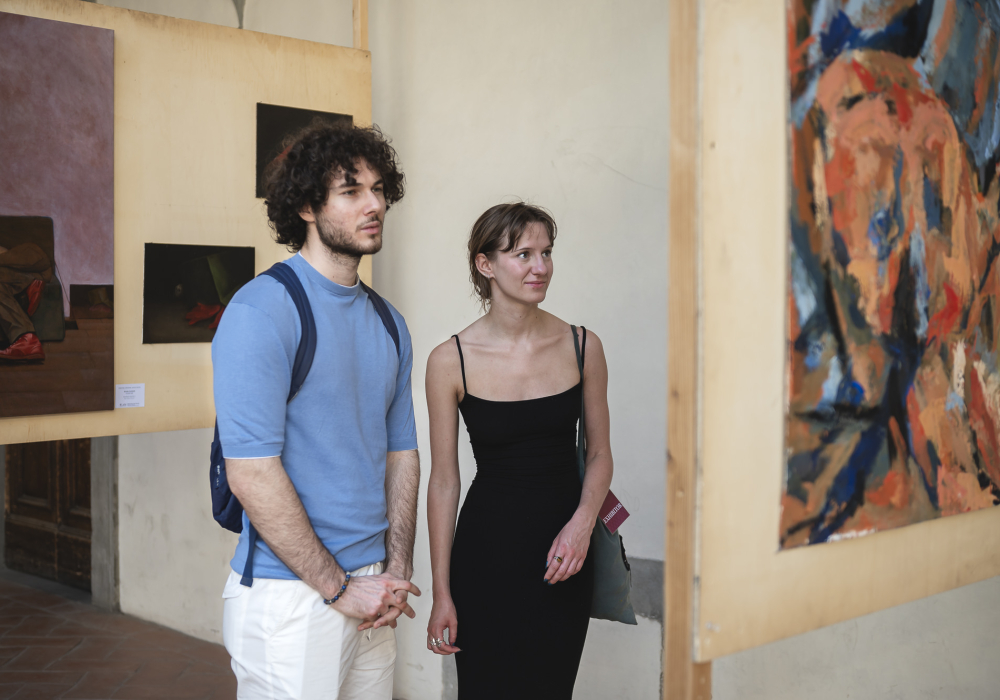
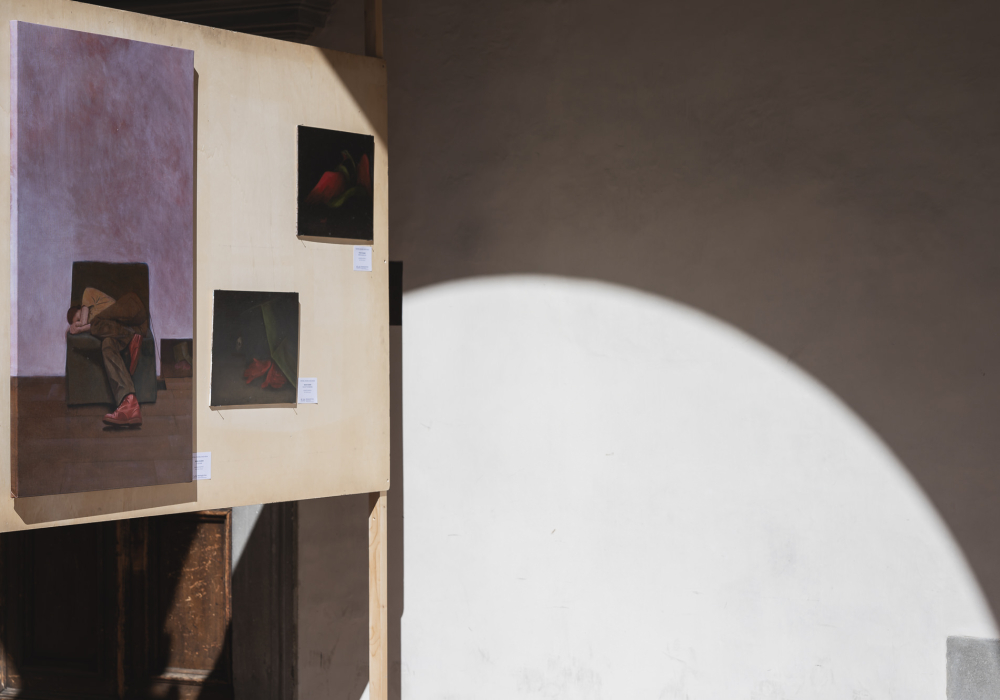
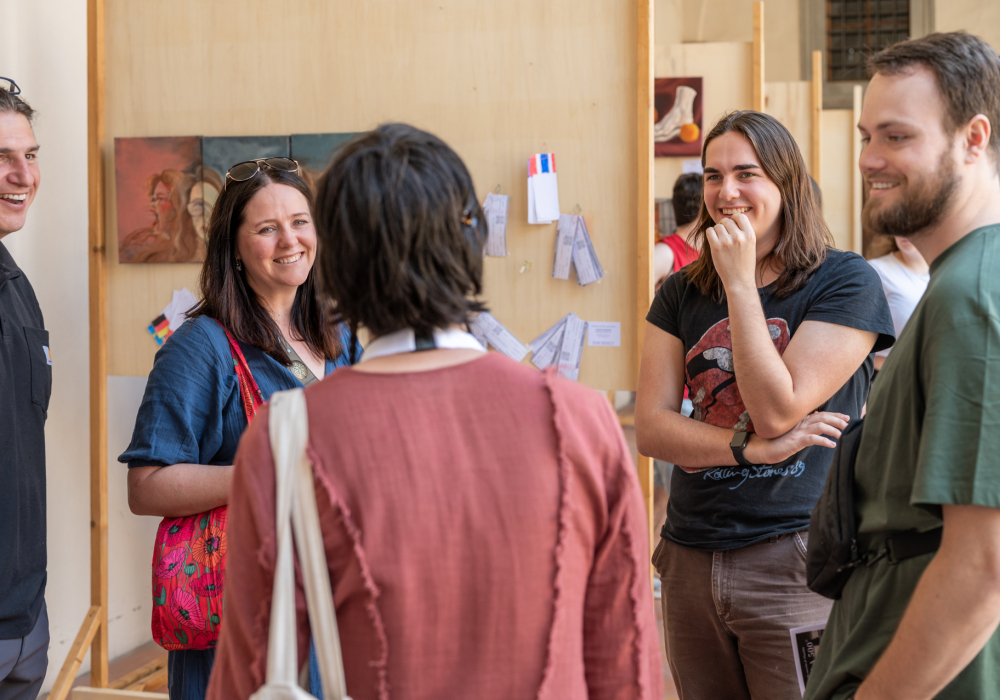
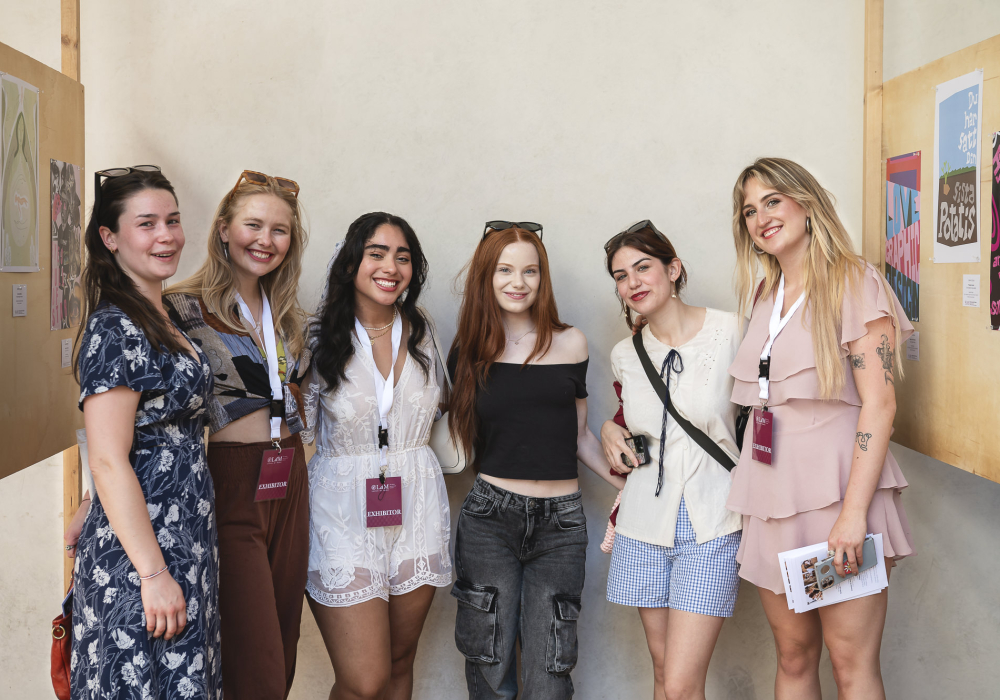
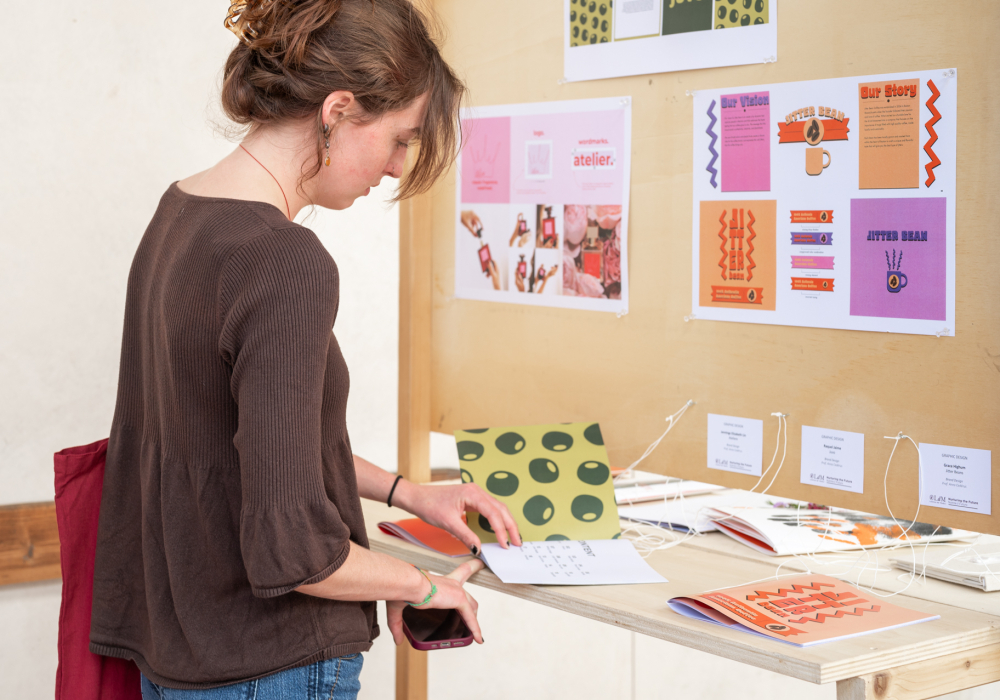
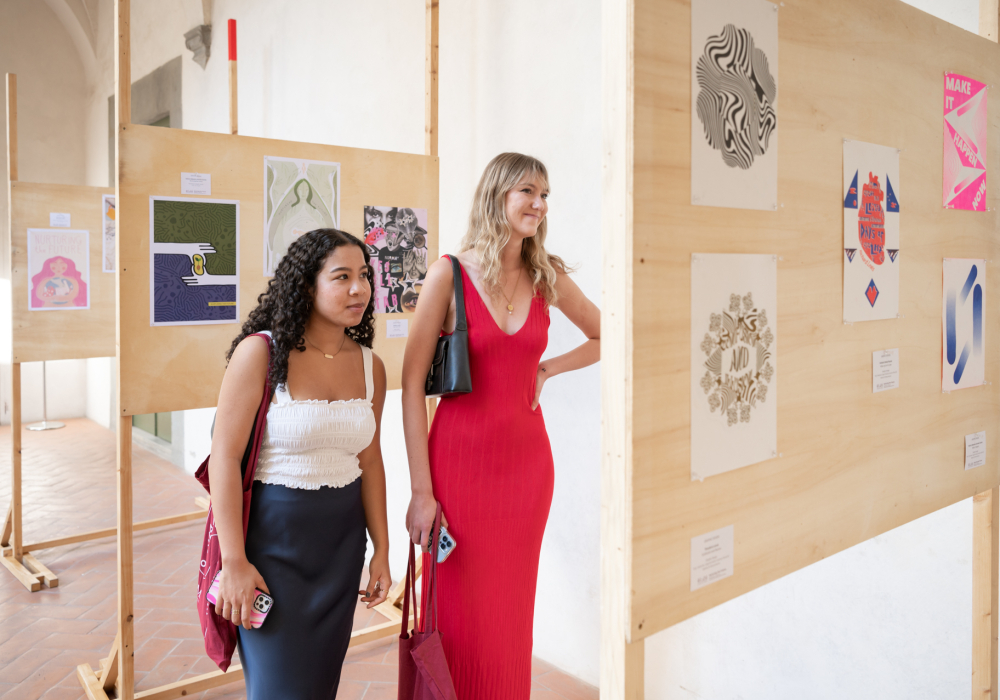
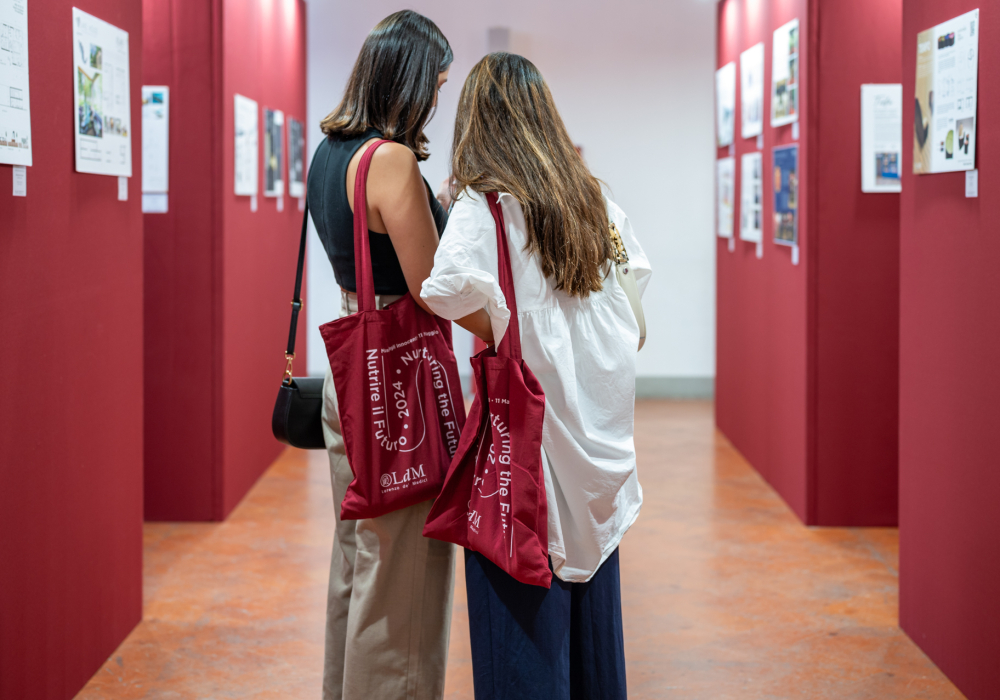
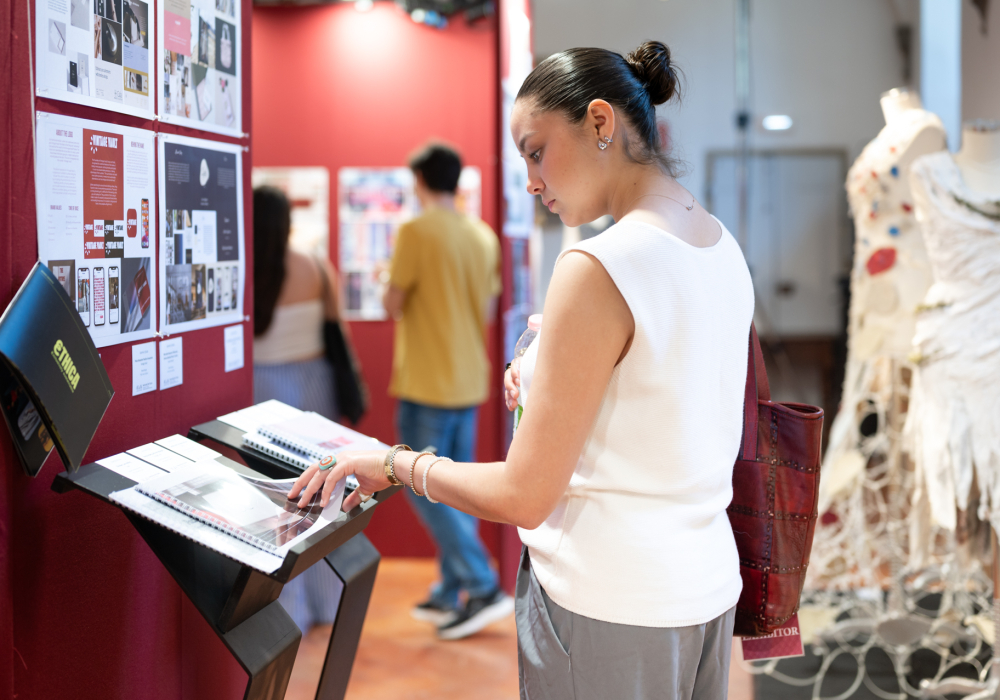
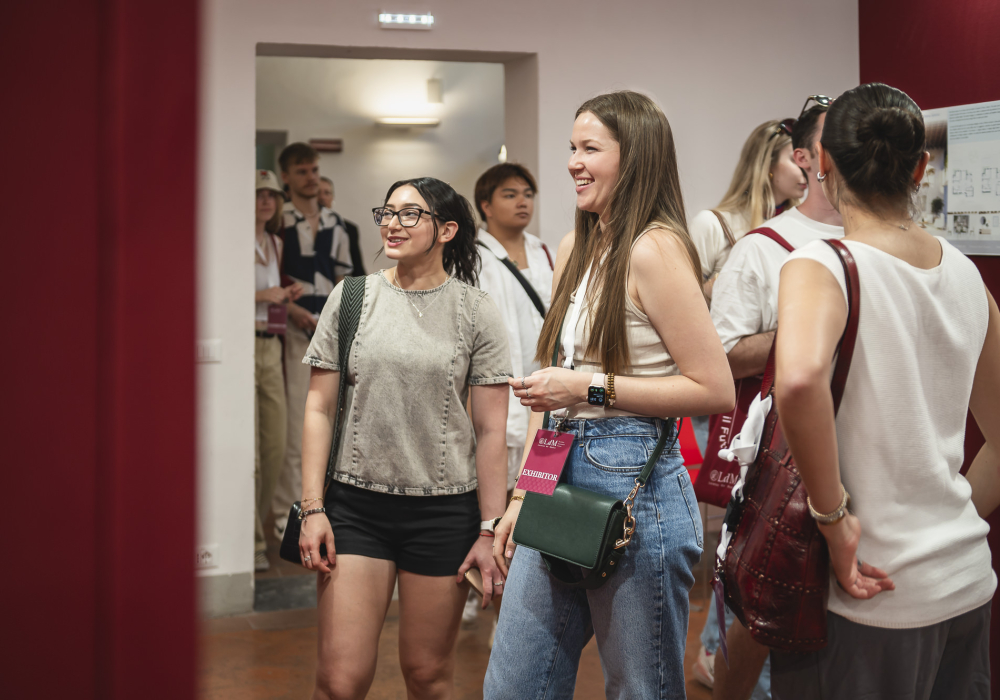
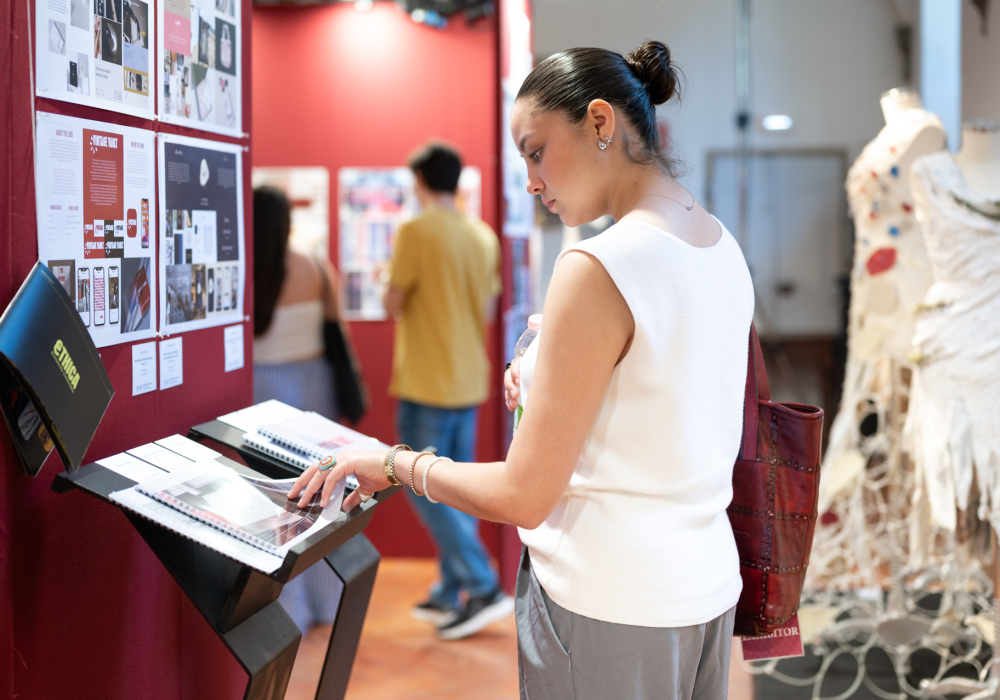
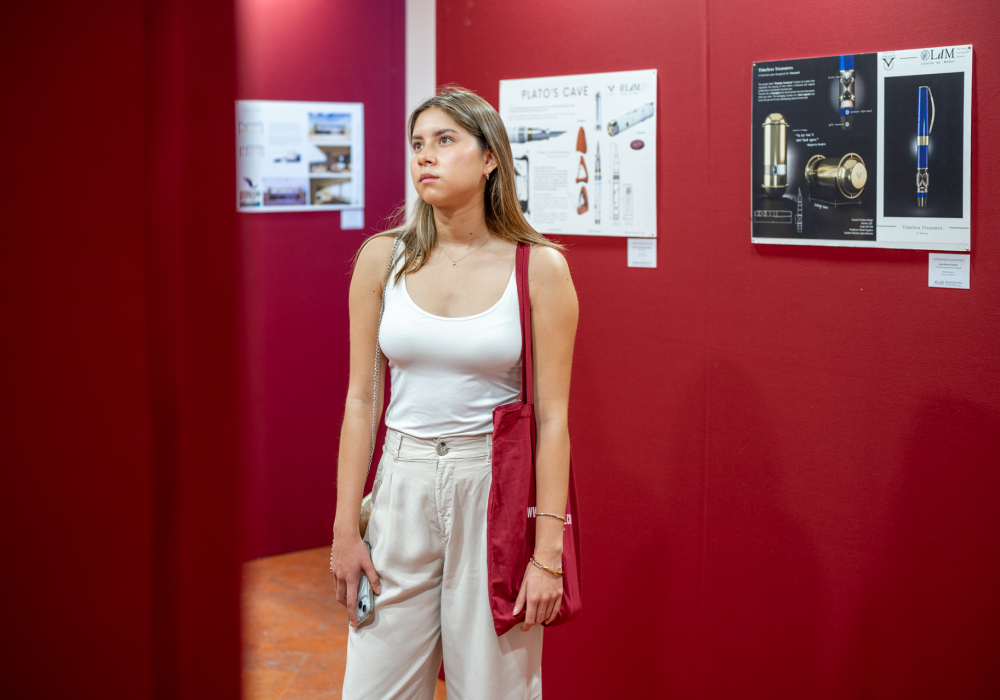
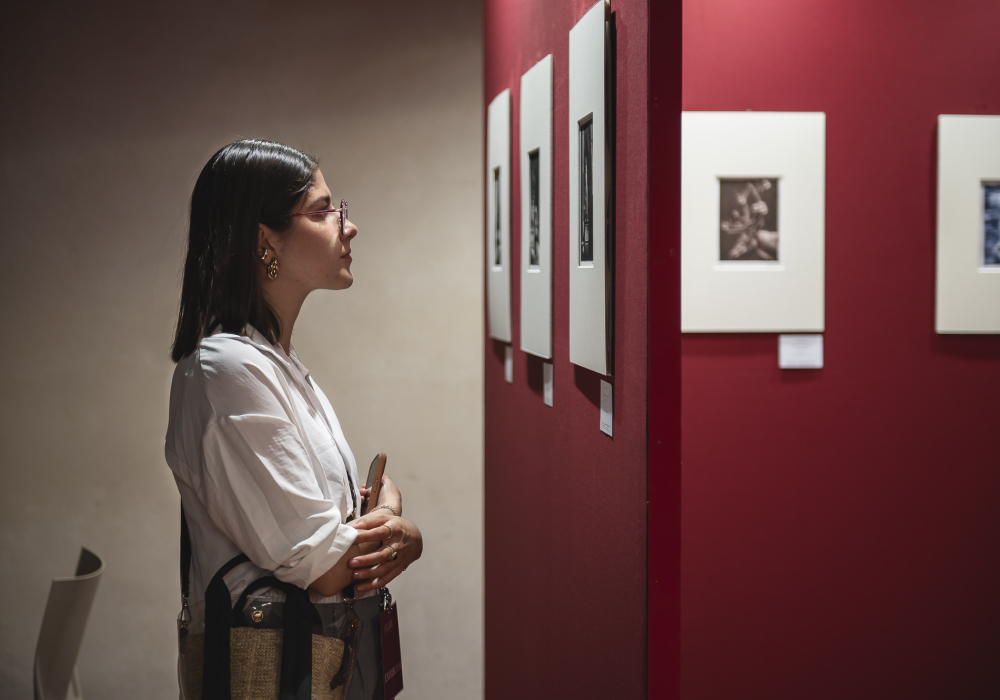
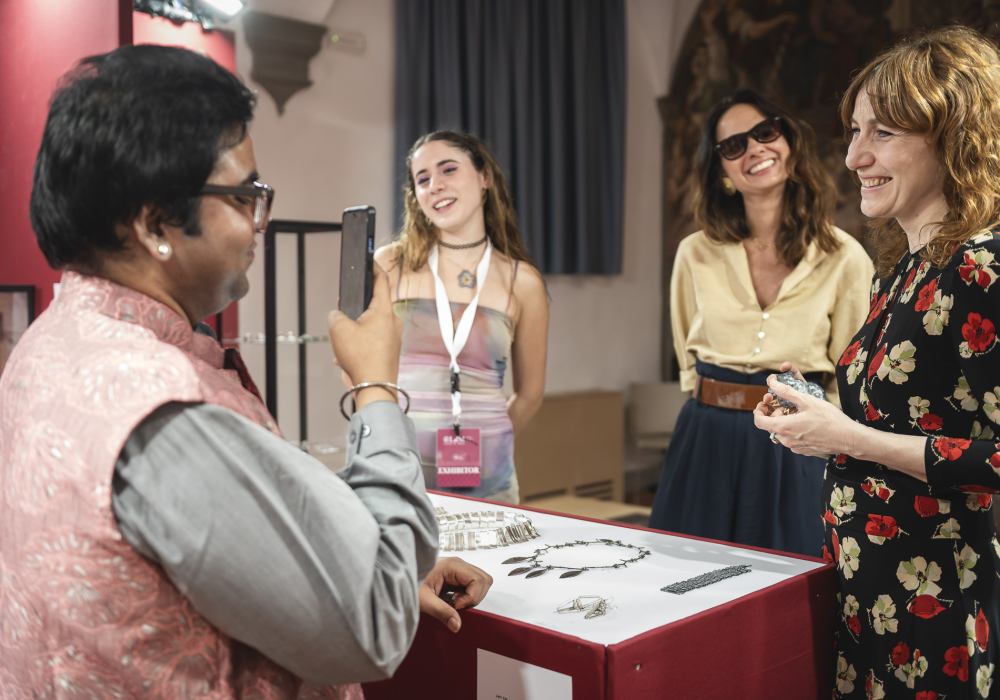
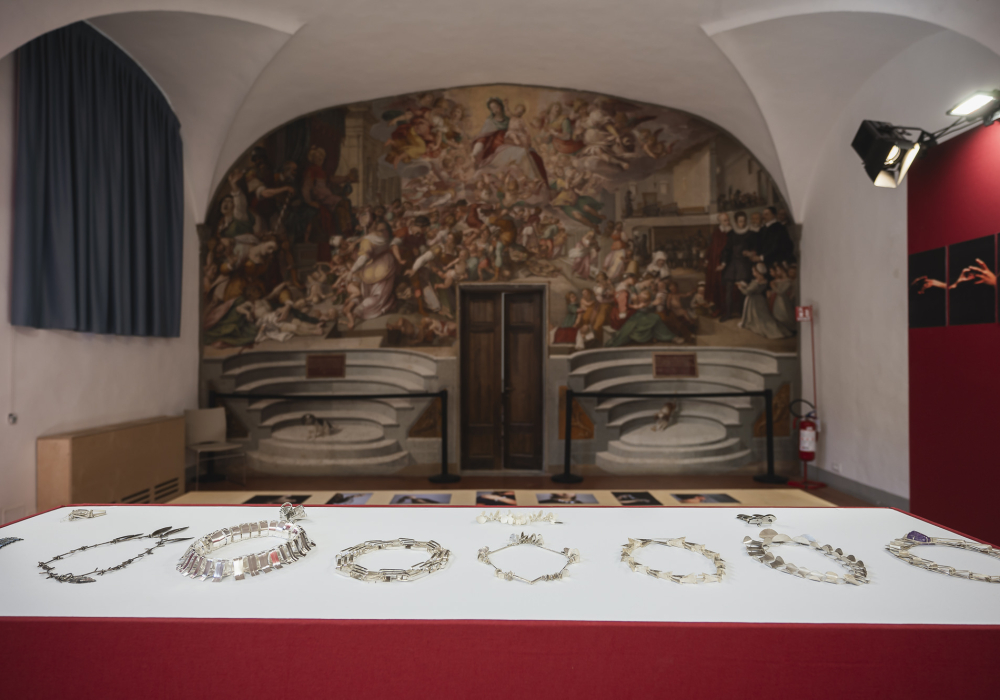
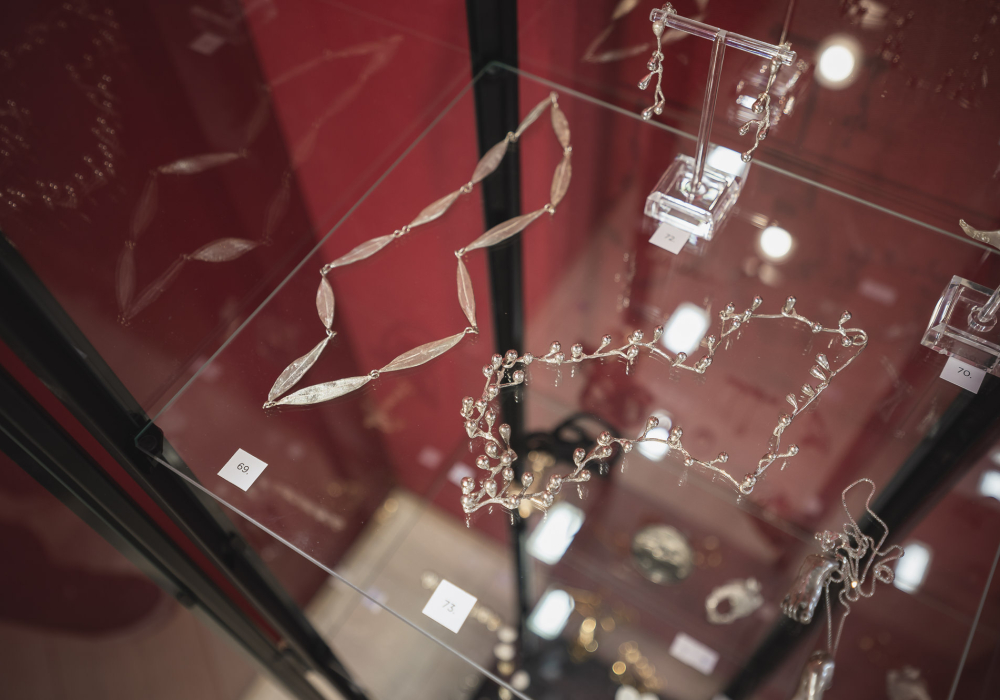
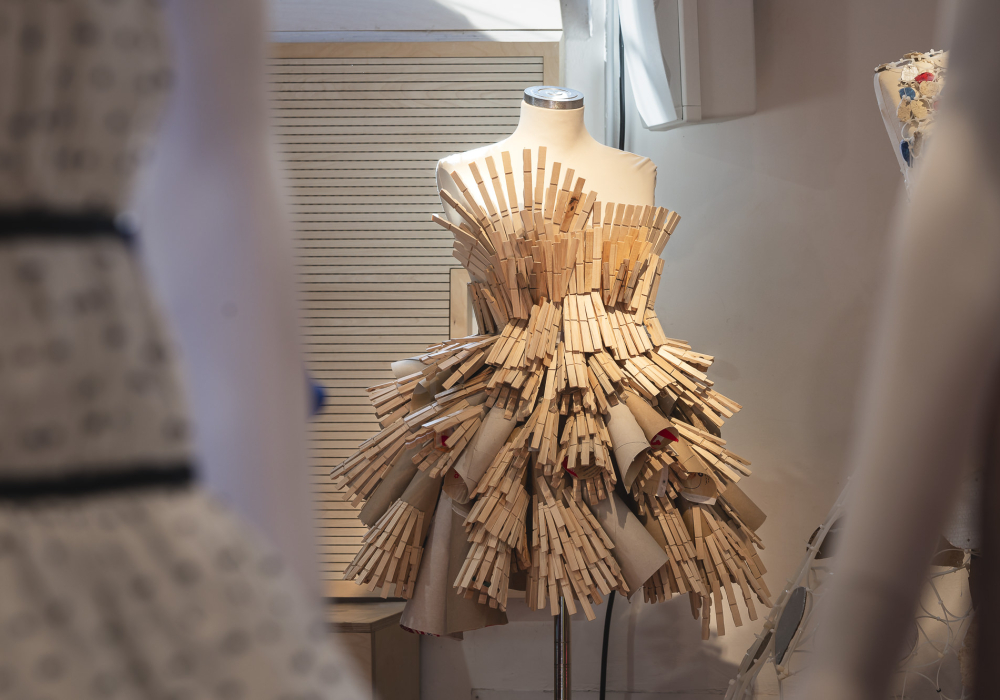
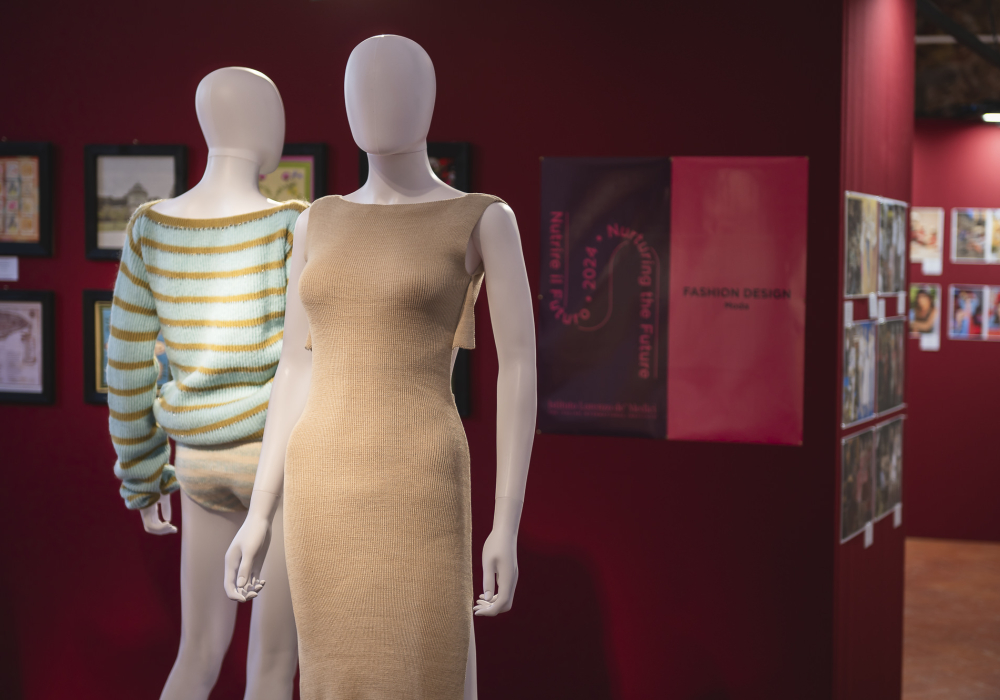
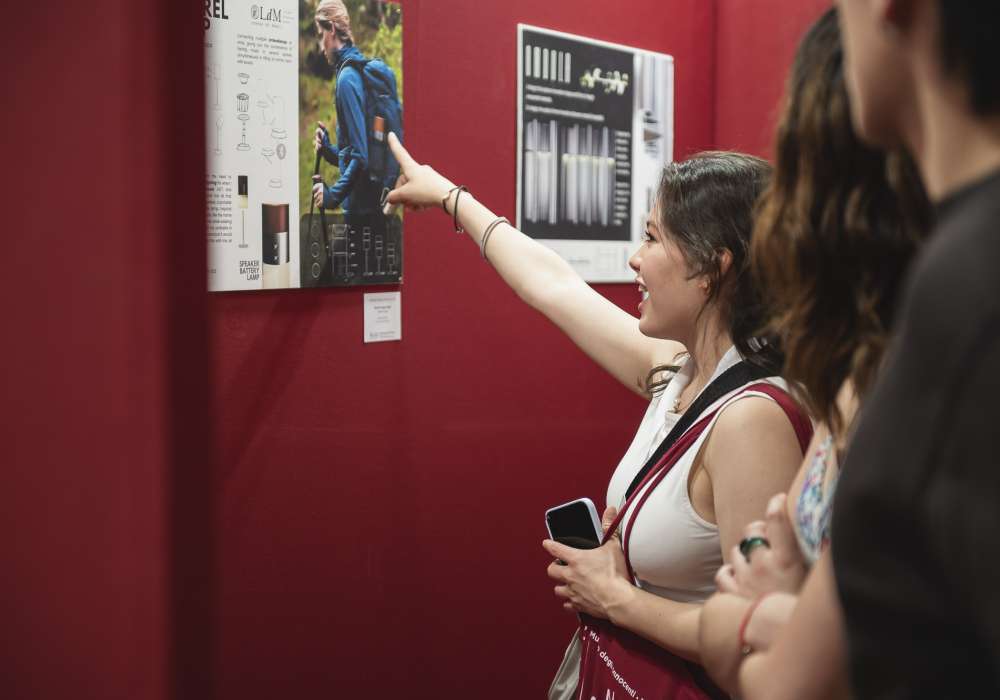
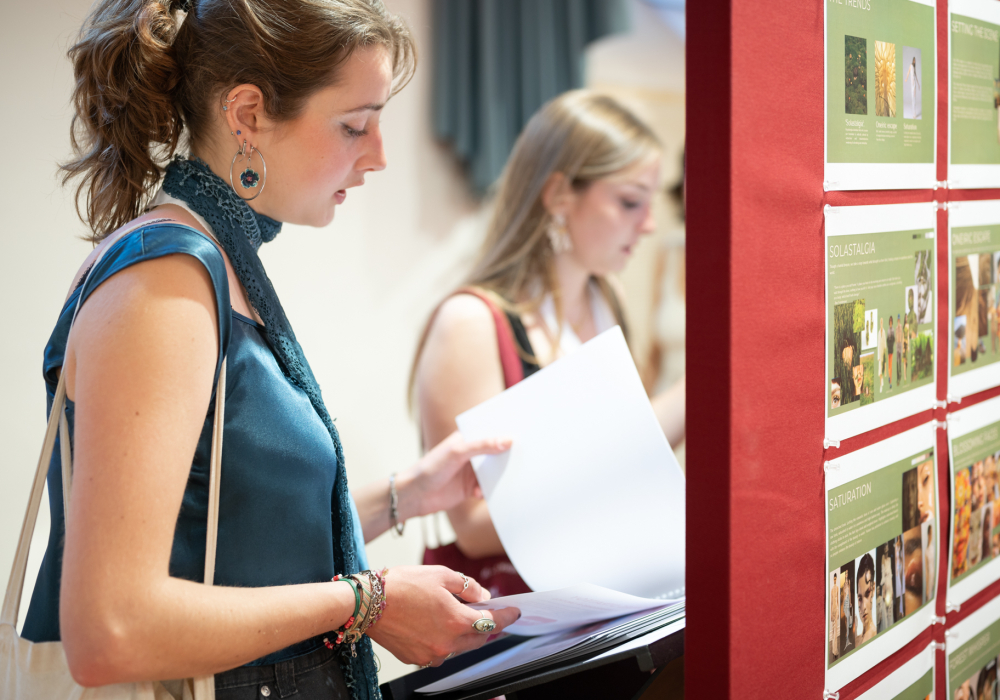
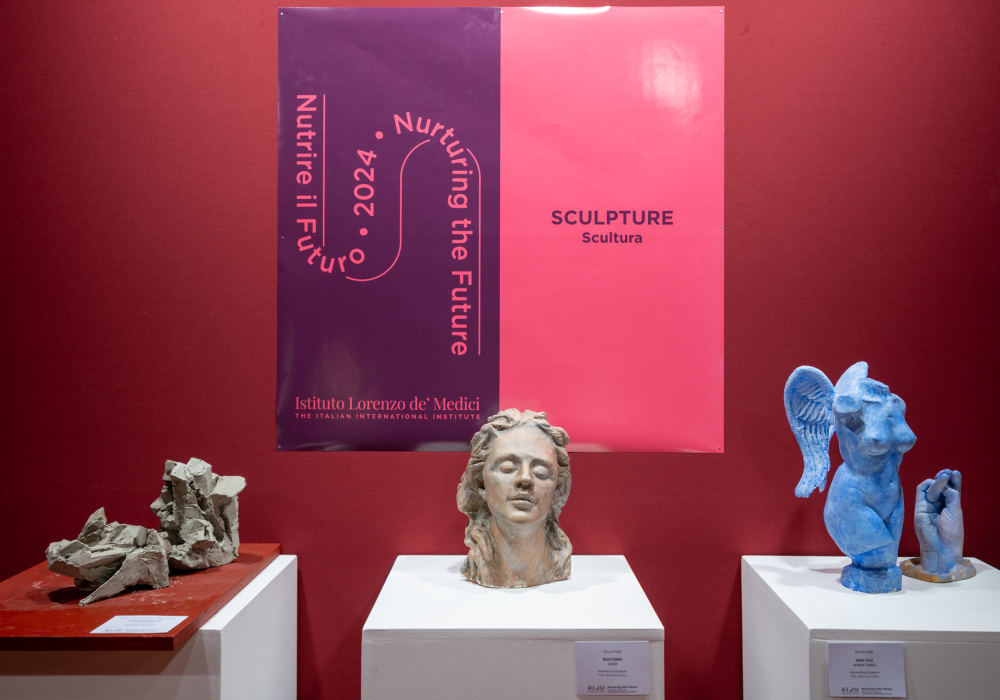
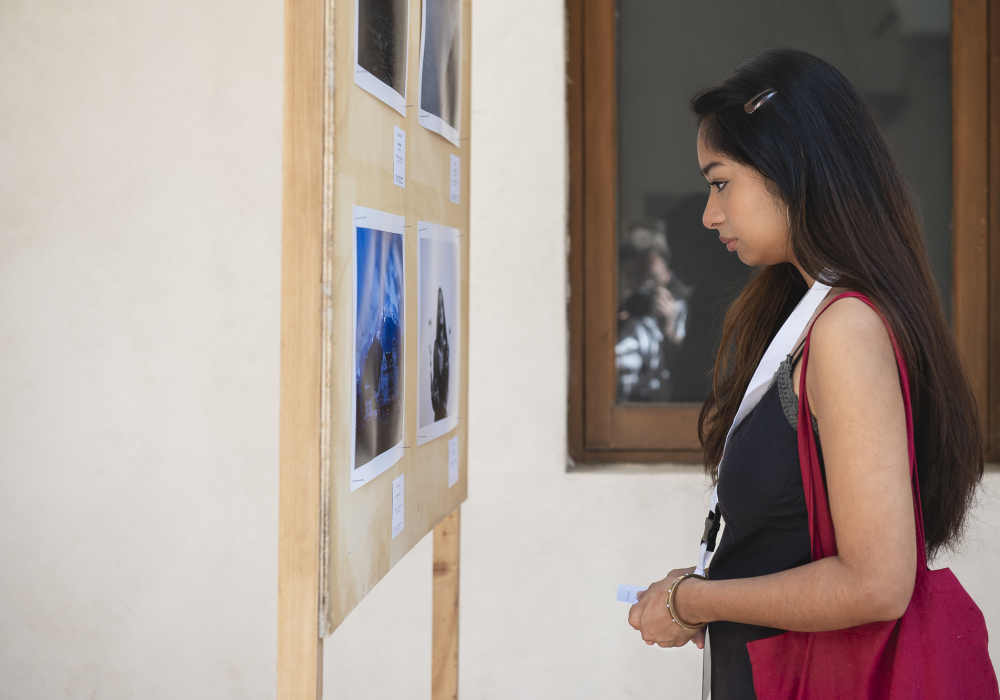
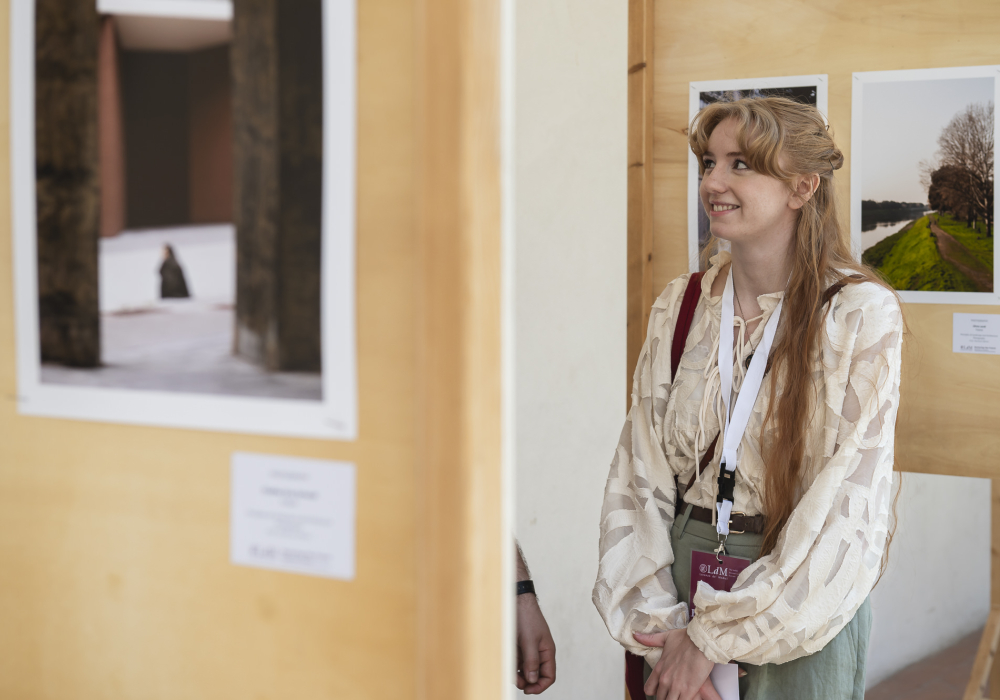
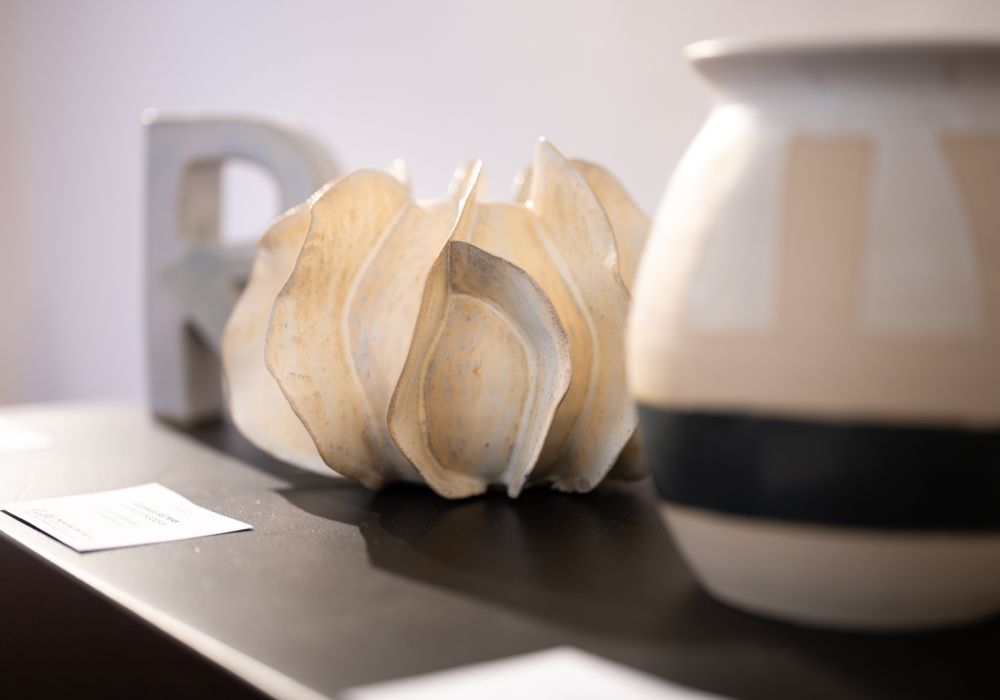
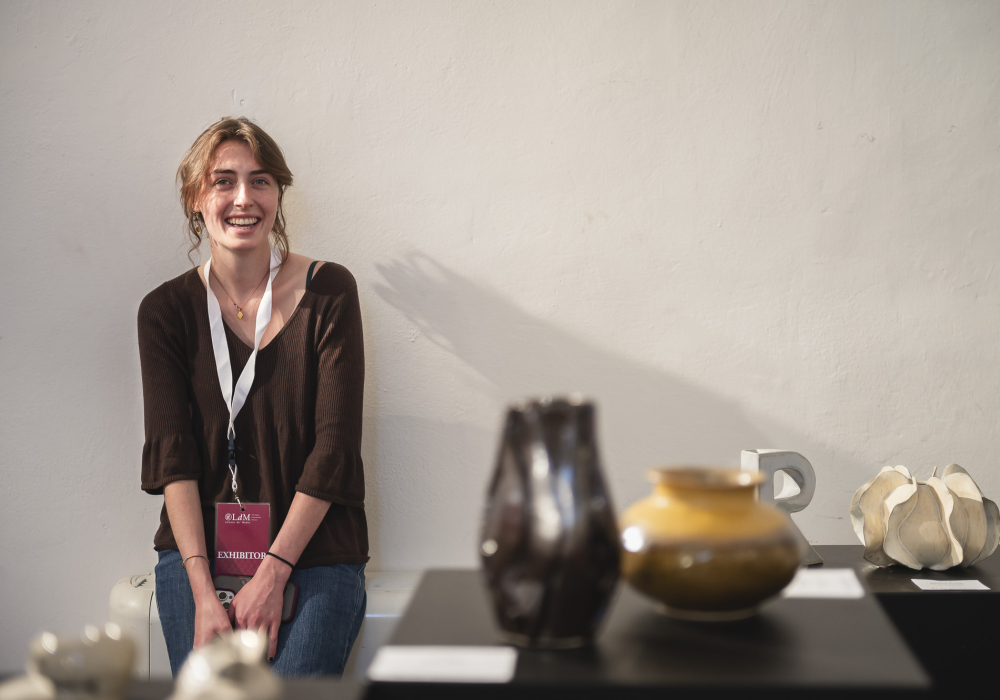
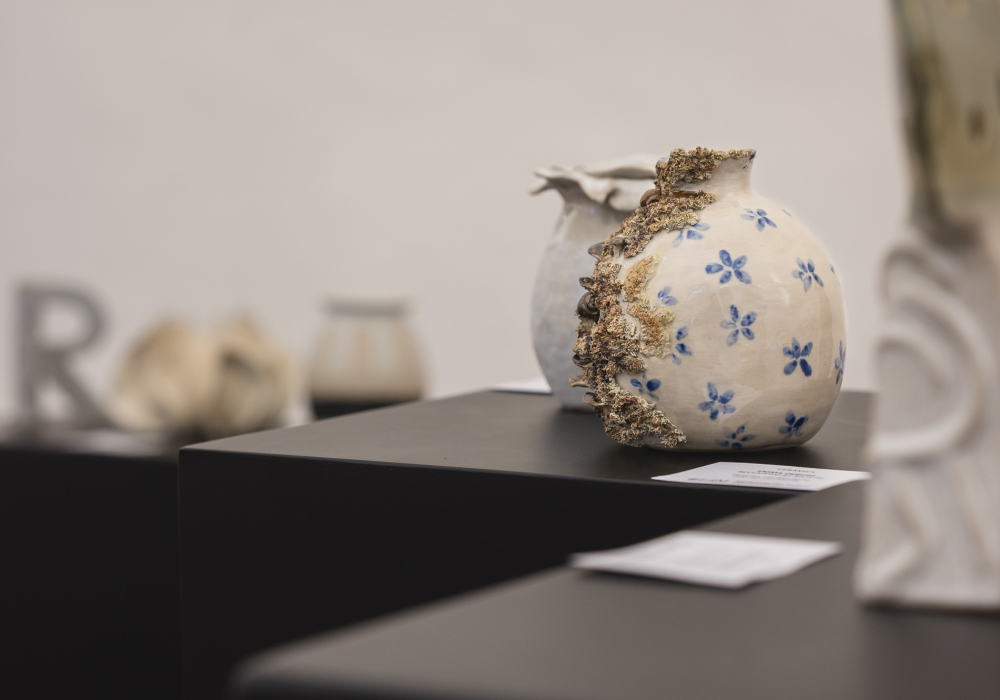
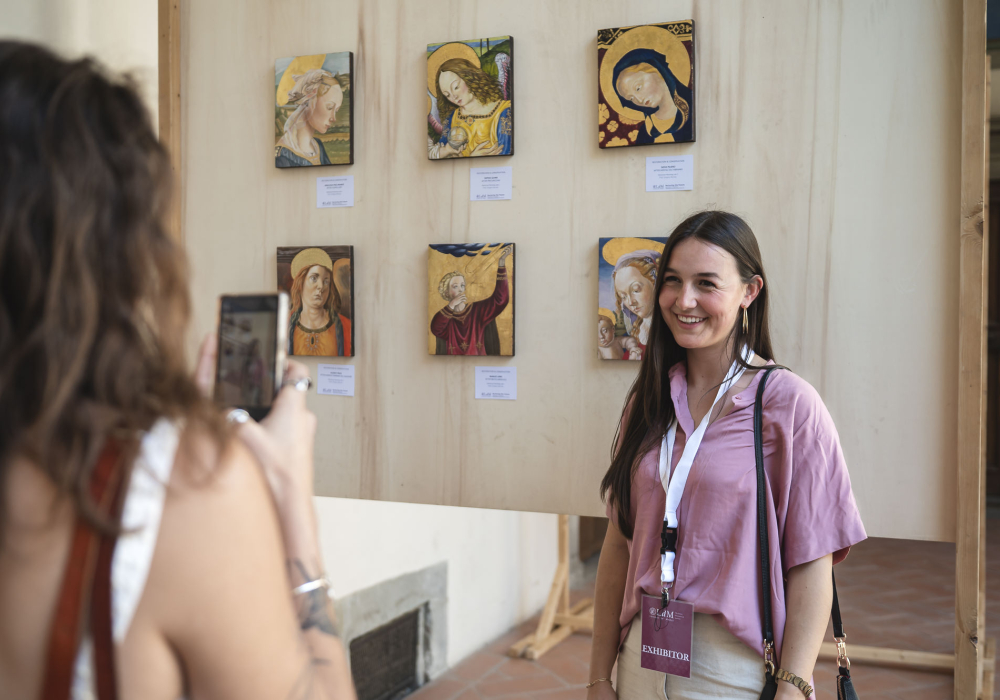
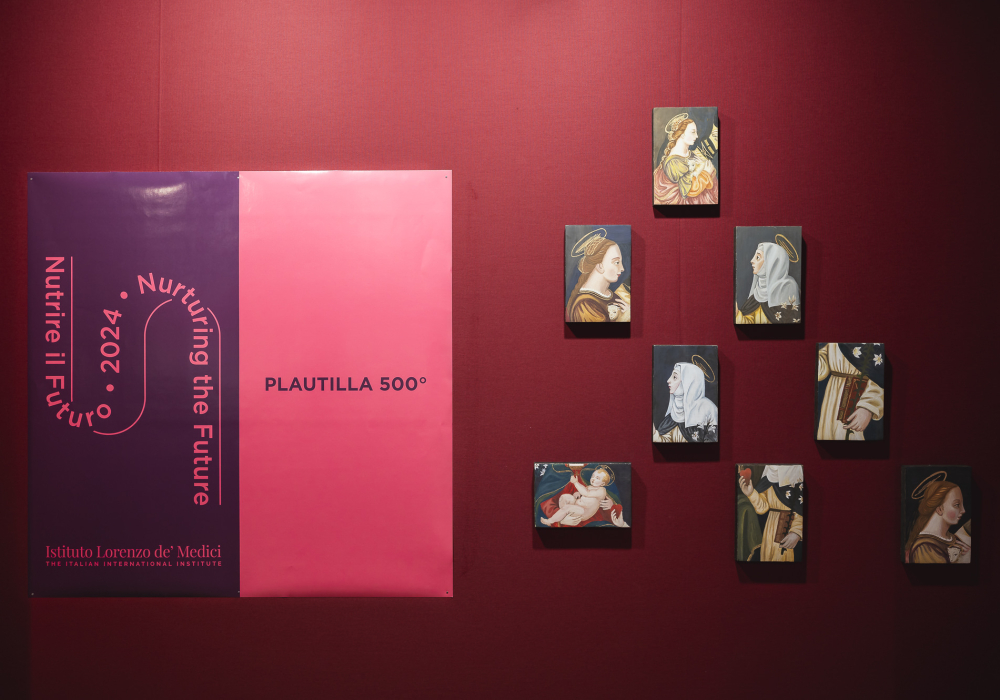
On May 10th, Istituto Lorenzo de’ Medici held “Nutrire il futuro – Nurturing the Future,” in the prestigious setting of the Istituto degli Innocenti, a showcase of the works by our students enrolled in the practical courses of the schools of Creative Arts, Design and Italian Gastronomy and Culture.
It’s not just the value of this historic venue that makes the occasion special, but also the spirit of warmth and intimacy, both physical and spiritual, that permeates its spaces. Since the very beginning the Istituto degli Innocenti has been dedicated to welcoming youths and nurturing their cultural and emotional growth within the society. It is an intimate and nurturing place for beauty, a place where new possibilities are created within the harmony of Renaissance forms. A similar venue provides the ideal context to showcase our students’ artistic expressions, amplify their voices, and facilitate their interaction with the public.
Works selected by LdM Department Supervisors and Professors.
Students participated from the following departments:
CREATIVE ARTS
Painting, Drawing & Mixed Media
Sculpture
Printmaking
Restoration
Photography
Film & Media Arts
Performing Arts
DESIGN
Fashion Design
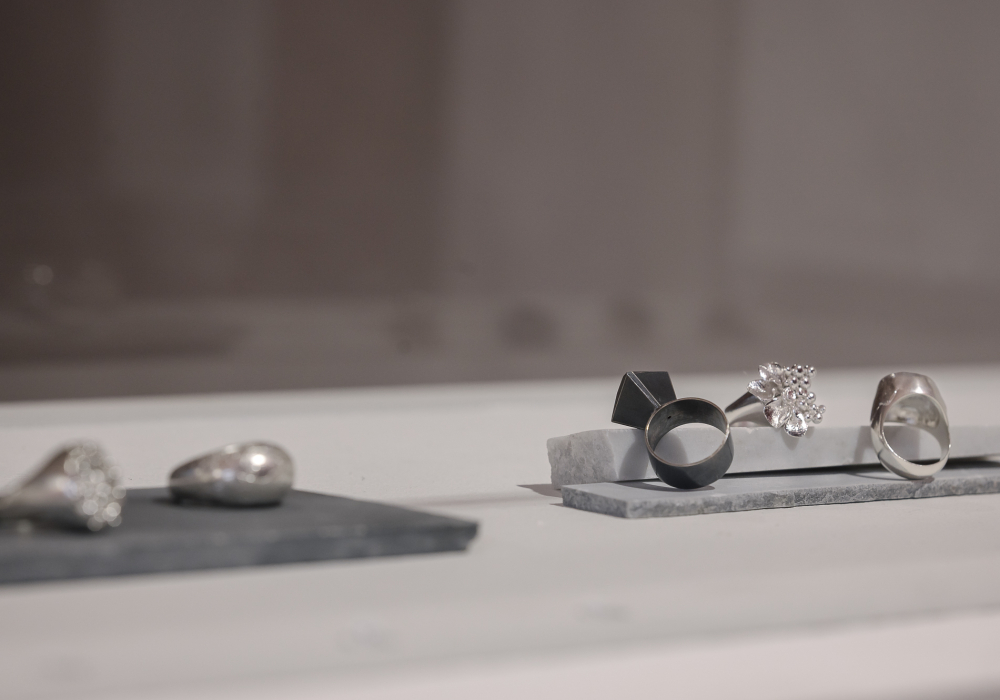
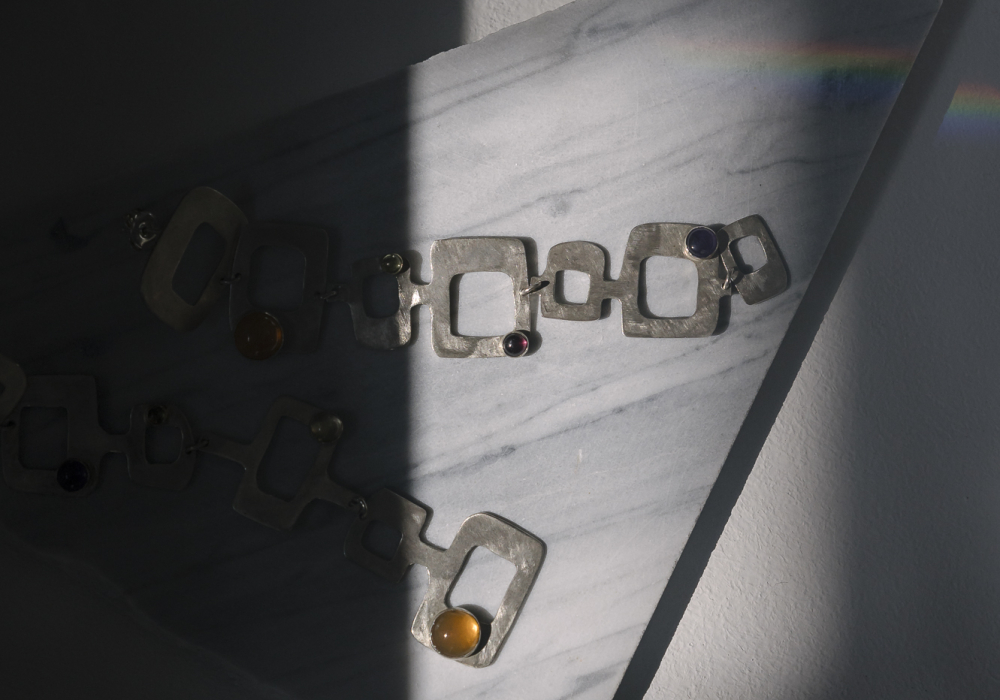
Jewelry Design
Graphic Design
Architecture
Interior Design
NUTRITION, ITALIAN GASTRONOMY AND CULTURE
Certificate students in Italian Gastronomy and Culture department held a culinary performance.
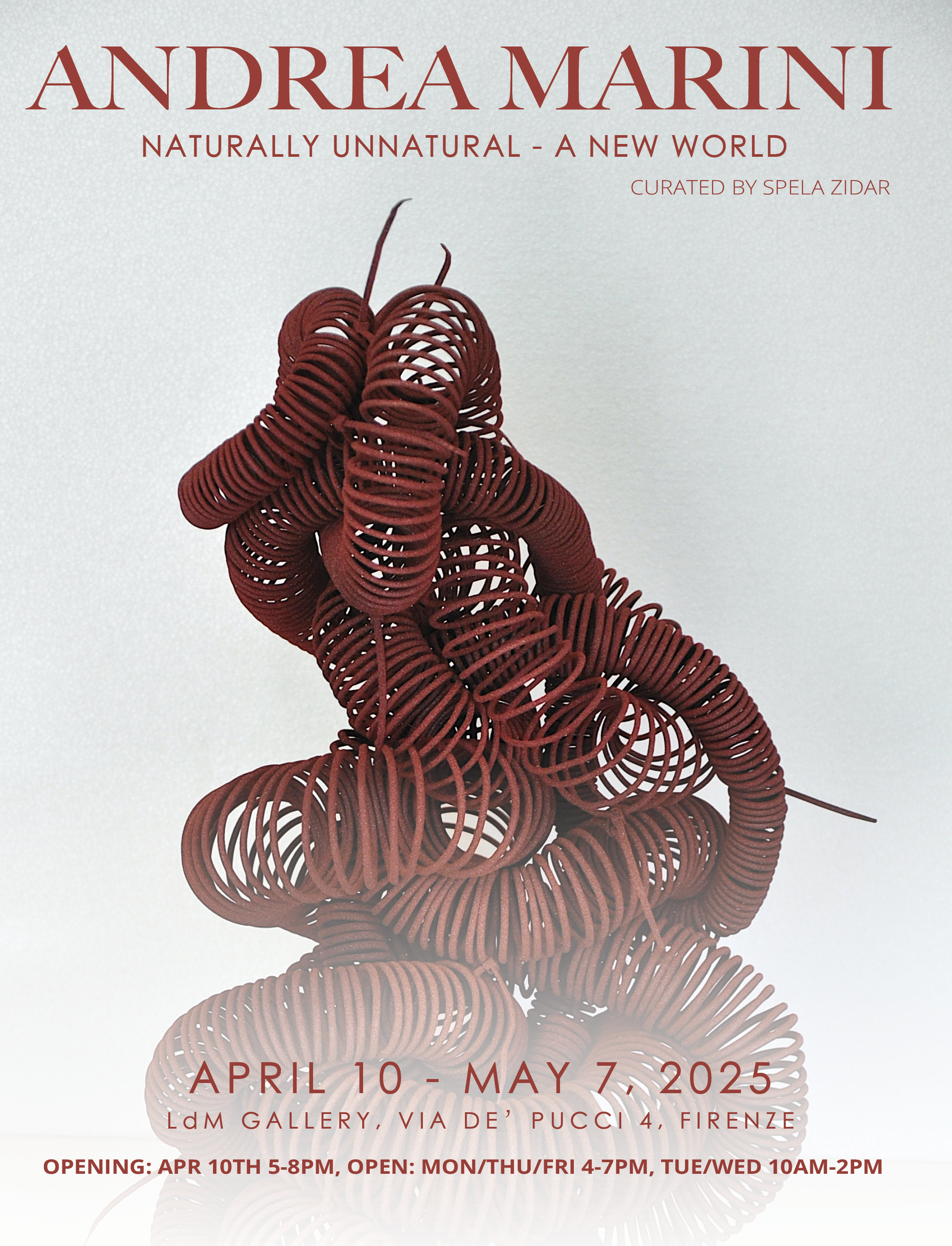
The LdM Gallery is pleased to present Naturalezza Innaturale – Un mondo nuovo (Naturally Unnatural – A New World) by Andrea Marini. The show is a container for Marini’s captivating synthetic but lifelike sculptures and drawings. At the same time disturbing and fascinating, his work exists in the boundary between real and imaginary. Despite their diversity, the works still manage to coexist peacefully in the gallery space, as if it were a sort of biodiversity in a non-natural ecosystem.
The artist uses ever-innovative techniques, exploring new possibilities of creation and transformation each time. His mutant creatures provoke a sense of alienation, but also of curiosity. In the viewer, this awakens a desire to understand and explore them even when they may be dangerous.
The artwork employs diverse materials to evoke nature and corporeality, depicting organic forms, growth, and transformation.
The exhibition therefore becomes a desire for a new birth, a corporeal metamorphosis, and a poetic transformation for a different vision of reality. An unnatural nature in the materials used, but created with such naturalness that it convinces the spectator to enter and listen to it, realizing the consequences that a lack of balance and respect have on our world.
About the Artist:
Born in Florence on April 19, 1948, Andrea Marini is an Italian artist whose work explores the delicate boundary between nature and artifice. Marini pursued studies in architecture, obtaining a degree in the arts. Since the late 1980s, Marini has devoted himself to his artistic research, particularly in sculpture and installation. Marini’s work is deeply rooted in an exploration of organic forms, evoking a sense of balance between simplicity and complexity, the familiar and the unknown. His career has seen him participate in numerous prestigious exhibitions in Italy and internationally, including: “Borderless” – Solo Creative Room, Pietrasanta (2024) “Nomads from the Infinite” – Spazio Cappella Marchi, Seravezza (2024) “SuperNatura” – Die Mauer Contemporary Art, Prato (2019) “Novi Mundi” – Kate Vass Galerie, Zurich (2018) “Genesis” – Lu.C.C.A. Center of Contemporary Art, Lucca (2010) “Italian Spring in Japan” – Museum of Modern Art, Saitama, Japan (2007). A critical voice in contemporary art, Marini’s works navigate the thresholds of organic and inorganic, blending the scientific with the poetic.
The LdM Gallery is a project by Istituto Lorenzo de’ Medici, an interdisciplinary space where academic research and artistic experimentation meet within a professional setting.
Opening performance: concert with handpan by Cristina Manuguerra& Licia Agnetta
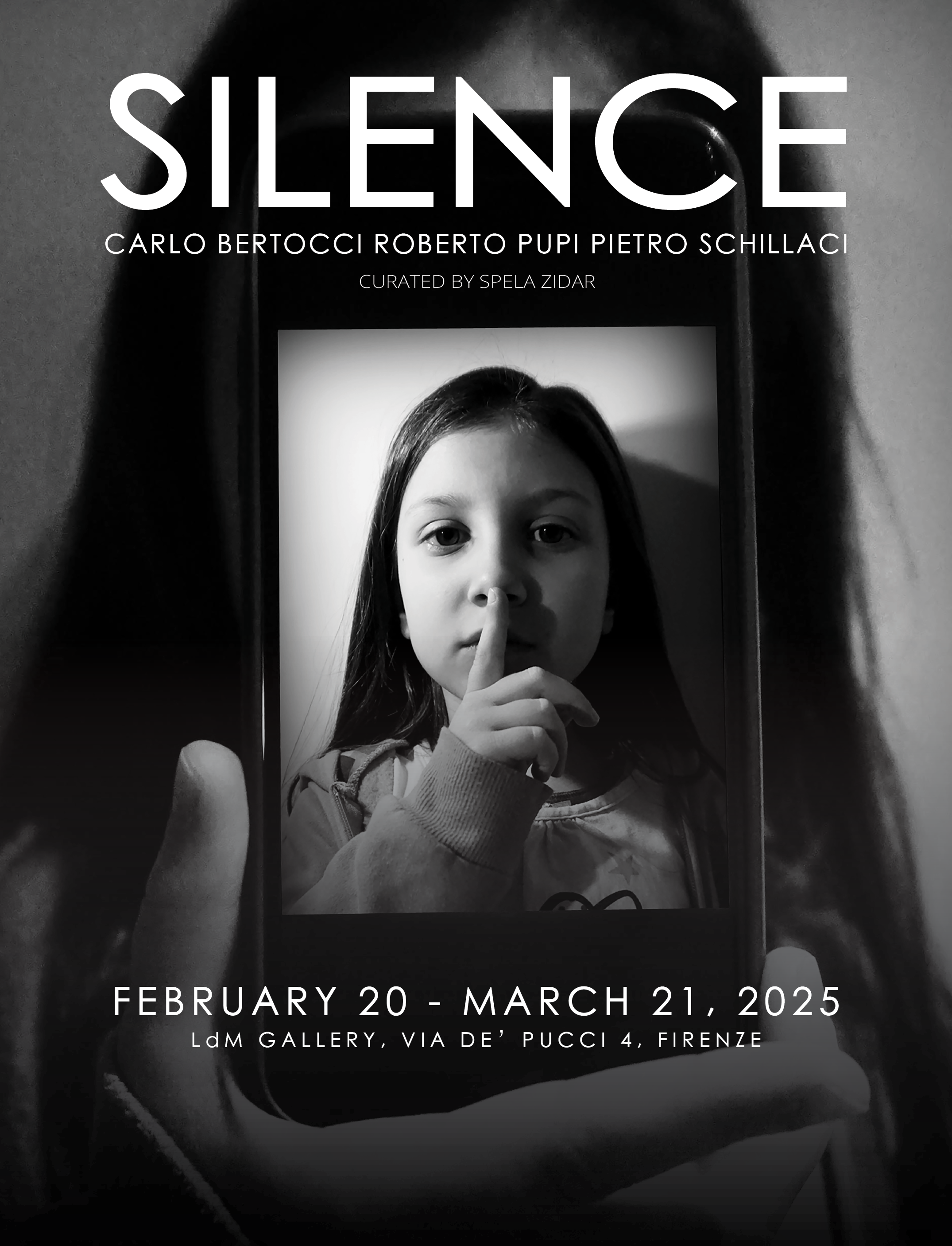
LdM Gallery is pleased to present SILENCE exhibition in which three artists Carlo Bertocci, Roberto Pupi and Pietro Schillaci dialogue about the representations of silence.
Silence, the concept that is defined by absence – the absence of sounds, voices, noises, and everything capable of producing and perceiving them. Can a still and silent world be a real condition? Can a human being perceive absolute silence or will one always remain tied to the background noises of distant activities or his own body that keeps itself alive? In fact, silence is more of a state of mind than an actual component of nature. The unpredictable silence that paradoxically predisposes the absence of the senses to be heard, but in the absence of the senses does it make sense to talk about silence or does it also cease to exist? Like the famous question: “If the tree falls by itself in the woods and there is no one to hear it, does the tree make a noise?” For the philosopher George Berkeley, the answer was clear – the tree does not make a noise, as objects exist only if perceived. Therefore, silence can only exist if perceived, but to be perceived it must be represented.
The three artists featured in the exhibition Carlo Bertocci, Roberto Pupi, and Pietro Schillaci aim to unite their unique interpretations of silence. Using languages of art, the only ones capable of expressing the concept of silence that has no concrete reality and highlights the limits of language, since it can only be affirmed by remaining silent, the artists create an environment where the viewers can live their own experience of silence and put himself in the relationship with it.
The figures in the paintings of Carlo Bertocci, one of the Tuscan protagonists of the return to figurative painting in Italy in the 80s, have a great communicative attraction. They do not tell a story or mention an event, but their presence is felt, through the gaze and through gestures, which makes his works open to different interpretations. In the works on display it is precisely the gesture, index finger in front of sealed lips, that invites the visitors to be silent in the first part of the exhibition. This gesture is represented both, in the paintings of the master and in the photographs of Pupi and Schillaci who dialogue with each other.
The works of Roberto Pupi and Pietro Schillaci, created together, aim to overcome the autorial dimension of artistic production. Through synaesthetic processes, they visually elaborate the theme of silence as unsaid/unseen, and implement a differentiated perceptive process, through a reorganization of the ways in which the image is presented to the gaze.
During the exhibition, LdM students and other spectators will deepen their experience of silence through events and performances. On the opening day, the musician Cristina Manuguerra will play handpan to create an immersive environment. Furthermore, students will have the opportunity to participate in the meditation session in the gallery with Shirley Shivhon and have a guided tour of the exhibition in the presence of the artists.
CV ARTISTS
Carlo Bertocci was born in Castell’Azzara (GR) in 1946. He lives and works in Florence where, in 1973, he graduated in Architecture. Since 1997 he has been a member of the Academy of Arts and Design in Florence. In the early 1980s he was the protagonist of Pittura Colta theorised by art critic Italo Mussa, thus participating in international exhibitions that brought together the painters of this group with those of Anacronismo. In 1974 he held his first solo exhibition at the Galleria Schema in Florence, followed by numerous solo exhibitions over the years. In 2011 he held an anthological exhibition at the Academy of Florence. He also continues to participate in numerous international and national collective exhibitions, including the XIII Quadriennale d’Arte in Rome 1999 and the biennials in Istanbul 1999, Prague 2009, and Venice 2012. Since 2004 he has been called by the Senate of the Republic to create, for the Galleria dei Presidenti in Palazzo Madama, the portraits of Presidents Giovanni Spadolini, Franco Marini and Maria Elisabetta Alberti Catellati.
“Painting is a silent poem…”
(Leonardo Da Vinci)
Roberto Pupi , born in Livorno (1958), he lives and works in Florence, his studio is in via Giuseppe Sirtori 25 in Florence. Graduated in Painting at the Academy of Fine Arts in Florence. Graduated in History of Contemporary Art at the University of Florence. Among the numerous exhibitions we mention: Exhibitions in 1995 FIRST PRIZE TREVI FLASH ART MUSEUM collective Trevi Perugia; in 1988 ARTISSIMA Contemporary Art Fair Turin Over Studio Gallery, Turin; in 2002 TRACCE FUORICENTRO second edition Department of Culture Municipality of Florence, curated by Lara Vinca Masini and again in 2004 TRACCE FUORICENTRO LIVE fourth edition TRA ART regional network of contemporary art in Tuscany, curated by Patrizia Landi and Gaia Bindi; in 2005 SMACK! collective, The Brewery Project, Los Angeles, curated by Robert Veydemaier; in 2006 LIVORNO 400 YEARS FROM THE FOUNDATION installation, Biblioteca Labronica Livorno. Department of Culture of the municipality of Livorno, curator Patrizia Landi; in 2009 THE ORDER OF CHAOS Installation, National Archaeological Museum of Florence, National Central Library of Florence, La Corte Contemporary Art of Florence, curated by Gianni Pozzi; in 2012 ROBERTO PUPI AT DIE MAUER, solo exhibition at Die Mauer gallery, presentation of the mobile photo catalogue curated by Patrizia Landi, Prato. Among the latest projects we mention: In 2022 BAPTISTERY-A solo exhibition with Pietro Schillaci, Palazzo Pucci, Florence curated by Fabio Norcini; in 2024 NUVOLE Villa Rospigliosi Prato curated by Riccardo Farinelli and Pietro Gaglianò, SOTTOVUOTO for an epidermal city with Margherita Verdi, Cartavetra art Gallery Florence, curated by Erica Romano, SIMULACRA, on the occasion of Pitti Immagine, with Pietro Schillaci, Galleria Immaginaria Florence And 2024 RIFLESSI, with Silvia Noferi and Duccio Ricciardelli, IsolartGallery Florence curated by Xue Rui, Yanqui Cao and Rossella Tesi. The artist collaborates with the following Galleries: Galleria Die Mauer Prato, Galleria Immaginaria Florence, Galleria I-sculpture, San Gimignano – Siena, Galleria Isolart Florence, Sincresis Arte Empoli.
Pietro Schillaci, born in Sicily, lives and works in Florence where he graduated in Architecture. Schillaci is a professional photographer, specialized in art. His photographs are featured in many catalogs of contemporary artists. Shy and withdrawn, he is an implacable judge of his work. In addition to his profession, he carries out research on the medium of photography exhibiting within the circuit of Italian galleries. For some years he has undertaken collaborations with other artists with whom he has produced experimental and innovative projects
Exhibition Dates: February 20 – March21, LdM Gallery, via de’ Pucci 4
The LdM Gallery is a project by Istituto Lorenzo de’ Medici, an interdisciplinary space where academic research and artistic experimentation meet within a professional setting.
As curators, our journey toward this exhibition began with a shared interest for the lifecycle of objects—their creation, use, and eventual discard. Throughout the process, we reflected on how objects, once deemed essential, are so easily discarded the moment they fail to fulfill their intended purpose. This failure often results in their exile from our lives, yet they are still present. This realization made us question the value systems we impose on the material world. Why does an object’s worth depend solely on its utility? What stories could these discarded objects tell if we saw them not as useless, but as full of potential?
By challenging their utility-based purpose, we aim to foster a space where discarded items can ‘live’ again—this time as bearers of meaning, imagination. The exhibition collectively becomes not only a site for reflection but also a speculative space for building a more thoughtful future. Through this reimagining, we hope to shift perspectives—from seeing failure as an end to seeing it as an opening for innovation and renewal.
To further expand our point of view, we decided with the LdM gallery staff to launch an Open Call for student artworks aimed at all LdM and LdM Marist students that wished to express themselves creatively on the topic.
Among the interesting proposals that we received, the jury selected 10 projects that are presented in the exhibition.
The artists Gina Bae, Tomo Borromeo, Aliyah Goldberg, Samuel Hromec, Girija Jhalani, Theodore Lance & Carlo Marshall, Gretta Lemke, Belis Ozbek, Lucia Rodriguez, Rylie Severino interpreted the topic through a variety of materials and techniques from video installation, collage, installation, sculpture, photography, jewelry and crochet.
During the process, selected artists shared some creative moments together, visiting artist studios and participating in a workshop where they created a collective installation out of objects that were meaningful to them. We believe that sharing and reusing ideas, experiences, and feelings is a way to reach new possibilities and expand our creativity.
Samuel Hromec and Belis Ozbek, artists/curators
Exhibition Dates: December 5th – December 13th, LdM Gallery, via de’ Pucci 4
The LdM Gallery is a project by Istituto Lorenzo de’ Medici, an interdisciplinary space where academic research and artistic experimentation meet within a professional setting.
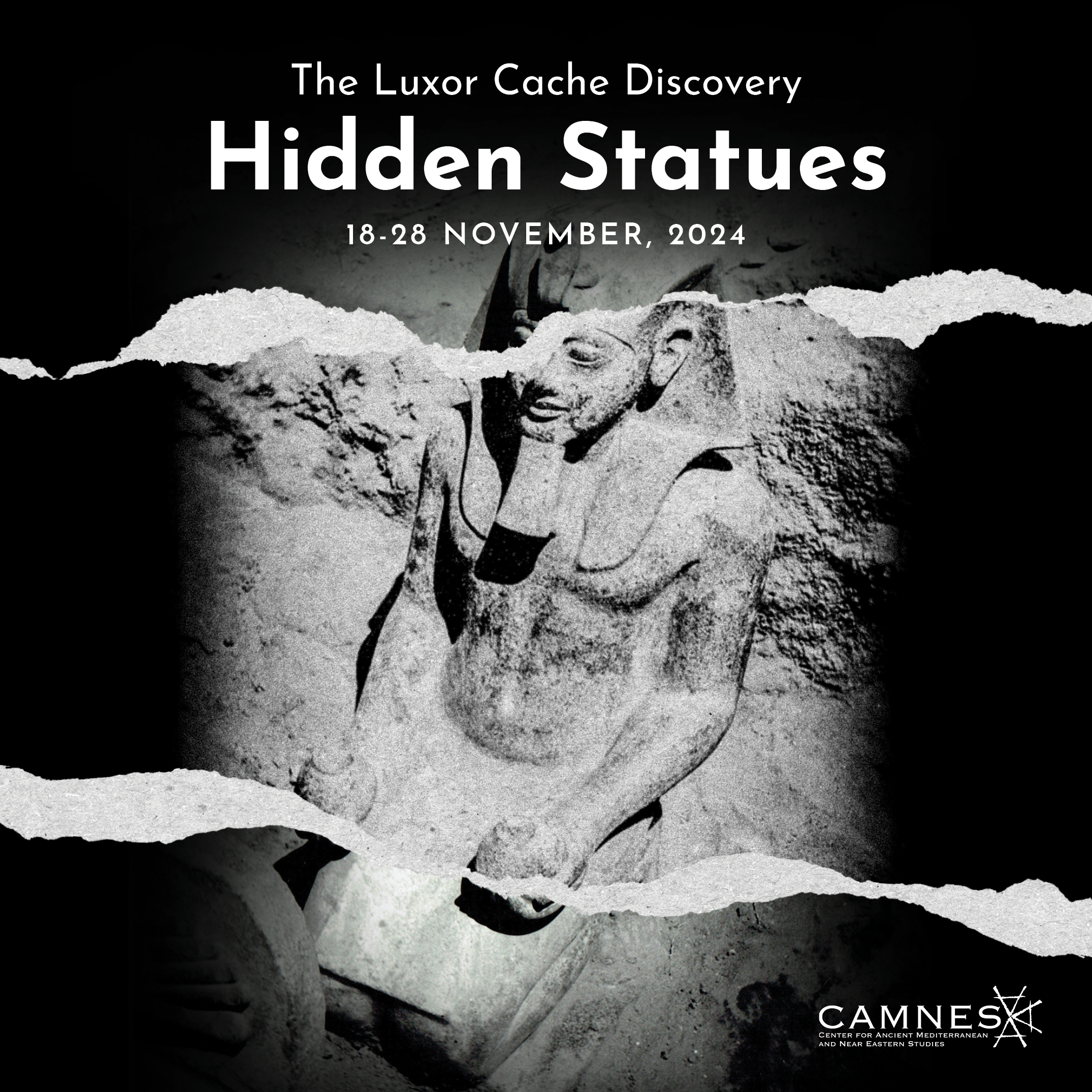
Opening November 18th, from 10 AM to 1 PM LdM Gallery, Via de’ Pucci 4 After the opening, the exhibition will stay open until Thursday November 28th, Mon & Tue & Fri 4-7PM, Wed-Thur 10AM-2PM
The Luxor Statue Cache, found by chance in 1989, is one of the 20th century’s most remarkable archaeological discoveries. This exhibition presents the adventure through photographs, including images of Dr. Mohammad Al-Saghir, the archaeologist overseeing the discovery. On January 22, 1989, during routine cleaning at Luxor’s Amun temple, workers struck a stone base with a trowel, leading to the discovery of a statue base. Further excavation revealed a double statue pit, sparking interest in what might be hidden. The excavation, complicated by high underground water levels, unveiled 26 statues dating from the New Kingdom to the Ptolemaic Period. Scholars are divided on the pit’s purpose: some believe it stored replaced statues, while others suggest priests buried them for protection during times of conflict. Alongside statues, pottery jars were also found. After recovery, the statues were stored and displayed in an underground Luxor Museum wing, replicating the cache environment. The discovery, alongside the Avenue of the Sphinx, elevated Luxor’s significance, leading to its establishment as an independent governorate, separate from Qena. This find has enriched our understanding of Egyptian iconography and Luxor’s historic temple complex.
Mostafa Al-Saghir is the General Director of Karnak Temples and Avenue of Sphinxes at the Ministry of Tourism and Antiquities. He is the director of many archaeological missions in Luxor. He is a member of the International Association of Egyptologists and the American Alliance of Museums. He started his career as an Egyptologist and Archaeologist for more than 25 years. He was the head of many projects of excavation, restoration and development mainly in Luxor, such as projects of Deir El-Medina, Colossi of Memnon, Medinet Habu, Queens Valley and Qurnet Murei. During his work at the Minister’s scientific office, he created Luxor Pass and Cairo Pass. At Karnak, he qualified the temple to be accessible for the disabled as well as developing the signage and visitors’ services. He was the representative of the Ministry of Tourism and Antiquities on the project of Visual Identity of Luxor. He succeeded to complete the discovery of the Avenue of Sphinxes after 72 years of work and to make the official inauguration in November 2021.
Massimiliano Franci is an Associate Professor of Egyptology and Food Anthropology at CAMNES-LdM Institute. He was the secretary of the International Congress of Egyptologists, held in Florence in 2015. He participated in numerous international conferences and is the author of many scientific contributions, such as: “Rethinking Osiris (Rome 2021)” in collaboration with Salima Ikram (AUC) and Irene Morfini (CAMNES), and “The Stelae of Khentykhetjwn and the Ancient Egyptian Lexical Field of ‘The man, ages, and Kinship’: an invitation to an Anthropological Analysis (Cairo 2022)”. Among his recent projects is the development of new information technologies for the analysis of Egyptian artifacts in partnership with the CNR and the University of Florence.
Irene Morfini is an Egyptologist and Archaeologist. She graduated in Egyptology from both the University of Pisa in Italy and at the University of Leiden in the Netherlands. In 2019 she obtained her PhD at the University of Leiden. She’s participated in numerous excavations in Italy since 2000 and in Egypt since 2007. Since 2013 she has been co-director of the Min Project in Luxor. She has been vice-president of the Canarian Association of Egyptology who carries out research and dissemination of knowledge in the field of the archaeological, historical and scientific heritage of ancient Egypt and has been developing cultural projects in Egypt, Cuba and Ghana since 2011. Since 2017 she has been part of the staff of CAMNES. From 2019 till 2022 she has been working in the field for the EU-funded project ‘Transforming the Egyptian Museum in Cairo’, for the National Museum of Antiquities of Leiden and for the Museo Egizio of Turin.
Valentina Santini is currently pursuing her PhD in Egyptology at the University of Birmingham. From 2016 to 2018, she worked at the Museo Egizio in Turin, where, among other responsibilities, she focused on disseminating scientific and academic data to the wider public. She is a member of the Editorial Board of SANEM, the series of scientific publications of CAMNES, and serves as one of the Specialist Editors of the Rosetta Journal. Currently, she is actively involved in the Egypopcult Project funded by the Fundação para a Ciência e a Tecnologia (FCT). Valentina has authored numerous scientific papers and published books for a broad audience, including titles like ‘Butehamon: A scuola di scrittura nell’antico Egitto’ (Sillabe) and ‘I segreti di Tutankhamon: Storia di un faraone tra mito e realtà’ (Longanesi). Her primary scientific interests revolve around the Amarna Age and private funerary beliefs during the New Kingdom.
The LdM Gallery is a project by Istituto Lorenzo de’ Medici, an interdisciplinary space where academic research and artistic experimentation meet within a professional setting.
LdM Gallery presents CARE for me! Herbarium the first chapter of a broader immersive art project by Tatiana Stadnichenko, dedicated to the exploration of the different ways of expressing care through the empathic energy of images.
The concept of caring/taking care has been present in Tatiana Stadnichenko’s works for several years and it originates from her deep desire of “alleviating the pain” of the body and the soul. This desire is, on the one hand, personal and intimate while, on the other hand, it has a collective and global nature: related to the world today profoundly wounded by violence and indifference.
Taking care (of someone or of oneself) is the greatest and most complex act of love that each of us can perform on a daily basis. It is also a cathartic moment that encourages a subtler and empathic communication. It is possible to express care in a myriad of ways: for this exhibition, the artist resorts to plants and medical herbs, for their ancient thaumaturgic power.
In traditional medical practices, the herbs get in contact with the human body, where they express their curative essence. With this artwork, Tatiana Stadnichenko proposes a metaphor of the same process: she gives the herbs to visitors through the images, visitors are in fact invited to interact with the artworks, communicate with them using all senses and interior channels. It is precisely this interaction that produces the “experience of care” designed for the soul.
CARE for me! Herbarium consists of two main art works, both featuring plants and medical herbs:(1) a selection of prints and (2) a video installation.
(1) With the prints, realized through the technique of gel printing, Tatiana Stadnichenko wishes to capture the energetic entity of each plant, fixing it on paper. This procedure has, first of all, a symbolic value for the artist: as it is the way for her to keep a sort of earthly connection with her motherland. At the same time, it’s precisely the plant’s “spirit” fixed on paper that is the active ingredient of the art project, the one that transmits the act of care to the visitors.
(2) In the second part of the exhibition there are a series of silk prints and a video installation: the video is projected on a white cloth, where the images flow downwards, following the rhythm of a contemplative sound. Through the images and the sound, visitors broaden their perception and therefore the reception of the act of care itself.
Protagonist of this part of the exhibition is the fern – present on the silk prints and printed on the installation’s cloth. Tatiana Stadnichenko has chosen to work with this prehistoric plant because it is known for its purifying power (by efficiently filtering the air in our interiors from pollution and fine dust). Moreover, in its many variations, fern, since ancient times, is a subject for myths and legends, symbolizing mystery and infinite knowledge. Associated with the celebration of Saint John’s Eve, in many European cultures, fern has often a transcendental meaning: it is believed to offer protection and connection to the Divine, to promote intuition, to harmonize and balance energetic fields, to symbolize spiritual growth and rebirth. Most likely, fern was the first piece of flora to which men and women directed their request “CARE for me!”
The LdM Gallery is a project by Istituto Lorenzo de’ Medici, an interdisciplinary space where academic research and artistic experimentation meet within a professional setting.
The LdM Gallery is pleased to present Sand Storms in Medio Mundi – Imaginatio Vera, a solo exhibition by Italian American multidisciplinary artist, Lisa Batacchi.
The artist presents the three tapestries created after a long process of travel, study and research that represent three phases of the development of the spirit.
The first piece created, Meditating on Earth, is woven in beige colors and introduces the concept of earth. Mother Earth, a feminine energy that governs nature. The artist created brocaded triangles, the vortices, or waves of a sand storm. One facing up to the North and one down South, they represent the eternal dance between good and evil, positive and negative, typical dichotomy for Zoroastrian religion, as if the opposite poles were ready to create movement that allows the energy to flow, but needed a final push.
The World Is so far Reversed draws our gaze to the centre, representing firm, masculine energy referring to the state of the world today, being on the edge of big changes.
The final work in the series, The Spirit Will Return to Us, which the artist executed herself in a time span of almost a year, has a centre, a northern star, the first tool of orientation for human beings., From the star in the middle, four tentacles extend, dividing the surface into four sections: two darker, representing terrain, and two lighter, representing the celestial. The four tentacles are forming an ancient symbol that represents the vital energy of the sun. The tentacles trigger the circular movement of vital energy.
The tapestries manually executed by Batacchi on a vertical loom show us the creation of color shades, shapes that represent the earth, the sky, ancient symbols such as the sun, the stars, the vortices of sand storms that are intertwined in the narration made up of thousands of yarns. The artist begins to create on one part of the tapestry and then resumes work on the other side, always keeping in mind the overall picture, the preparatory drawing, whose appearance she wants to reproduce. To create we need space and to have space sometimes we need to destroy, overturn, discover or reveal like the waves of the winds that blow during sandstorms do. And when the storm calms down, when the work is done we can see the harmony that arises from the chaos – we have arrived at the Imaginatio Vera, interworld between the sensible and the intelligible, a place that existed in ancient Persia and the disappearance of which led to the catastrophe of the spirit. Perhaps being able to enter the Imaginatio Vera again means discovering the possible space from which to begin to change the destiny of the world?
The LdM Gallery is a project by Istituto Lorenzo de’ Medici, an interdisciplinary space where academic research and artistic experimentation meet within a professional setting.
Student Testimonials from the International marketing class:
The experience at the exhibition today was transformative in establishing a broader perspective of the concepts and something I really enjoyed. Specifically, the aspect of dichotomies particularly intrigued me. I enjoyed seeing the intricate textures and designs that were featured on the tapestries. The arrow indicating the duality of life was quite interesting. In life, something good can be undone very quickly and turn bad, as exemplified via sandstorms. For instance, a sandcastle being built on a beach for hours only to be destroyed in seconds by one powerful wave. I felt several feelings throughout the exhibit, such as curiosity and confusion. It made me reflect on nature and how several of its processes are the opposite of each other, such as water having the ability to put out fire. The element of sustainability resonated well with me, it reminded me that elements in nature can be recycled and move from one form to another. Sustainability is very important in today’s society, and I am glad that the exhibition made this an element of focus and importance. Nicole
I thought that the exhibition was really interesting, especially how it used different tapestries to show the similarities and differences between masculinity and femininity and how each was represented. It was extremely interesting for example the difference between the positives and negatives. I liked how it showed personal growth and how it didn’t have one strict meaning but how it was up for your interpretation. The sustainability aspect was also intriguing due to the use of raw silk that was barely dyed or touched but was just straight from nature. I think it’s important nowadays to keep in mind what artists are using and make sure that they are not worsening the conditions of the earth but that they can create using natural resources. Giada
“The most prominent feeling I felt was peace, the colors, the texture, the patterns and the atmosphere of the exhibition made me feel calm, also I think it is very congruent that this Sand Storms in Medio Mundi art wants to transmit something spiritual”. Ximena
“(…) I felt a sort of peace when looking at her art and had many thoughts of how much patience and time this took the artist and how she is trying to portray that in her art because it is a simple but beautiful piece of art. Sustainability resonated with me because it was a piece that took a lot of time and spoke with a sandy and peaceful look.” Kira
“I greatly appreciated the opportunity to enjoy the Gallery and the artists’ tapestry work. To begin, I thought the tapestry medium was very interesting. It was my first time getting to experience that kind of art and I would like to explore more series that utilize that kind of art. Diving deeper into the art itself, I thought it was an important message to be sharing regarding the spirituality of the world. I found parallels with other religious beliefs such as the Yin and Yang. After being able to view the art, I found myself revisiting some spiritual questions that I had previously abandoned. Lastly, the artist’s careful selection of silk shows that she is valuing sustainability. Additionally, her attempts to revive a dying art is in itself a practice of sustainability”. Kane
“I feel inspired to put more energy into my spiritual journey and practice to reach a level of more enlightenment. I had a first wave of awakening back in my junior year of high school and I always continue to practice – though there are moments of more effort than not – and maybe I should learn to treat every day with the same dedication to myself and my spirituality”. Hailey
“I thoroughly enjoyed this exhibition as well as the execution of the concept. Witnessing an Italian perspective and interpretation of such an ancient philology was fascinating. The duality of spiritual beliefs rooted in Zoroastrianism is universal and very separate from Islam, and I believe that introducing these concepts to the Western mindset, especially for Italians, through art like this is a beautiful act of globalization and connecting people through the barriers of cross-cultural communication. I felt touched by the exhibition, I could feel the appreciation behind the artist for this belief system that is currently underrepresented and it encouraged me to educate myself on these concepts more deeply”. Aishah
Student Testimonials from the Principles of Marketing class:
My overall impression on the experience was good. I think the tapestries were impressive and they progressed in a good way that you could see the journey. I do wish we could have a little more insight into what some of the things on the tapestry meant. I understand it has a desert feel to it, but I was not quite sure what to look for exactly or what the message being sent was. That leads me into my emotions or feelings, which at first was confusion. I didn’t really understand the feminine / masculine aspects of the tapestries, and I still am not sure what the colors were supposed to represent. The one interpretation that I came up with by myself was that it represents the roller coaster of life. At first, the tapestry was clean woven, perhaps representing young age and blissfulness, the second tapestry was ripped and had ascending symbols, perhaps representing the struggles of life and the journey out, and the third tapestry was clean woven and symmetrical, perhaps representing finding peace in life. That was how I saw it. I think the tapestries relate to sustainability in that they are hand woven and take time. They represent a greater theme of art and the ability to create beautiful works through one’s own hand and that beautiful things take time, in this case 2-3 months and even a year. I think it encourages the notion that we don’t always have to consume the most amount of things, and that we can slow down from time to time, which goes along with the ideas of sustainability. Micheal
I thought this was a very interesting experience, and the artwork was unique which I enjoyed. I think the artist did a great job at drawing out a certain emotion and feeling through her pieces, which were a sense of calmness. I appreciated the element of sustainability, because in our current society, everyone seems to address sustainability differently, but I feel like her piece of art demonstrates a perfect balance between sustainability and an interesting piece of art. Gabrielle
My overall thoughts of this experience were that art is an amazing thing that only some people can understand or have the ability to interpret, it doesn’t mean it’s a good or a bad thing, the visit to the exhibition was inspiring. It made me reflect on the deeper meaning behind art and creativity. I felt a mixture of awe and responsibility. The pieces made me open my mind to new thoughts about art and how the girl was explaining us and the story of how the artist came up with those pieces and the meaning behind them but that also we needed to use our creativity. The exhibition highlighted how art can be a powerful tool to communicate and raise awareness about sustainability in a way that marketing or data alone can’t achieve. Ximena
I thought the exhibit was very interesting. The tapestries were so poetic yet so simple at the same time.as the girl was explaining the art work and the thought process behind creating the tapestries, it really put her mind into perspective. I definitely had more of an open mind after seeing this art exhibit. Ive never really interpreted art well. Hearing the description of the tapestries, i really saw how the artist felt while creating the pieces and could understand the masculine and feminine energy that was presented. Madeline
My overall thoughts of the experience were that the art was very aesthetically pleasing, and you could instantly see how much craftsmanship and detail went into each loom. It also gave the feeling of being very old/traditional even though they were made very recently. The emotions I felt were complex. I felt like I was back in time and even in a completely different part of the world while looking at these pieces. They made me feel more carefree because they took me back to a period when there were fewer modern stresses, and people could take in Mother Nature’s beauty to the fullest. It resonated well with me because I think sustainability is very important for the future of not only our generation but the generations to come. It makes sense that this piece was created sustainably because the artist took us back to a time when everything was created sustainably. Aidan
I found it interesting and empowering that the artist decided to create pieces of artwork to depict the spiritual journey. Especially how she used her art as her spiritual journey by meditating throughout the process of creating her pieces. I believe that meditation is a truly powerful tool for people that can help us get in tune with our inner selves and help us reflect on who we are and what we put out to the world. The meditation and spiritual journey aspects of the art pieces deeply resonated with me. I grew up following and learning within the catholic church but recently started studying a bit of Buddhism, mainly focusing on yoga and meditation. So I feel I have a deeper understanding of what the artist’s experience was like while creating the pieces. Sustainability is very important to me, I think that we have lived in a world where sustainability wasn’t talked about or practiced enough in the past so I appreciated how important it was for the artist as well and how she incorporated her passion for sustainability into her artwork. Isabelle
I thought the experience was extremely eye-opening because of the deep interpretation you had to have in order to see the vision behind the tapestries. The different levels to each piece of art had so much to offer and I would have never been able to guess what the meaning was if I had not been told. The speaker did a great job informing us about the thought and creation process. Overall, I was very impressed with this new form of art and it has opened my mind to deeper, intricate interpretations. I had an array of emotions but the most prominent was confusion. If I’m being fully honest, it was difficult for me to see the message of the artwork the speaker was explaining. I am not a huge art junkie and do not have a knack for being able to understand messages behind art. However, I did feel the sense of peace behind each tapestry because of the smooth, light colored strings placed in an aesthetically pleasing way. Sara
The Lorenzo de’ Medici Gallery in collaboration with Lorenzo de’ Medici Institute and Marist Italy would like to thank all who participated in the open call for the (IN)ANIMATE EXISTENCE: Reviving the Unused Exhibition.
This exhibition explores the transformation of discarded or non-functional objects into meaningful art, challenging the notions of consumerism and the value of utility.
Artists will delve into intangible and invaluable aspects of existence, reimagining our world for a better future. The selected works will breathe new life into what society deems purposeless, engaging with broader themes of sustainability, inclusion, and societal outcasts.
We were thoroughly impressed with the amount of innovative and creative project proposals. Our jury took its time to extensively review and appreciate each application. After some deliberation, we are pleased to announce our selections:
Gina Bae
Tomo Borromeo
Aliyah Goldberg
Girija Jhalani
Theodore Lance and Carlo Marshall
Gretta Lemke
Lucia Rodriguez
Rylie Severino
Jurors:
Claudia Ceccato (Artist, Lucca)
Samuel Hromec (Exhibition Curator)
Luca Matti (Artist, Florence)
Belis Özbek (Exhibition Curator)
Špela Zidar (LdM Gallery Supervisor)
Exhibition Dates: December 5th – December 14th, LdM Gallery, via de’ Pucci 4
The LdM Gallery is a project by Istituto Lorenzo de’ Medici, an interdisciplinary space where academic research and artistic experimentation meet within a professional setting.
Stefano Tondo, a visual artist born in Lecce in 1974, stands out in the contemporary artistic panorama for his incessant search for the truth hidden behind appearances. Resident in Florence, Tondo has shaped a distinctive artistic path, characterized by a profound investigation into the boundaries of identity and the very essence of material and immaterial reality. Graduated from the Academy of Fine Arts in Florence, Tondo initially embraced advertising photography, a field that sensitized him to powerful visual dynamics before dedicating himself completely to art in 2002. His transition towards pure artistic research marks the beginning of an exploratory journey through various mediums and expressive forms, from installation to sculpture, from photography to video.
At the LdM Gallery he presents the personal exhibition LUCE è OMBRA (Light is Shadow) with new site-specific installations that investigate the basis of a relationship narrated through sometimes even contrasting materials and objects, which however create a unified story.
Opening:June 12th, from 5 to 8 PM LdM Gallery, Via de’ Pucci 4
After the opening, the exhibition will stay open until Friday, July 12th, Mon, Thu & Fri, 4 PM – 7 PM, Tue – Wed, 11 AM – 3 PM
The LdM Gallery is a project by Istituto Lorenzo de’ Medici, an interdisciplinary space where academic research and artistic experimentation meet within a professional setting.
With the conclusion of the academic year 2023-2024 an end-of-year event took place in the prestigious setting of the Museo degli Innocenti on Saturday, May 11th. “Nurturing the Future – Nutrire il futuro,” a showcase of the works by our students enrolled for the practical courses of the schools of Creative Arts and Design.
It is an exclusive context of invaluable importance in the history of art, a place where international exhibitions are regularly hosted.
It’s not just the value of this historic venue that makes the occasion special, but also the spirit of warmth and intimacy, both physical and spiritual, that permeates its spaces. Designed by Brunelleschi at the beginning of the 15th century it is one of the very first examples of Renaissance architecture. Since the very beginning the Hospital has been dedicated to welcoming youths and nurturing their cultural and emotional growth within the society. It is an intimate and nurturing place for beauty, a place where new possibilities are created within the harmony of Renaissance forms.
A similar venue provided the ideal context to showcase our students’ artistic expressions, amplify their voices as emerging talents, and facilitate their interaction with the public.
Students participated from the following departments: